
Most “creative content marketing examples” lists show you the same tired examples.
Spotify Wrapped. Duolingo’s TikTok account. Share a Coke.
These are the go-to examples for a reason – they encapsulate personalisation, humour, and shareability in B2C content marketing.
But what if you want fresh examples you haven’t come across a dozen times? The kind that make you think “oh, I hadn’t considered approaching it that way”? Or examples that work if you aren’t already a household name for consumers?
That’s what this list is for. Lesser-known creative gems that drive real impact and will spark ideas you can actually apply to your own content strategy thinking.
Here are 10 examples that made me rethink what’s possible with content marketing.
Want examples like these delivered to your inbox?
With This Month In Content you’ll get one creative content marketing example straight to your inbox every two weeks, for never-ending inspiration.
1. Typeform’s Get Real campaign
🔷 Brand name: Typeform
🏭 What they do: Survey and form software
📝 Content type: Original research, interactive content
📢 Core distribution channel(s): LinkedIn (organic and paid)
Original research content usually follows a predictable pattern: conduct a survey, create a comprehensive PDF report, gate it behind a form – and the risk is that users flick through once and it disappears into their download folder forever.
Typeform’s ‘Get Real’ campaign took a different approach.
They surveyed 1,300 influencers, marketers, and content consumers about the reality of influencer marketing – what actually works, what feels fake, where the industry’s biggest challenges lie. And instead of a static report, they created an interactive landing page presenting key themes across five ‘chapters’, featuring quotes and even little video clips from survey respondents.
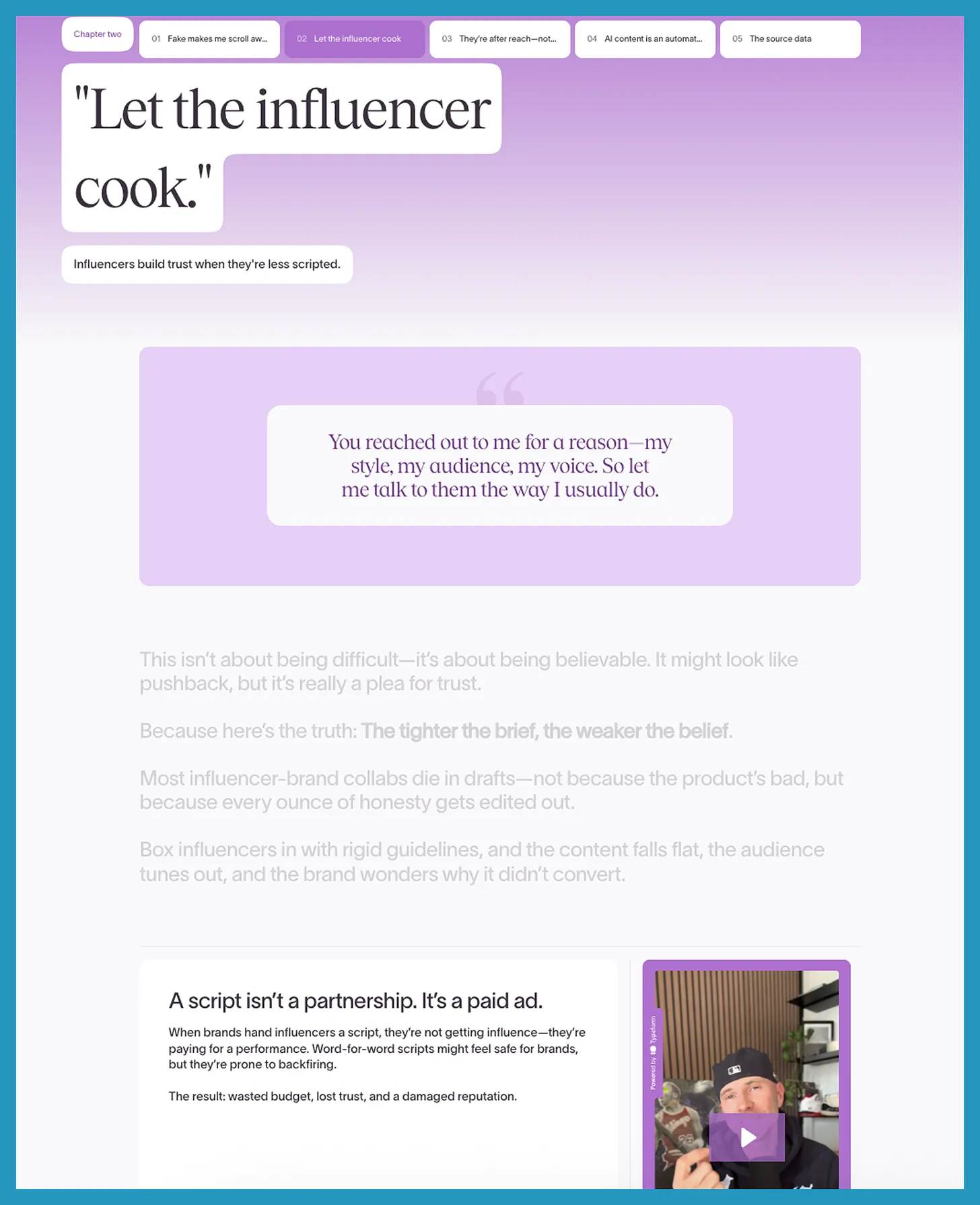
The survey itself created shareable moments – video responses and data insights that readers would naturally want to share on social media.
And contributors became natural advocates because they were featured in the content too, with Typeform also working with influencers to distribute the report to their audiences, whilst employees amplified it too.
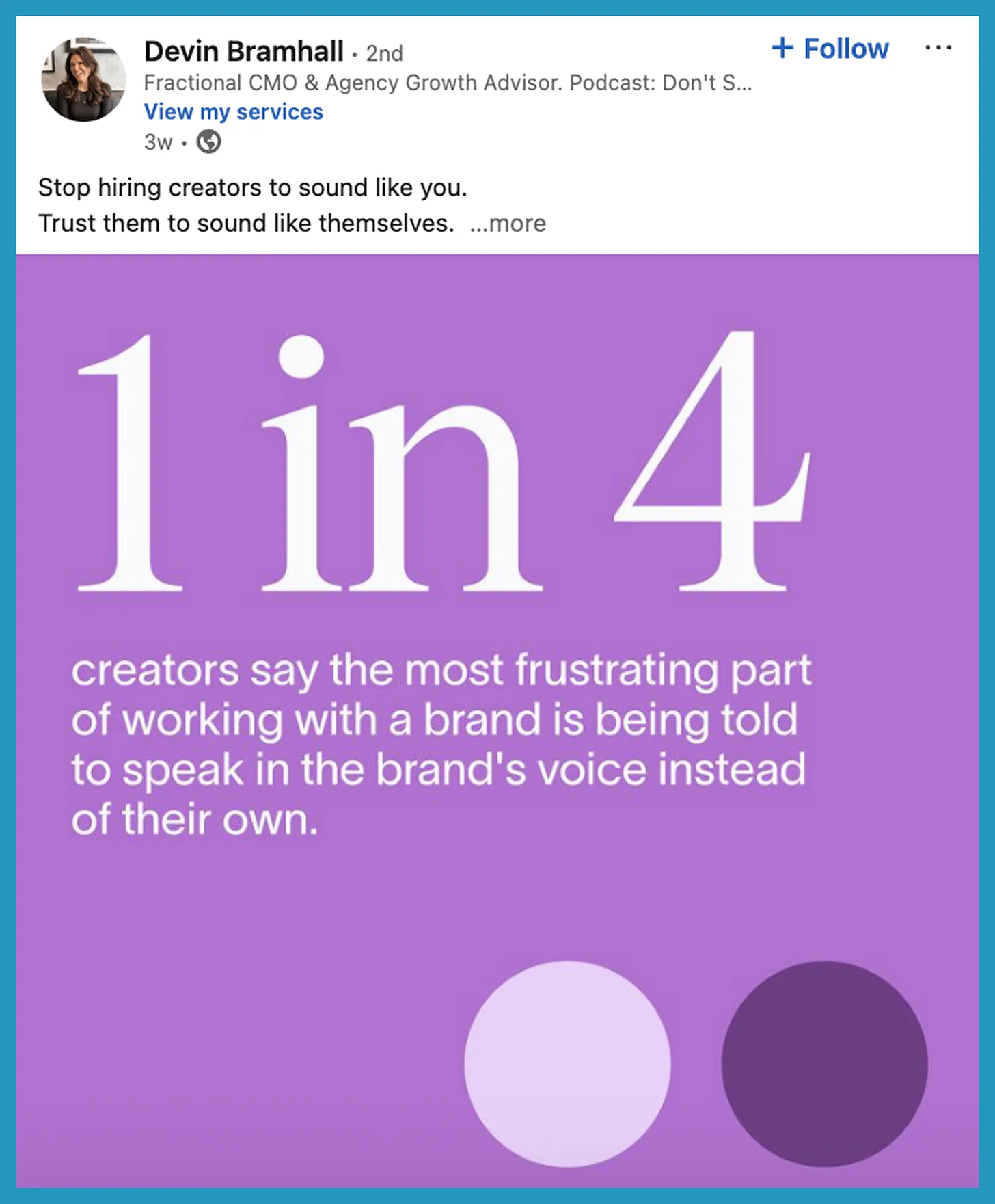
Why it’s a great example of creative content marketing
The format mirrors Typeform’s product – their tool is a survey platform with interactive capabilities, so their content is an interactive experience too. That consistency reinforces what their product offers whilst matching how audiences actually want to consume data.
Instead of sterile charts and graphs, you’re hearing directly from the people surveyed. The way they designed their survey – asking for video responses – created shareable moments from the start. Those 146 contributors would naturally want to share content they were featured in, so distribution became built-in. Typeform then amplified that organic momentum through influencer partnerships, turning contributors into a distribution engine that felt authentic rather than forced.
Actionable insight for your next campaign
When you’re gathering research or insights, could you make the human voices part of the content itself rather than just becoming a data point in the analysis?
2. WePresent by WeTransfer
🔷 Brand name: WeTransfer
🏭 What they do: File sharing software
📝 Content type: Editorial content, branded content
📢 Core distribution channel(s): Newsletter, events, partnerships, social media
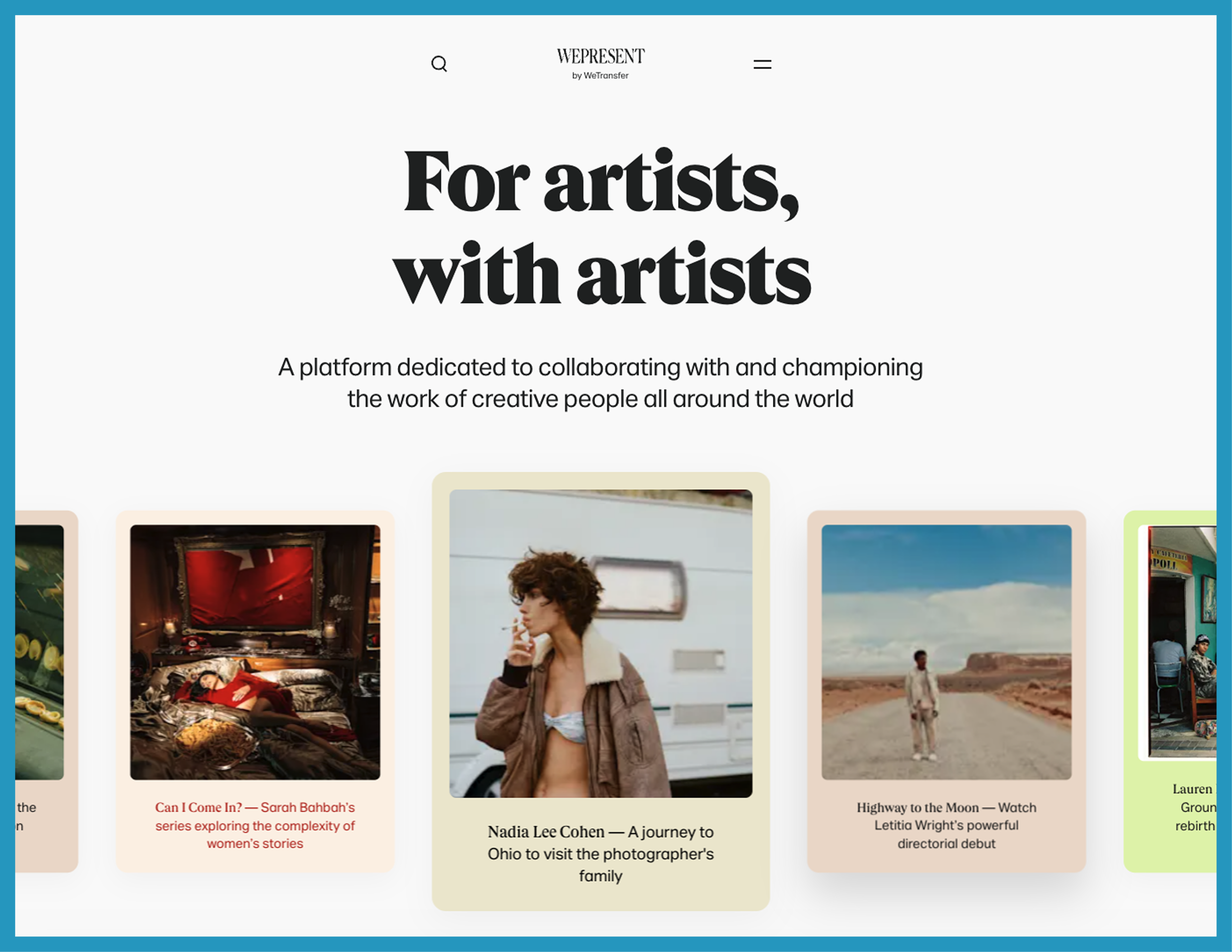
When I first discovered WePresent years ago, I genuinely didn’t realise it was content marketing. It looked like an independent culture magazine – stunning photography, interviews with artists across every creative medium, stories from creators all over the world.
Then I noticed the “by WeTransfer” in the corner.
WePresent launched in 2018 as WeTransfer’s digital arts platform, profiling artists from across the world – photographers, filmmakers, musicians, designers, writers. Every feature includes interviews delving into the thinking behind their work.
It operates like genuine journalism, not like a company blog. WePresent has its own editorial team led by Editor-in-Chief Holly Fraser, creating editorial content, commissioning original work, and running recurring series like “Learn from the Best” with manifestos from well-respected creatives.
Why it’s a great example of creative content marketing
WeTransfer positions themselves as patrons of the arts through sustained commitment to this project.
WePresent could exist as an independent publication. The editorial quality, the depth of artist profiles, the commissioning of original work – the content stands on its own merit.
That builds brand authority in a way product content never could – proving your values and relevance through investment in the work that matters to your audience.
Actionable insight for your next campaign
If you completely forgot about product connection and focused purely on what your audience cares about, what content would you create just to entertain, educate, or inspire them?
3. Lovable’s Discover page
🔷 Brand name: Lovable
🏭 What they do: AI development tools
📝 Content type: User-generated content, interactive content, BOFU content
📢 Core distribution channel(s): Community sharing, SEO
Lovable is an AI builder that lets non-coders create apps, tools, and websites through conversation with AI. Their monumental growth over the past year has been driven by content and community – and their Discover page embodies both.
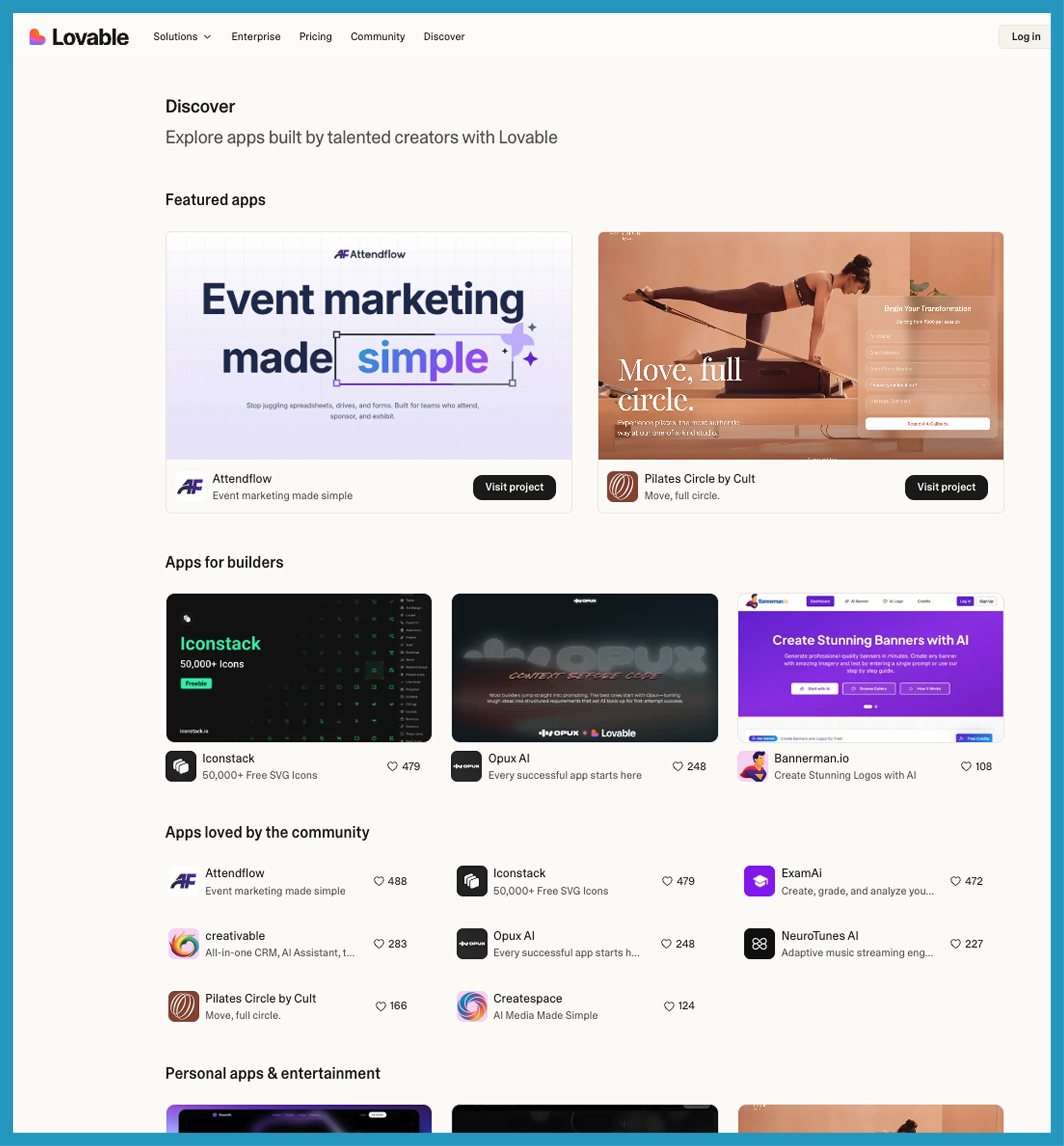
Instead of a traditional blog or resource centre, their main website navigation has just one content destination: Discover. Click in and you’re browsing real projects people have built – an event marketing platform, a personal finance tracker, a restaurant booking site, organised into sections like “apps for builders” or “most loved by the community.”
And you can actually interact with each one. Click into Attendflow’s “event marketing made simple” website, for instance, and you’re using a functioning website someone built with Lovable.
Why it’s a great example of creative content marketing
Lovable’s product is inherently shareable – people want to show off what they’ve created. The Discover page surfaces those creations directly on their website, reinforcing what’s already happening organically. When users see their projects featured publicly, it validates the community they’re part of, and when new visitors see what others have built, they want to create their own. Builds inspire more builds, which get shared, which inspire even more.
Plus, the examples are the product in action.
Instead of blog posts explaining what Lovable can do, you’re seeing real user projects you can actually interact with. Seeing someone else’s functioning event platform makes you think “I could do that too” – you’re seeing proof that someone like you already succeeded.
Actionable insight for your next campaign
If you have a product that produces something (reports, designs, websites, whatever), could you create a “built with [your tool]” showcase that turns user output into your content library?
4. UserEvidence’s The Long Game
🔷 Brand name: UserEvidence
🏭 What they do: Customer evidence platform
📝 Content type: Video content, branded content
📢 Core distribution channel(s): YouTube, LinkedIn
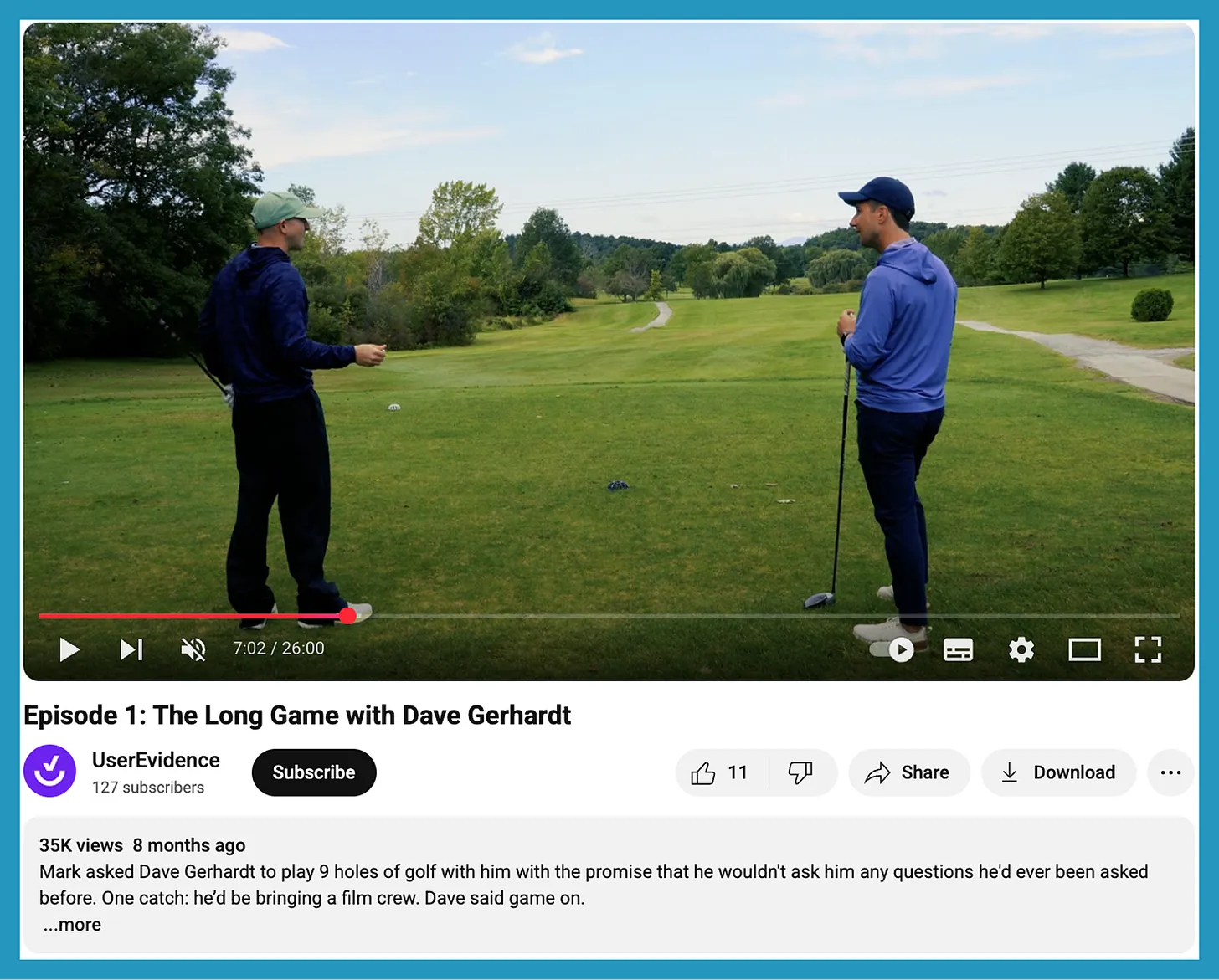
Most business podcasts feel like two people reading from scripts in a studio. UserEvidence ditched that format entirely for ‘The Long Game’ – a YouTube series where Mark Huber films real conversations with marketing leaders whilst they’re doing activities they love.
Season 1 featured Dave Gerhardt golfing in Vermont. Season 2 saw Mark hitting the slopes with UserEvidence’s own CEO, Evan Huck. Each season spans 4-5 episodes, creating an episodic journey viewers follow from start to finish.
When you’re in someone’s hometown, walking between ski runs or waiting for them to tee off, the conversation flows differently. An avalanche story comes up because you’re literally on the mountain where it happened – you’re not just listening to an anecdote in a studio, you’re there reliving it with them.
Why it’s a great example of creative content marketing
There’s a big difference between asking a marketing leader to do another podcast interview versus asking if you can come film them playing golf in Vermont or skiing in Jackson Hole. One feels like work, the other feels like an experience worth bragging about. So when Dave or Evan share these episodes on LinkedIn, they’re not sharing yet another podcast appearance – they’re sharing this cool, creative project they got to be part of.
Plus, the episodic structure makes people come back. Most content is one-off pieces – a blog, a report, a webinar. When you create a series with multiple episodes per season, viewers get invested and want to see what happens next, more like a TV show than typical branded content.
Actionable insight for your next campaign
What would it look like to take your content format somewhere unexpected – literally and conceptually – where the environment itself changes the conversation?
5. Agorapulse’s Social Trends dashboard
🔷 Brand name: Agorapulse
🏭 What they do: Social media management software
📝 Content type: Original research, interactive content
📢 Core distribution channel(s): SEO, LinkedIn
The typical approach to original research is one-and-done: release an annual report, promote it briefly, then let it gather dust until it’s time for the next edition.
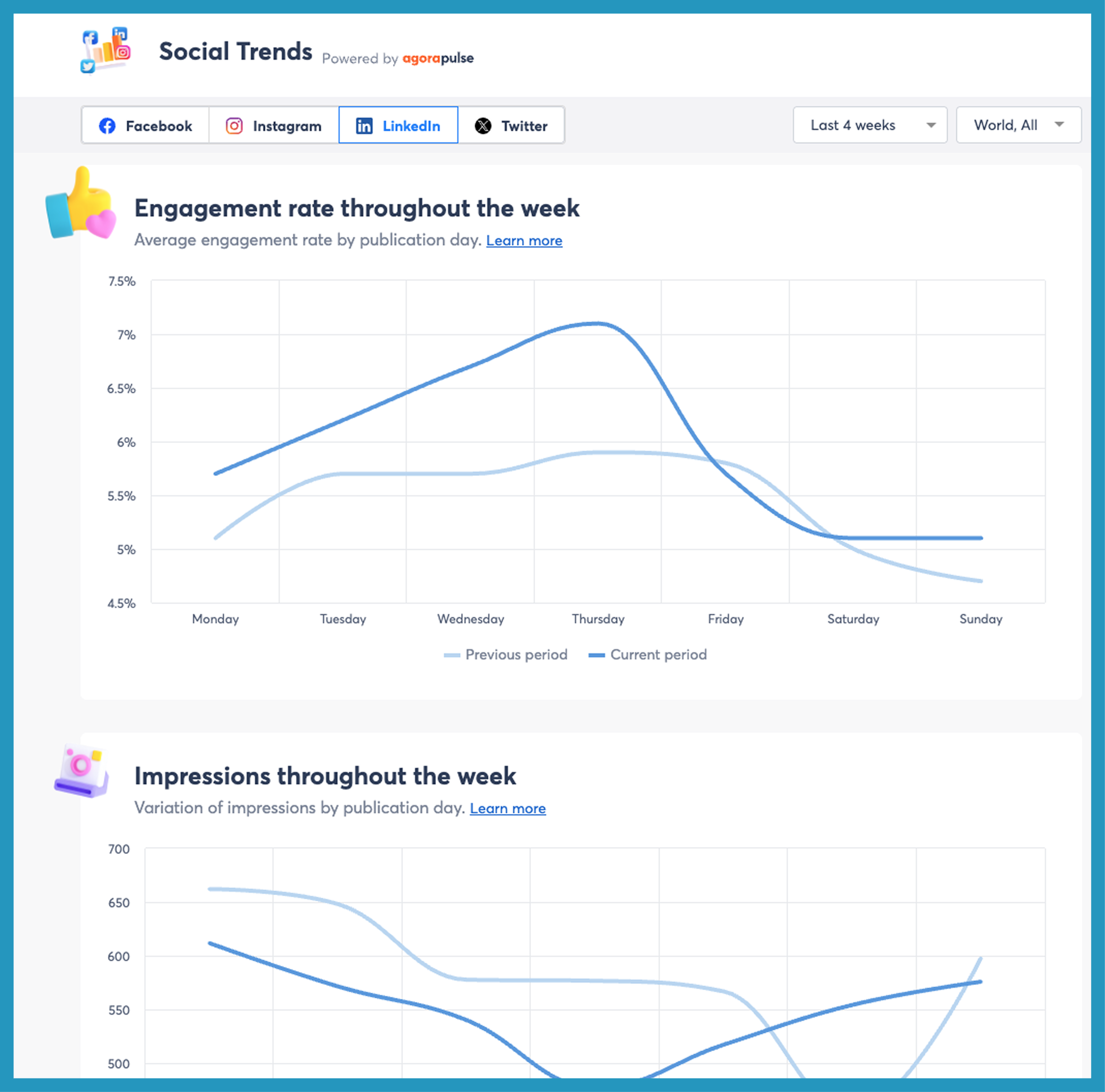
Agorapulse takes a different approach with their Social Trends landing page, updating the same dashboard monthly with fresh social media performance data from their platform – average engagement rates, top-performing content types, best posting times, all filterable by region and industry across Facebook, LinkedIn, Instagram, and Twitter.
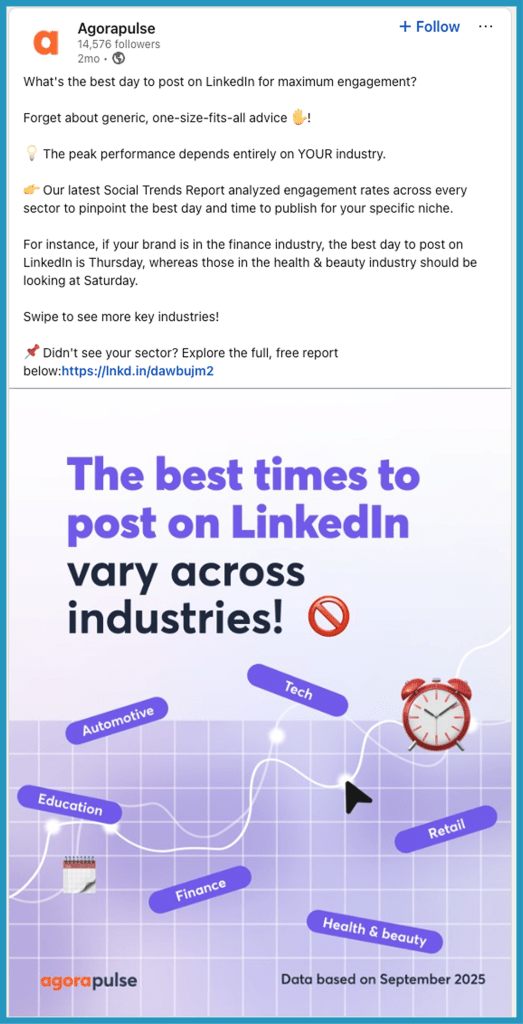
You can view data from the last 4 weeks or look back further to see trends from any month in the past year. And they create social content off the back of it too – like LinkedIn carousels on the best day to post for maximum engagement, using fresh data from the dashboard.
Why it’s a great example of creative content marketing
Social media managers constantly ask “what’s typical performance?” or “are my engagement rates normal for my industry?” Agorapulse answers that question with real benchmarks that are genuinely useful, which means people bookmark it and return to it.
Every month when they update the dashboard, they can create new social posts pulling the latest findings. “Best day to post on LinkedIn this month” feels timely because it is – not repurposing the same report over and over, but genuinely fresh insights each time.
Plus, the format mirrors the product. Most original research becomes a static PDF report, but Agorapulse is a social media management platform with real-time insights – so their content is a dashboard too. That consistency reinforces what their product offers whilst matching how their audience actually wants to consume data.
Actionable insight for your next campaign
If you have original data in your product, would an always-on dashboard that updates regularly be more valuable to your audience than a one-time report?
Want creative content examples like these, on the regular?
Subscribe to This Month In Content for one standout content marketing example straight to your inbox every two weeks.
6. Pinpoint’s Red Flag, Green Flag series
🔷 Brand name: Pinpoint
🏭 What they do: Applicant tracking software
📝 Content type: Video content, social media content
📢 Core distribution channel(s): LinkedIn, YouTube Shorts
With more brands using AI to churn out generic educational content, creative content series are becoming one of the few ways to build a defensible brand moat.
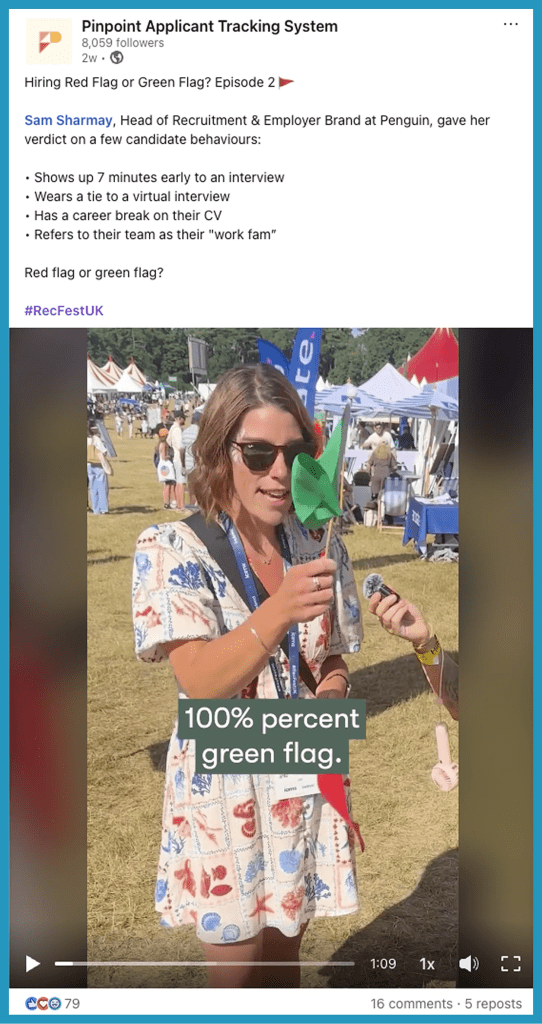
Pinpoint’s Red Flag, Green Flag is exactly that kind of creative series thinking. The Pinpoint team filmed talent acquisition professionals during the RecFest conference giving their ‘red flag or green flag’ reactions to common candidate scenarios – like “asks about salary in the first 5 minutes” or “refers to their team as ‘work fam'”.
The result is a set of videos containing genuine and unscripted responses – ranging from thoughtful analysis to visceral “big red flag” reactions.
They’re situations that Pinpoint’s audience can instantly relate to, with the comments making it clear the discussions are resonating.
Why it’s a great example of creative content marketing
This series hits the sweet spot of offering educational insights into how others approach hiring challenges whilst also being genuinely entertaining. It addresses daily frustrations, validates experiences, and provides insider knowledge that only industry practitioners would fully appreciate – the content equivalent of overhearing colleagues discussing work problems, immediately engaging because it’s so relatable.
And the videos were filmed at RecFest UK (a large-scale event for talent acquisition professionals), which means the Pinpoint team were able to leverage their audience already being in-person, build relationships through a fun activity rather than a sales-focused stall, and create natural content momentum through linking to the event.
Actionable insight for your next campaign
What would a short-form video series that aimed to entertain through relatable, resonant scenarios look like for your audience?
7. Air’s Zoltair Speaks
🔷 Brand name: Air
🏭 What they do: Creative operations platform
📝 Content type: Original research, branded content
📢 Core distribution channel(s): LinkedIn, influencer partnerships
Every year we see ‘2026 predictions’ or ‘2026 trends’ reports by a myriad of brands. Most are forgettable – the same regurgitated trends you’ve seen everywhere else, dressed up with slightly different statistics.
Air’s Zoltair Speaks does it differently. The name alone – a reference to the fortune-telling machine from the film Big – tells you they’re not taking this too seriously. In the introduction, Head of Content Ariel Ruben jokes about “the inevitable onslaught of 2026 prediction reports.” They know it’s overdone, and they’re leaning into it.
But what I really like is how simple they kept the actual content – asking 20 marketing leaders for one honest take each on what they’ll be focusing on in 2026, with those contributors then becoming their distribution engine through sharing their take on LinkedIn in a paid partnership.
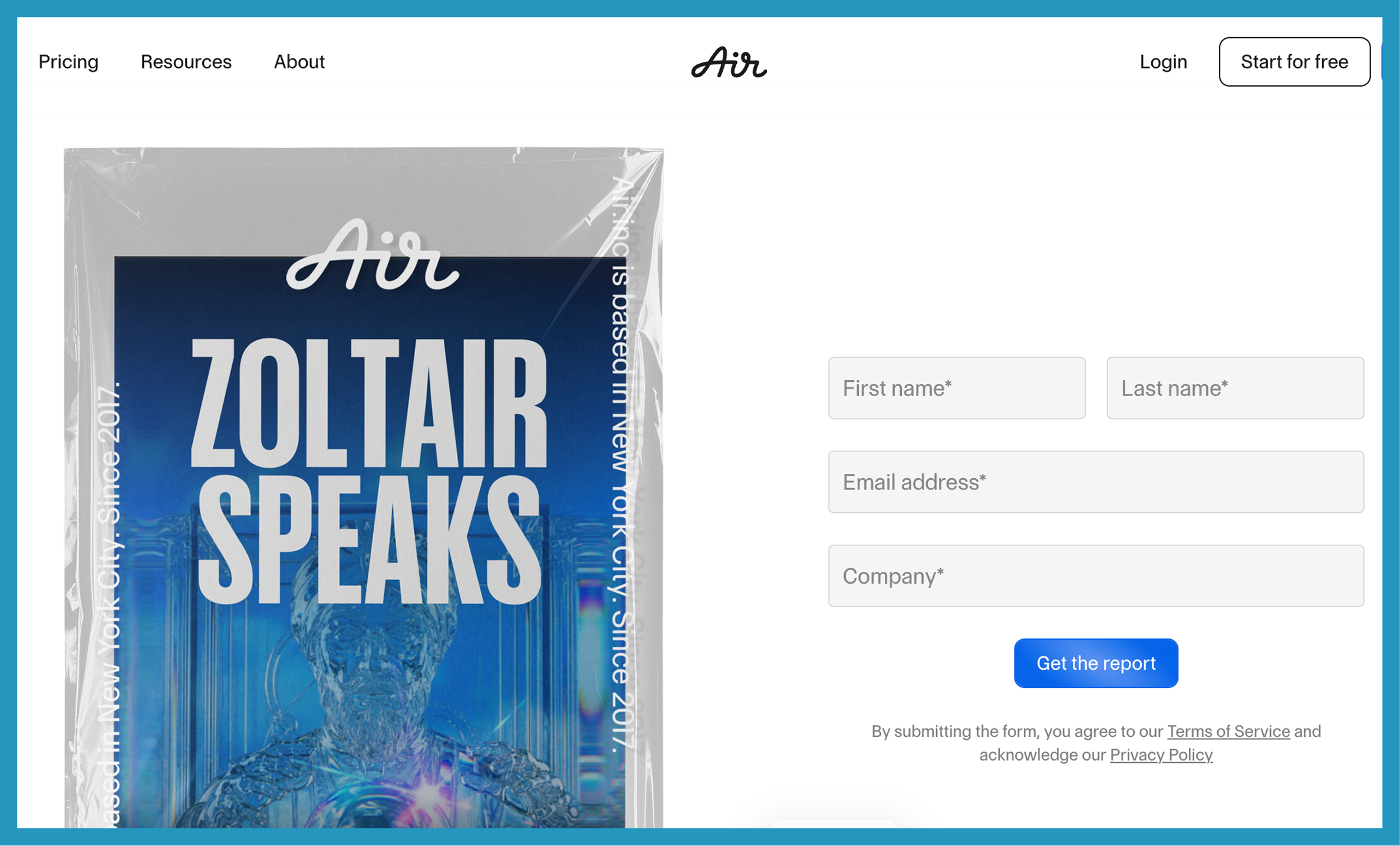
Why it’s a great example of creative content marketing
By acknowledging upfront that predictions reports are overdone, Air immediately differentiates themselves. The Zoltar reference reinforces this – it’s whimsical and nostalgic (appeals to marketers who appreciate creative references), thematically perfect (fortune teller = predictions), and shows Air’s brand voice is playful rather than corporate.
Plus, amplifying diverse voices builds more credibility than claiming to have all the answers yourself. By featuring 20 marketing leaders, Air created 20 people incentivised to share the report with their own audiences, turning contributors into natural advocates.
Actionable insight for your next campaign
Are you overcomplicating your thought leadership content – have you got the right interesting voices to truly influence your audience?
8. Storyarb’s The Standard
🔷 Brand name: Storyarb
🏭 What they do: Content agency
📝 Content type: Newsletter content, editorial content, branded content
📢 Core distribution channel(s): Email, LinkedIn
If we’re really honest with ourselves, most company newsletters end up feeling like thinly veiled promotion. They exist to nudge readers towards services or products, and readers can smell it from the subject line.
Storyarb’s The Standard is a company newsletter done differently. They designed it like an old-school newspaper – a choice that immediately signals what this is: editorial content, not marketing collateral. Each edition follows a consistent format with a headline piece from a marketing leader weighing in on trending topics or hard-won lessons, followed by repeatable sections like “From our marketing-inspo file to yours.”
Some editions feature Storyarb’s own team discussing topics like AI implementation, but the strongest ones bring in external marketing leaders to share career-defining projects. Take their edition featuring Morgan Selzer, Chief Content Officer at Headspace, sharing the inside story of their Sesame Street collaboration – it’s the kind of practitioner insight you might expect from an industry publication, not a vendor newsletter.
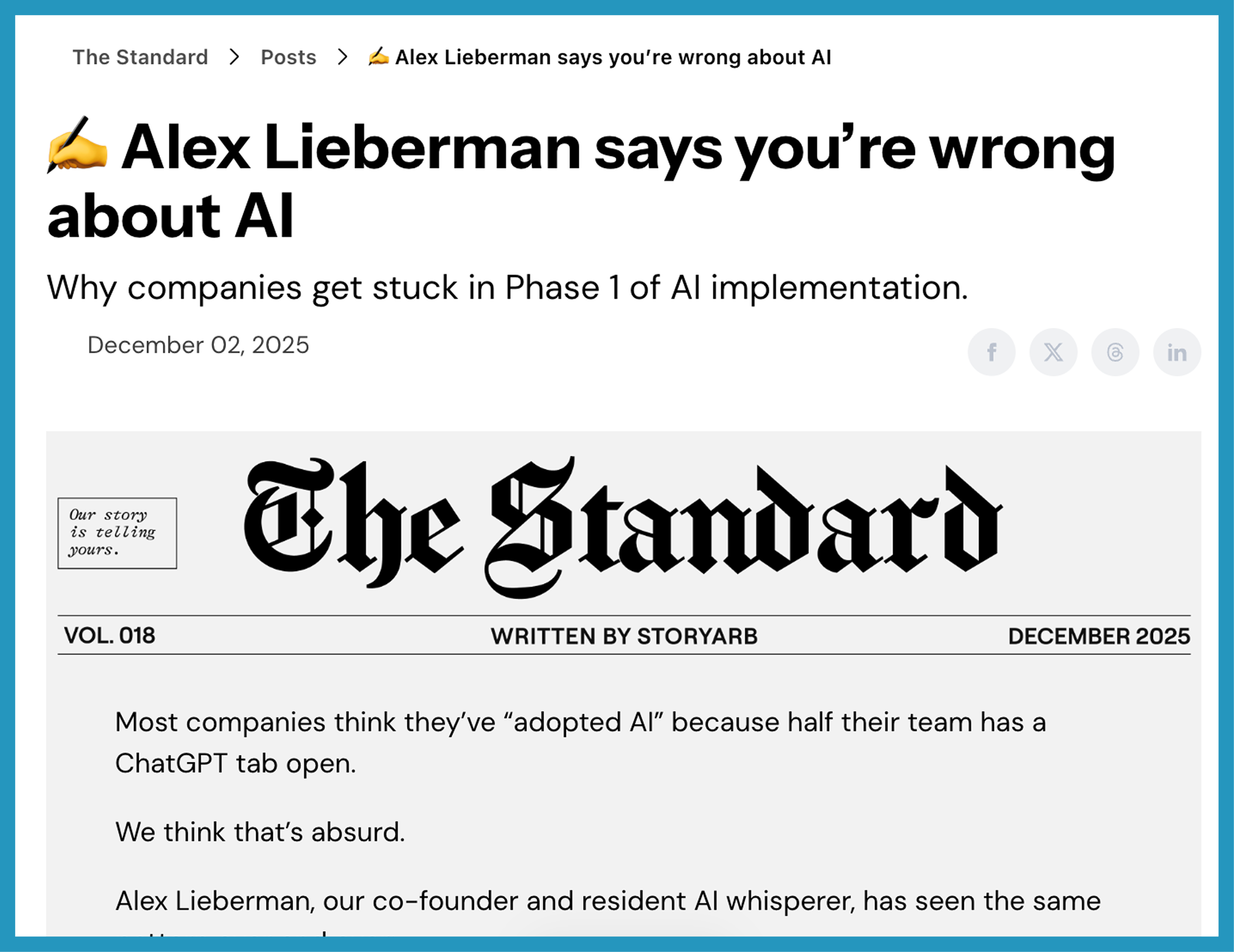
Why it’s a great example of creative content marketing
The newspaper aesthetic speaks directly to who their audience is. Naming it “The Standard” and designing it like a newspaper immediately signals editorial content for people who appreciate that format. For a content agency whose business is editorial newsletters and thought leadership, this alignment is perfect – but it also taps into something deeper, with plenty of content marketers having journalism backgrounds or growing up dreaming of working on publications like that.
Plus, the “by Storyarb” framing creates crucial editorial distance. It’s not “The Storyarb Newsletter” – it’s The Standard, brought to you by Storyarb. The content stands on its own as valuable even if you never engage with Storyarb as a vendor.
Actionable insight for your next campaign
Does your content format and branding reflect what your business does and who your audience is – or does it look like every other company newsletter?
9. Sequel’s Game Changers
🔷 Brand name: Sequel
🏭 What they do: Webinar software
📝 Content type: Webinar series, video content, BOFU content, branded content
📢 Core distribution channel(s): Email, thought leader partnerships, LinkedIn
Most content teams are drowning in the hamster wheel – trying to be everywhere, doing everything, barely keeping up.
Sequel took the opposite approach with their Game Changers series: one recurring webinar format with conversations with CMOs and marketing leaders, same structure each time, same type of guest, running weekly (ish) since September 2022 and repurposed into replays, written summaries, and LinkedIn clips.
For a webinar software company, this makes perfect sense as the place to double down – it provides genuine value for their marketing audience whilst naturally demonstrating their product working.
And Game Changers now has its own logo, its own spot in the main navigation, its own recognisable identity. From the CMO webinar series, they expanded by adding the Masterclass Series underneath the same Game Changers brand – mid-funnel content showing how other companies use webinars in their marketing.
They’ve also published multiple guides explaining how they built Game Changers itself, providing genuine value to their audience whilst naturally showcasing their expertise.
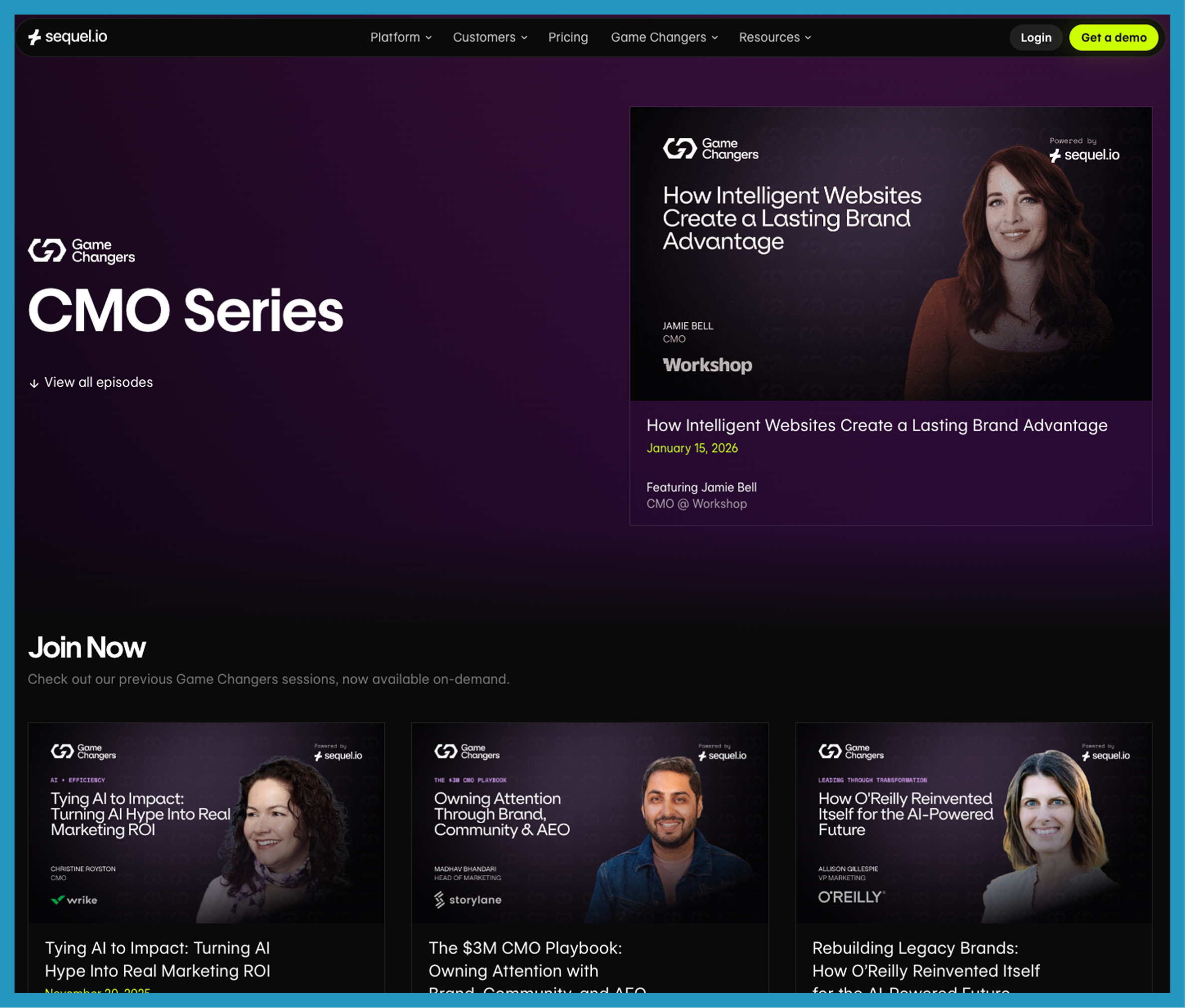
Why it’s a great example of creative content marketing
Instead of spreading themselves thin trying to be present on every platform with every content format, they focused on building one recognisable, valuable series and making it excellent.
That focus means they can keep improving it, keep showing up consistently, and keep building momentum rather than constantly starting from scratch with new formats.
Plus, by establishing Game Changers as its own brand identity rather than just “Sequel webinars,” they created space to add more series underneath that umbrella. The CMO Series and Masterclass Series feel connected but serve different purposes – top-of-funnel thought leadership and mid-funnel demand generation working together under one recognisable content mini-brand.
Actionable insight for your next campaign
What would happen if you stopped trying to be everywhere and just focused on doing one content series exceptionally well?
10. Greenly’s Leaf Media
🔷 Brand name: Greenly
🏭 What they do: Business sustainability software
📝 Content type: Video content, podcast content
📢 Core distribution channel(s): YouTube, Spotify, LinkedIn, TikTok
Most content teams struggle to maintain one podcast consistently. So when I saw Greenly running two separate climate podcasts under the same brand, I was sceptical – I’m a big believer in focus, doing less, doing it well.
But in this case, the separation actually serves their audience better.
CSO Connect interviews Chief Sustainability Officers about strategy, challenges, career paths – the tactical, career-focused podcast.
Eco Echoes features leading voices in the climate space like Clover Hogan and Mike Berners-Lee sharing their vision for global change – the inspirational, personal podcast.
They could’ve combined them into one “Greenly’s Climate Podcast” – but a CSO discussing compliance deadlines and an activist sharing their vision for systemic change serve completely different needs.
Both podcasts live under Leaf Media by Greenly – a mini-brand with its own microsite, social channels, and editorial identity distinct from their core product.
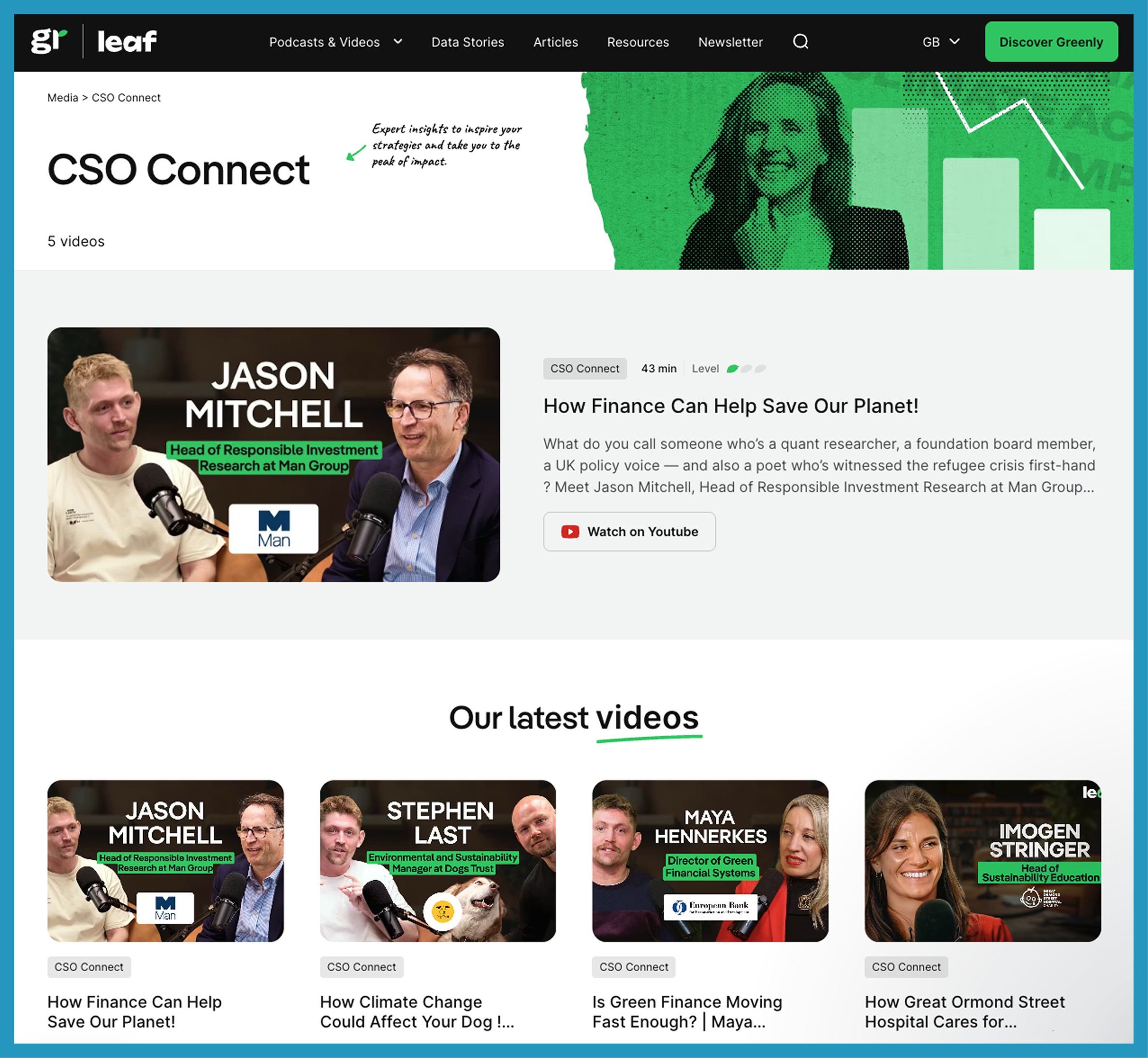
Why it’s a great example of creative content marketing
One is a career podcast you listen to for tactical insights during work hours. The other is for inspiration during your commute or downtime. Different purposes, different emotional spaces, different value propositions – keeping them separate means each can serve its specific audience moment better.
The separated mini-brand also creates editorial distance. Leaf Media by Greenly positions the content as educational media first, company marketing second.
Actionable insight for your next campaign
Do your content series have a clear purpose, or are you trying to cover everything in one podcast/blog/webinar series?
Which creative content marketing example should inspire your next campaign?
The examples here span different formats, channels, and approaches – from editorial platforms to interactive dashboards to video series to crowdsourced research reports.
What they share is creative thinking that goes beyond “let’s write another blog post” or “let’s chop up our webinar into clips.”
These brands found formats that genuinely serve their audience, align with their product or values, and create something memorable in a sea of forgettable content.
Looking for more content marketing inspiration?
Subscribe to This Month In Content for creative content marketing examples that’ll inspire your next campaign, delivered every two weeks.
FAQs
What is creative content marketing?
Creative content marketing goes beyond standard blog posts and generic social media content to create memorable experiences that genuinely engage your audience – fresh formats and unexpected approaches that cut through the noise. It’s content that makes people think “oh, I hadn’t considered approaching it that way” – like Typeform’s interactive research landing page instead of a static PDF report, or UserEvidence filming marketing conversations on ski slopes rather than in a studio.
What are examples of content marketing?
Content marketing includes everything from blogs and videos to podcasts, research reports, newsletters, interactive tools, and social media content. Strong examples include WePresent’s editorial platform profiling artists worldwide, Lovable’s Discover page showcasing real user projects you can interact with, Agorapulse’s monthly-updated social trends dashboard, and Pinpoint’s Red Flag, Green Flag video series filmed at industry events. What makes content marketing effective isn’t the format itself – it’s whether it provides genuine value to your audience whilst building trust in your brand.
What is an example of a creative marketing strategy?
Sequel’s Game Changers strategy is a brilliant example of creative focus. Rather than spreading themselves thin across multiple formats and channels, they built one recurring webinar series with CMO conversations that’s been running since 2022. They gave it its own logo and navigation spot, expanded it into a mini-brand with a Masterclass Series underneath, and published guides showing how they built it. The strategy works because they committed fully to one format that aligns with their product (webinar software) and consistently delivers value to their audience – proving that doing less but doing it exceptionally well often beats trying to be everywhere at once.
What are some examples of successful content marketing?
Successful content marketing delivers value whilst naturally showcasing what makes a brand different. Typeform’s Get Real campaign surveyed 1,300 people about influencer marketing and created an interactive landing page with embedded video responses, sparking organic LinkedIn conversations whilst demonstrating their survey platform’s capabilities. Air’s Zoltair Speaks asked 20 marketing leaders for one prediction each about 2026, keeping it simple whilst using contributors as a distribution engine. Greenly runs two separate climate podcasts under Leaf Media serving different audience needs. What makes these successful is that they provide genuine value for a specific target audience, even if you never become a customer – which is exactly what builds long-term brand trust and awareness.
What are some video content marketing examples?
UserEvidence’s The Long Game films conversations with marketing leaders whilst they’re golfing or skiing, creating episodic content viewers actually want to watch rather than typical business podcast footage. Pinpoint’s Red Flag, Green Flag series filmed talent acquisition professionals at an industry event giving reactions to common candidate scenarios – creating distinctive short-form video for LinkedIn and YouTube Shorts. Both examples show how video content works best when the environment or format itself changes the conversation, making it more engaging than standard talking-head interviews.
What are some evergreen content marketing examples?
Evergreen content remains valuable and relevant over time. Agorapulse’s Social Trends dashboard is evergreen infrastructure that updates monthly with fresh data – the page itself continues driving consistent traffic whilst the data stays current. Lovable’s Discover page showcases user-created projects that demonstrate what’s possible with their platform, with new examples added regularly whilst older ones remain accessible. The key to evergreen content is creating resources people return to repeatedly, whether that’s through genuinely useful information or a format that stays relevant even as specific examples within it change.
What are some branded content marketing examples?
Branded content builds awareness and positions your brand rather than driving immediate conversions. WePresent by WeTransfer operates like an independent culture magazine profiling artists worldwide, with its own editorial team and commissioned work from established writers. Storyarb’s The Standard newsletter is designed like a newspaper featuring marketing leaders sharing career-defining projects, creating editorial distance through the “by Storyarb” framing. Greenly’s Leaf Media runs two climate podcasts under a separate mini-brand with its own microsite and social channels. These examples show how effective branded content could exist independently whilst still building authority for the company behind it.
What are some interactive content marketing examples?
Interactive content requires user participation, creating more engaging experiences than static text or images. Typeform’s Get Real campaign presented research as an interactive landing page where users could explore findings across five chapters with embedded video responses – far more engaging than a traditional PDF report. Agorapulse’s Social Trends dashboard lets users filter social media performance data by region and industry, making insights easier to explore than a static report. Lovable’s Discover page allows visitors to actually interact with functioning apps and websites that users built with their platform. Interactive content works because people engage more deeply with content they can explore or manipulate themselves.

