
Most “types of content marketing” lists just dump content formats at you without explaining when you’d actually use them.
Blogs, videos, podcasts, infographics, case studies, social posts – sure, these are all types of content. But knowing they exist doesn’t help you decide which ones to invest in.
The reality is that the right type depends on what you’re trying to achieve.
Content that drives conversions looks different to content that builds brand awareness. Content that educates prospects about your product serves a different purpose to content that positions your brand in the market.
This post organises types of content marketing by purpose, with real examples of each type done well – so you can figure out which ones make sense for your strategy.
Looking for fresh ideas to level up your content marketing?
Subscribe to Content Ideas for one standout content marketing example delivered every two weeks, for your regular bout of inspiration.
Understanding content types: format vs purpose
When people talk about “types of content marketing,” they usually mean formats – blogs, videos, podcasts, infographics. Or they mean channels – SEO content, social media content, email content.
Those distinctions matter for execution. But they don’t help you decide what to create.
A more useful way to think about content types is by purpose: what are you actually trying to achieve?
Which is why I think distinction between product-led content and branded content types is the most important to delve into:
- Product-led content exists to drive conversion and product education. It helps prospects understand your solution, evaluate alternatives, and make buying decisions. This content lives further down the funnel where people are actively researching solutions.
- Branded content exists to build awareness, visibility, and brand warmth. It positions your brand in the market, demonstrates your values and expertise, and creates connections with audiences who might not be ready to buy yet. This content lives higher in the funnel and focuses on building relationships rather than driving immediate conversions.
The same format can serve either purpose depending on how you approach it.
A video series could be product demos (product-led) or it could be interviews with industry leaders discussing broader challenges (branded).
A research report could compare solution categories to help prospects evaluate options (product-led) or it could analyse industry trends to position your brand as a thought leader (branded).
Most effective content strategies include both – just in different proportions depending on your goals, company context, ICP audience.
Below, I’ve organised 12 more specific types of content marketing under these two umbrellas. Each type includes what it is, when to use it, and real examples of brands doing it well.
Product-led content (for conversion and product education)
Product-led content exists to move prospects closer to buying.
Users are already aware they have a problem and are evaluating solutions, and your job is to help them make an informed decision (ideally in your favour).
Common types of product-led content:
- Case studies
- Product education and use case content
- User-generated content
- Competitor comparison content (bottom-of-funnel SEO)
- Category education content (bottom-of-funnel SEO)
- Tools and templates (mid or bottom-of-funnel SEO)
Case studies
Case studies showcase how real customers use your product and the results they achieved.
They work because prospects want proof that your solution actually delivers – not just features and promises, but evidence from someone like them who succeeded.
The strongest case studies focus on the customer’s story and challenges rather than your product features, with specific metrics that demonstrate impact.
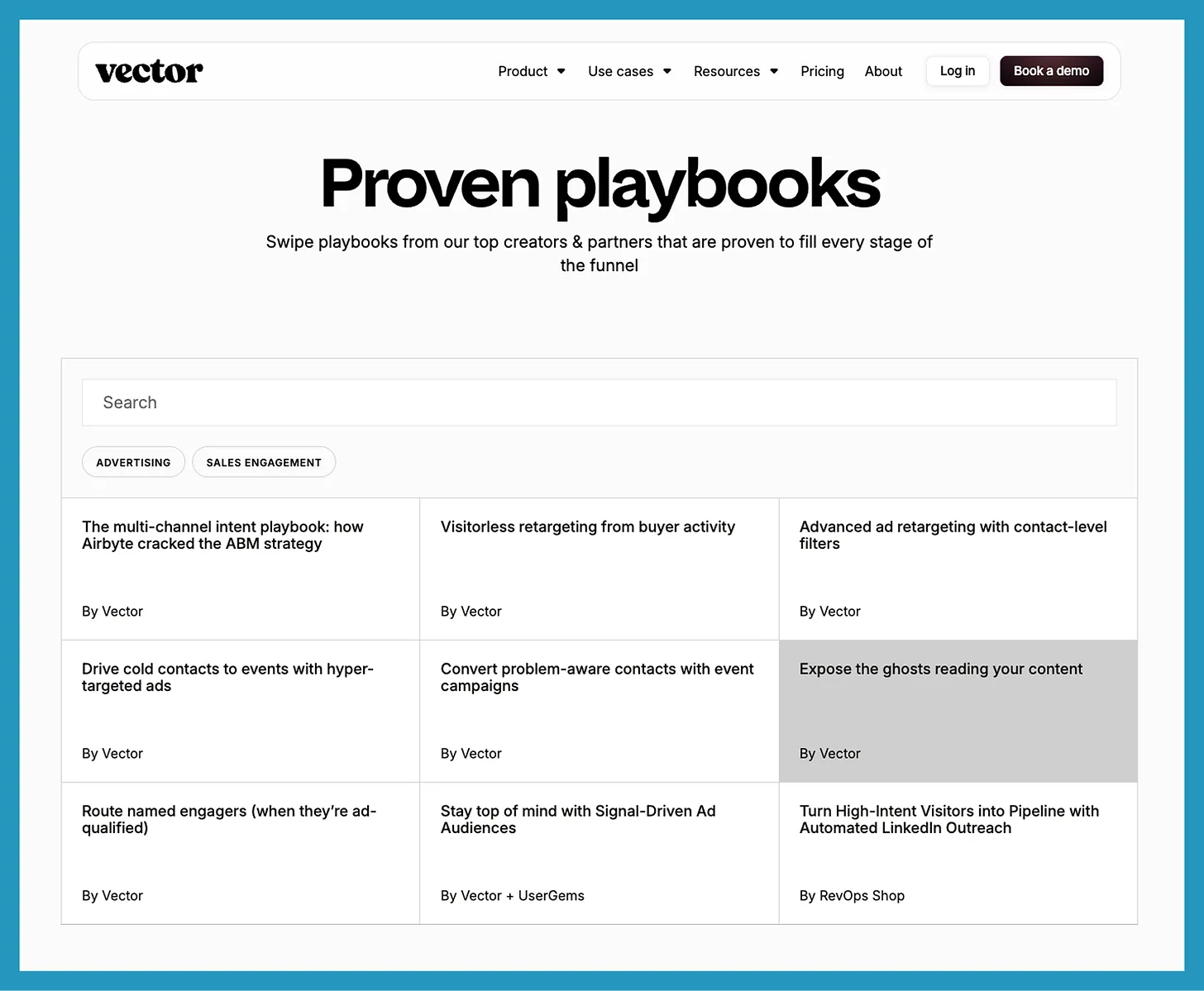
Example: Vector turned traditional case studies into “Proven Playbooks” – deep-dive guides showing exactly how customers built their growth strategies, breaking down actual tactics and processes rather than just claiming results.
Product education and use case content
Product education content teaches prospects and customers how to get value from your product.
This includes product demos or how to tutorials showing different ways to apply your solution, how-to guides for specific workflows, and educational resources that help users level up their skills.
Video or interactive demos work particularly well because they let prospects see the interface, explore workflows, and understand the user experience before committing.
The best demos focus on solving specific problems rather than touring every feature, and tutorials that teach prospects how to achieve something create value whilst showcasing your product’s capabilities.
This content serves prospects evaluating whether your product can solve their specific problem, and customers wanting to get more value from what they’ve already bought.
Examples:
- Notion shares super short product video clips as LinkedIn posts highlighting specific features like keyboard shortcuts or workflow automations – each solving one problem in under 30 seconds.
- Hex published a blog showing how their own data team used their platform to reorganise their data warehouse, working as both case study and tutorial.
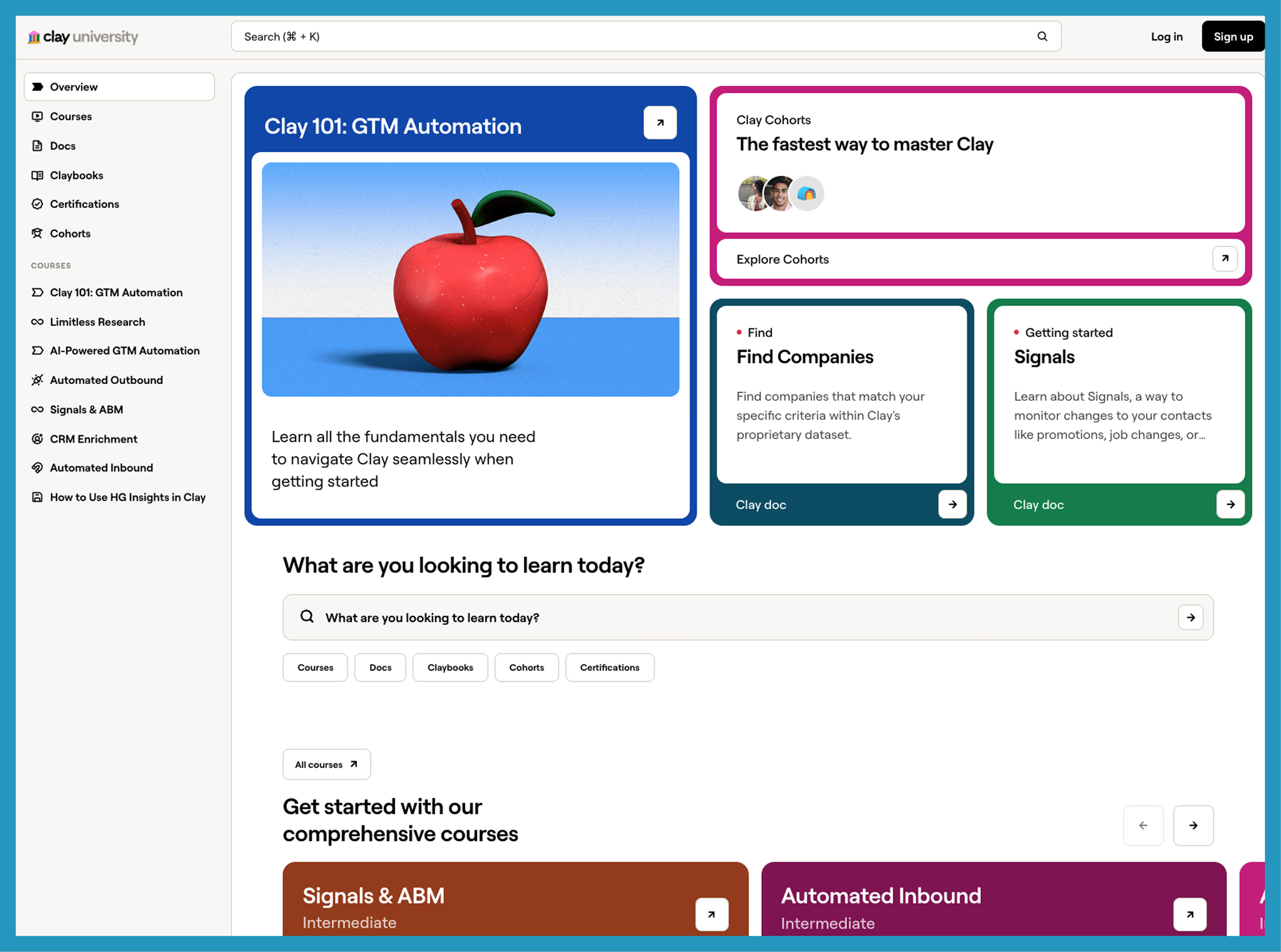
- Clay University is an entire educational platform with courses, tutorials, and use case examples teaching users what’s possible with Clay whilst naturally demonstrating the product’s capabilities.
User-generated content
User-generated content showcases what your customers create or achieve using your product. It works because prospects trust other users more than they trust your marketing, and seeing real people succeed with your product provides social proof that’s hard to replicate.
The strongest user-generated content makes customers the heroes, celebrating their work whilst naturally demonstrating what’s possible with your product.
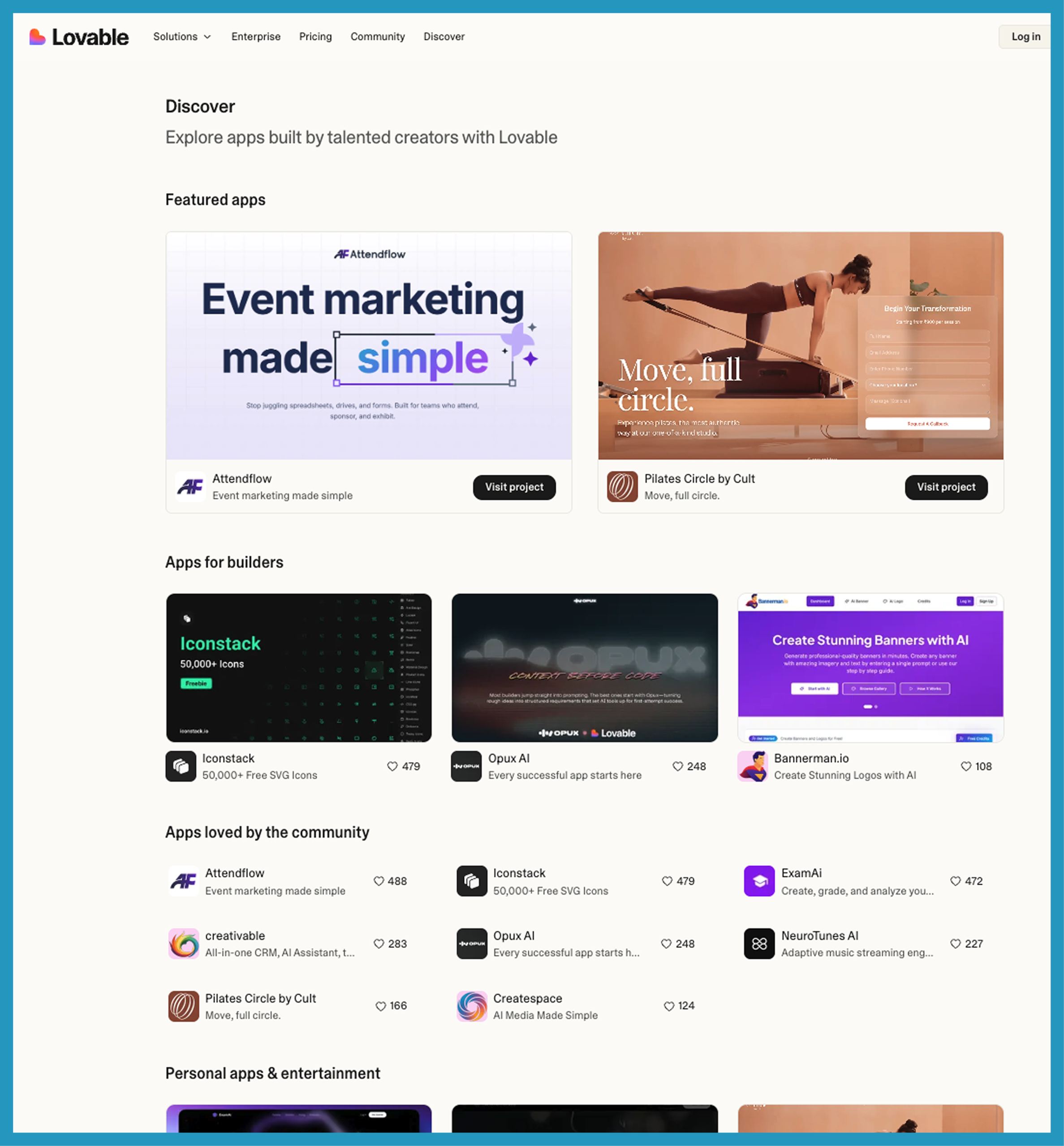
Example: Lovable’s Discover page is a gallery of real projects people have built using their AI builder – you can browse and actually interact with functioning apps, whilst community members like projects to surface the most popular ones, creating a flywheel where user creations become the content library.
Competitor comparison content (bottom-of-funnel SEO)
Competitor comparison content helps prospects evaluate you against alternatives they’re considering.
This includes “[Your product] vs [Competitor]” pages, “[Competitor] alternatives” listicles, and comparison guides that break down differences in features, pricing, and use cases.
These pages target high-intent prospects who are actively researching options, making them valuable for conversion – but they need to be credible rather than one-sided sales pitches.
Examples:
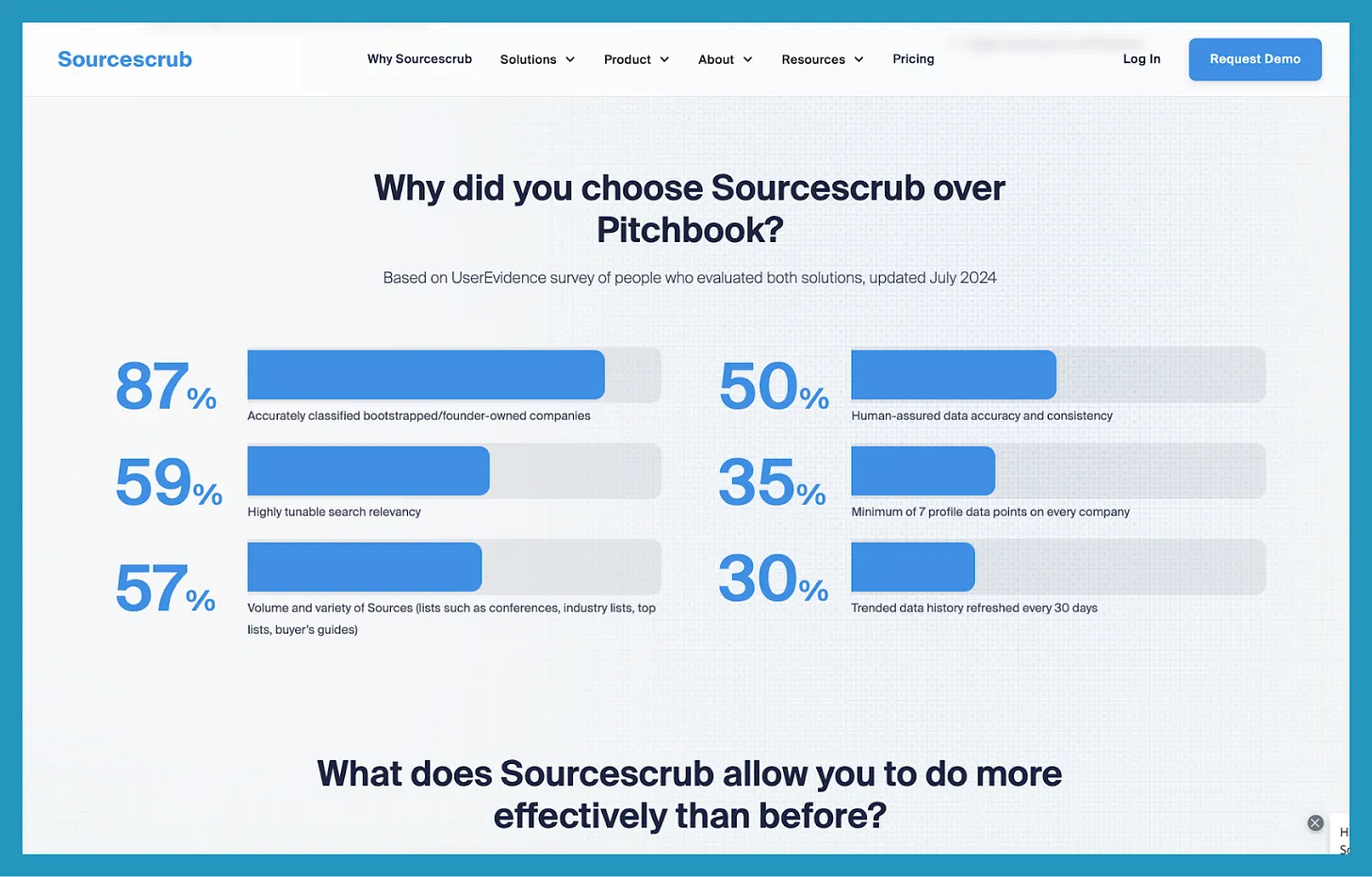
- Sourcescrub built their competitor comparison pages around user survey data – showing what actual users said when surveyed about why they chose Sourcescrub rather than making subjective marketing claims.
- Beehiiv openly targets Kit customers with BOFU content targeting Kit keywords and offers for customers migrating to Beehiiv – aggressive, but effective for reaching prospects actively evaluating alternatives.
Category education content (bottom-of-funnel SEO)
Category education content helps prospects understand the solution category itself – not your specific product, but the broader options available for solving their problem.
This includes guides like “What is [category]” or “How to evaluate [solution type]” or “[Category] buyer’s guide.”
This content targets prospects earlier in their research, before they’ve narrowed down specific vendors. It builds trust by helping them make informed decisions rather than pushing your product immediately.
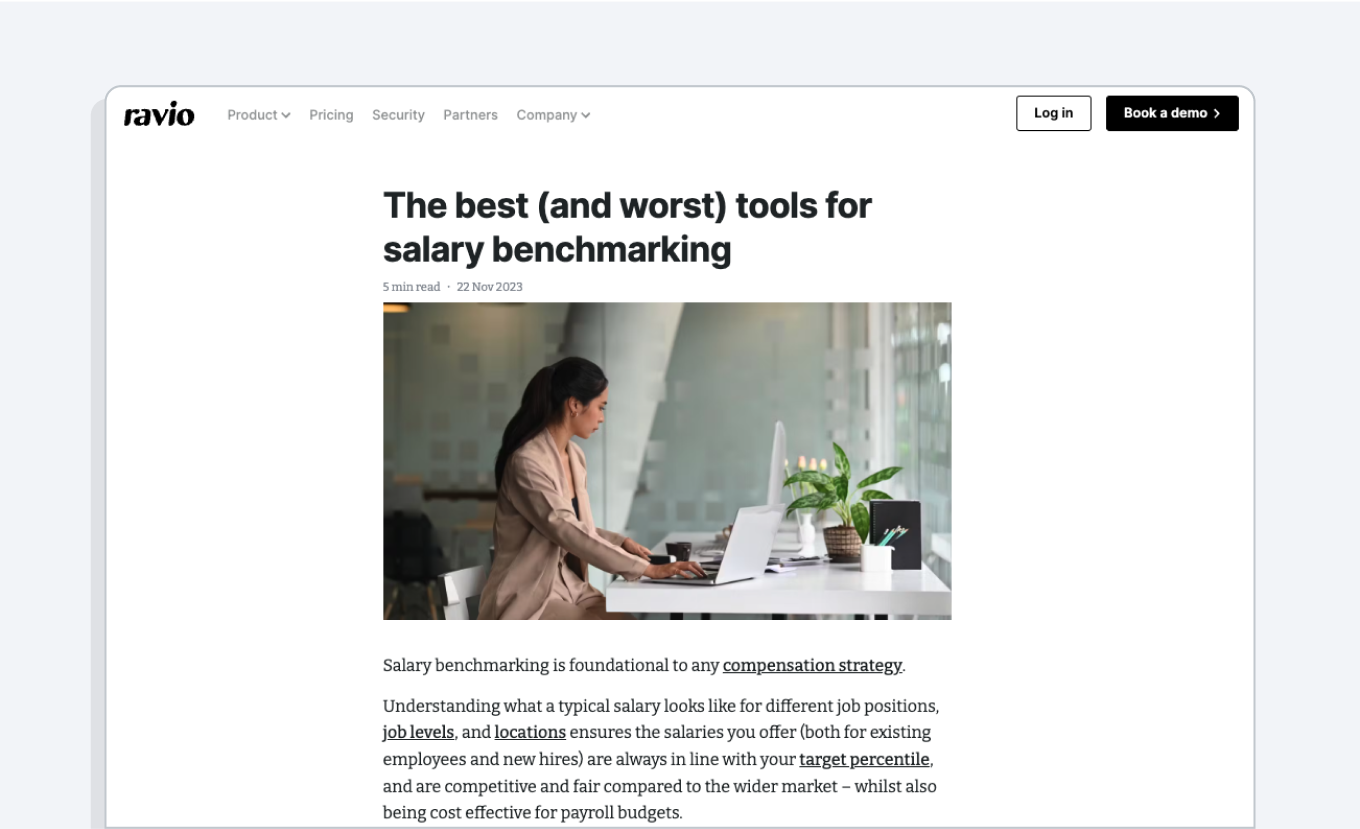
Example: Ravio creates content helping users evaluate salary benchmarking options – from “Best salary benchmarking tools” listicles covering multiple options, to “Compensation management software: Everything you need to know” category guides, to “The pros and cons of salary surveys” and evaluation frameworks. It positions them as experts in the space whilst naturally demonstrating their understanding of the problem.
Tools and templates (mid or bottom-of-funnel SEO)
Free tools and calculators provide immediate value whilst capturing prospects who are showing early signs of the problem you solve. They work because they’re genuinely useful for a specific task right now – but that task often signals a bigger need developing.
The best tools solve problems your audience faces at the moment they’re starting to think about the broader challenge, creating natural touchpoints before they’re actively looking for paid solutions.
Examples:
- Ravio created salary benchmark landing pages for every country, industry, and job role – when someone searches “UK salary benchmarks” or “India salary benchmarks“, they’re likely hiring and looking for data. Ravio gives them the free benchmark they need whilst introducing them to the product, and the programmatic SEO approach means they can scale these pages across every relevant search term.
- Flow Agency released a free Looker Studio dashboard tracking traffic from ChatGPT and other LLM sources in Google Analytics – when marketers start tracking LLM traffic, they’re showing early interest in optimizing for AI search before they’re actively looking for services.
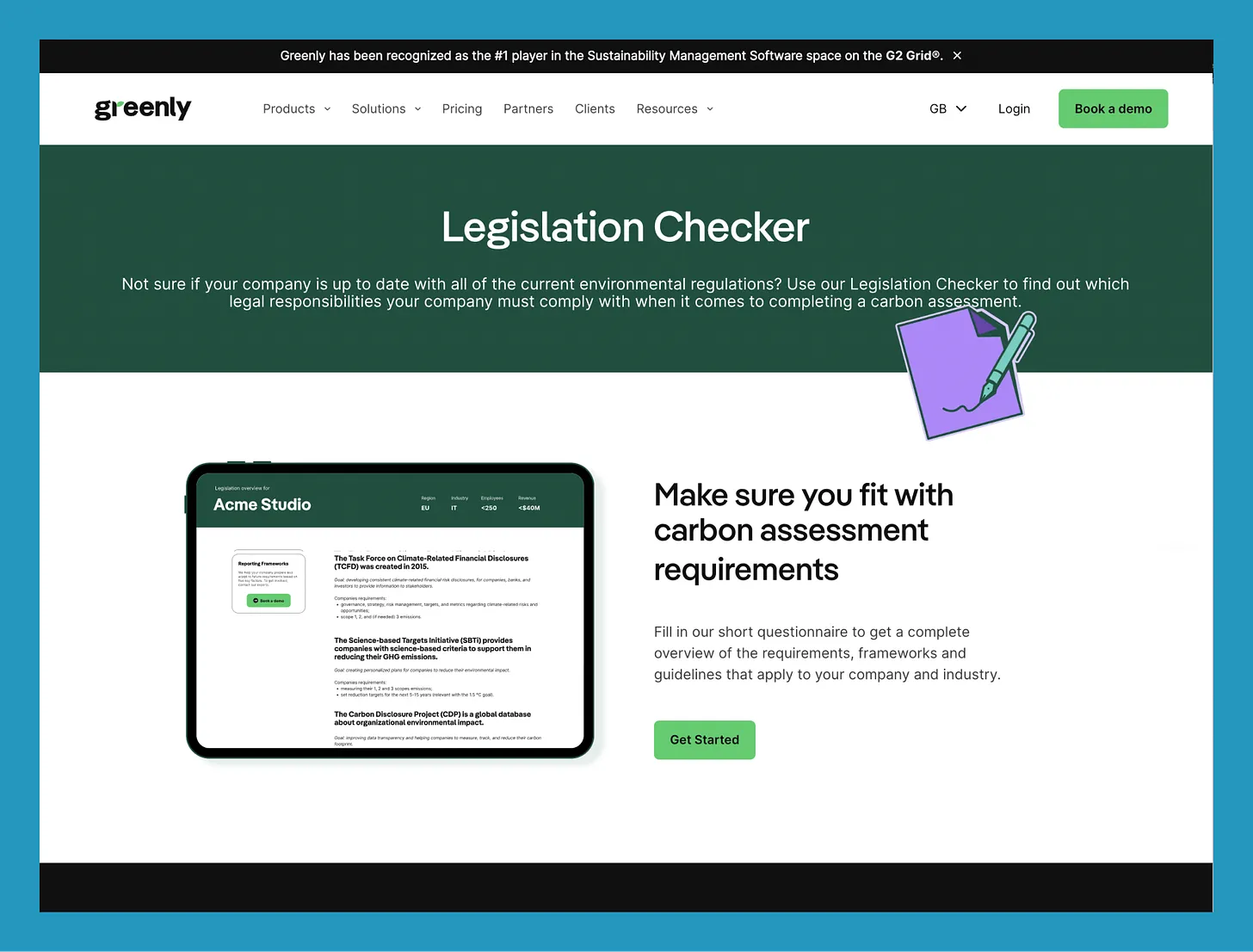
- Greenly’s Legislation Checker helps companies understand which sustainability regulations apply to them – the moment they’re figuring out compliance requirements is exactly when they’re starting to realize they’ll need proper sustainability software to actually manage reporting and compliance.
Get fresh content marketing inspiration for your strategy – product-led, branded, and everything in between.
One standout example every 2 weeks.
Branded content (for awareness, visibility, and brand warmth)
Branded content exists to build awareness and position your brand in the market.
It’s not about moving prospects to buy right now – it’s about creating connections with audiences who might not be ready to buy yet, demonstrating your values and expertise, and building the kind of brand warmth that eventually drives inbound interest.
Common types of branded content:
- Editorial content
- Video content
- Podcast content
- Original research content
- Interactive content
- Webinar series
- Newsletter content
- Social media content
Editorial content
Editorial content is journalism-style articles, essays, and stories. It could be industry analysis, cultural commentary, or explorations of topics your audience cares about.
The strongest editorial content could exist as an independent publication – it’s that good. It builds brand authority by demonstrating your perspective and values rather than promoting your features.
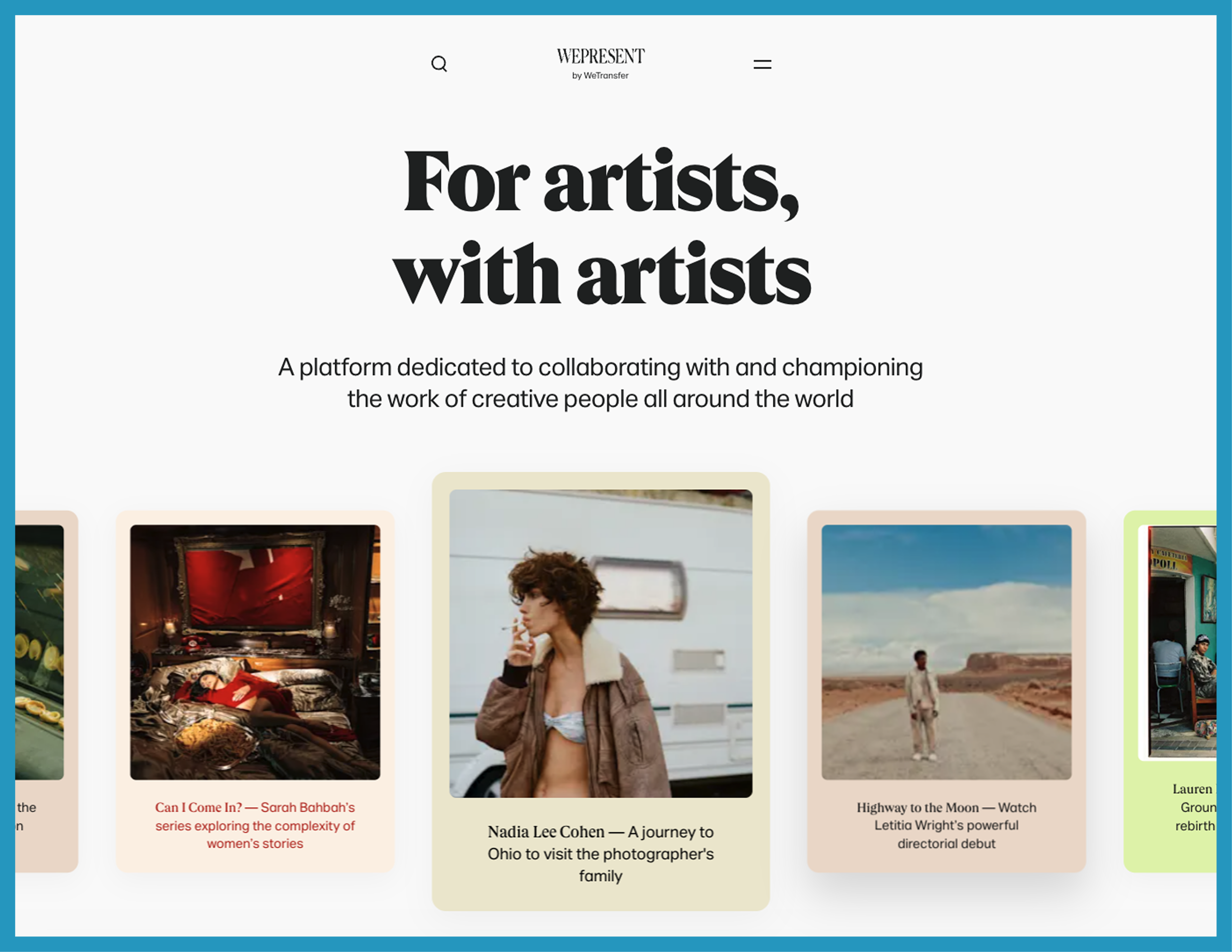
Example: WePresent by WeTransfer is a digital arts platform profiling artists across photography, film, music, design, and writing – with its own editorial team, commissioned work from established writers, and recurring series. It operates like genuine journalism rather than branded content, positioning WeTransfer as patrons of the arts through sustained investment in creative work.
Video content
Video content spans everything from short-form social clips to long-form documentary-style series. It works because video is highly engaging, lets you showcase personality, and creates stronger emotional connections than text alone.
The best branded video content entertains or educates first, with brand integration feeling natural rather than forced.
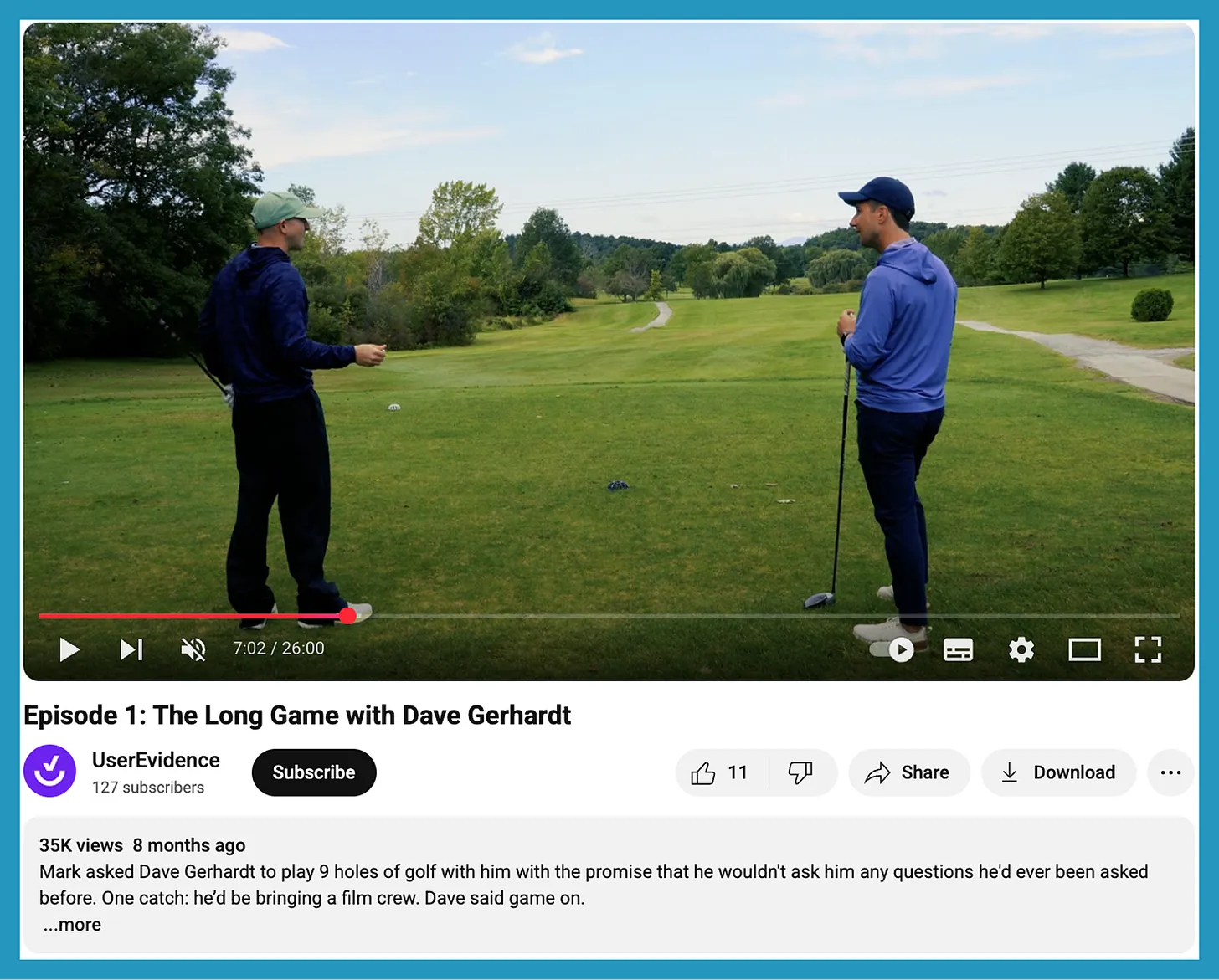
Examples: is a YouTube series where they film conversations with marketing leaders whilst doing activities they love – golfing in Vermont, skiing in Jackson Hole. The environment changes the conversation, creating episodic content viewers actually want to watch rather than typical business podcast footage. Read the full breakdown in Content Ideas – September 2025.
- UserEvidence’s ‘The Long Game’ is a YouTube series where they film conversations with marketing leaders whilst doing activities they love – golfing in Vermont, skiing in Jackson Hole.
- Pinpoint’s Red Flag, Green Flag series filmed talent acquisition professionals giving reactions to common candidate scenarios – creating distinctive short-form video for LinkedIn and YouTube Shorts, using a trending TikTok format for awareness.
- Typeform’s Get Real campaign includes video responses from survey participants woven throughout their interactive landing page – making human voices the content itself, and lending itself to distribution via social media.
Podcast content
Podcasts let you have in-depth conversations that build deeper connections with your audience. They work well for demonstrating expertise, platforming interesting voices, and creating content people consume during commutes or workouts.
The strongest branded podcasts focus on topics your audience cares about rather than making every episode about your company.
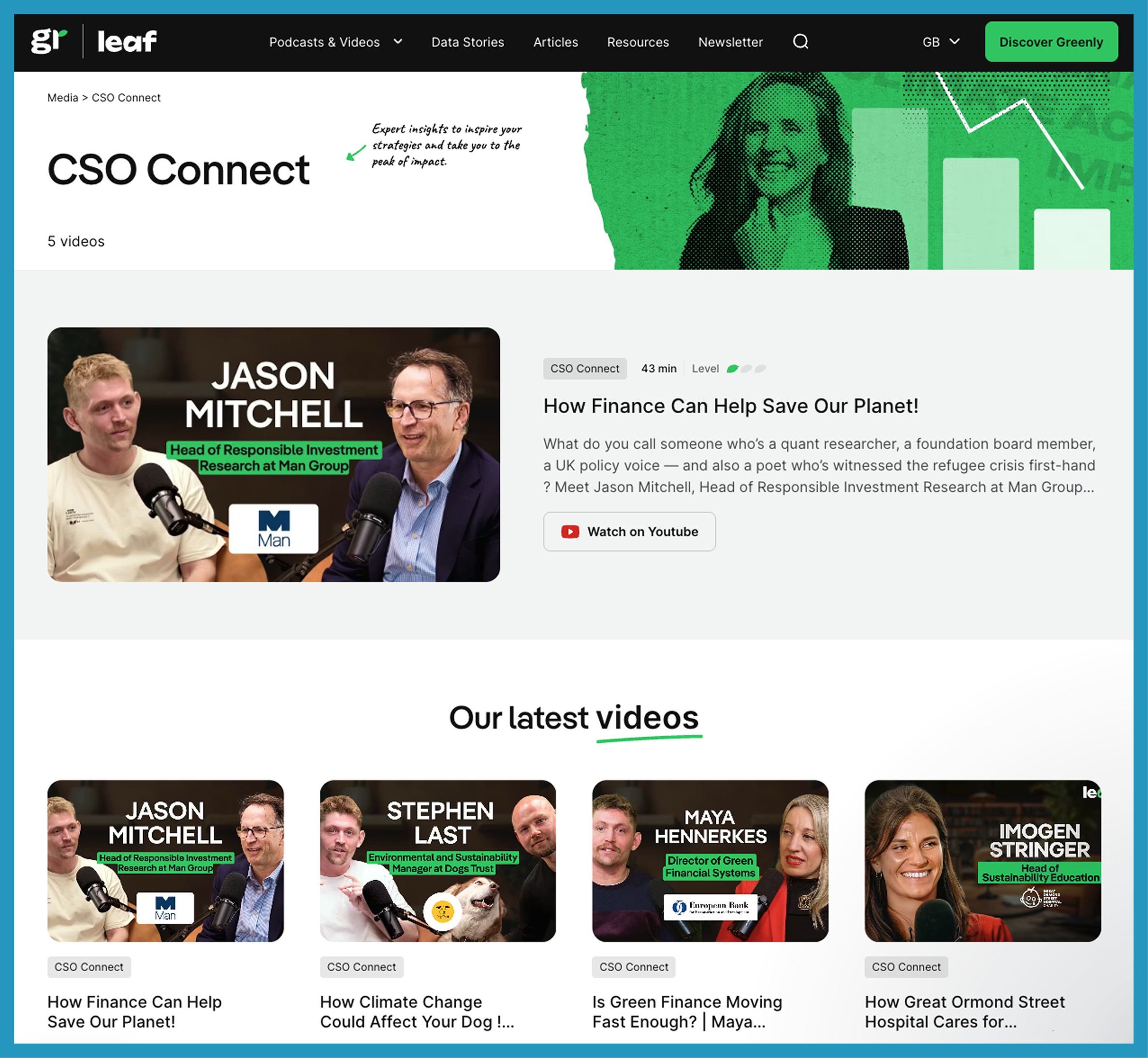
Example: Greenly runs two separate climate podcasts under Leaf Media – CSO Connect for tactical insights from Chief Sustainability Officers, and Eco Echoes for inspirational conversations with climate activists.
Original research content
Original research content uses proprietary data from your product or surveys you’ve conducted to surface unique insights. It positions you as a thought leader whilst providing genuinely valuable data your audience can’t get elsewhere.
The strongest research focuses on insights that matter to your audience rather than just data that makes your product look good.
Examples:
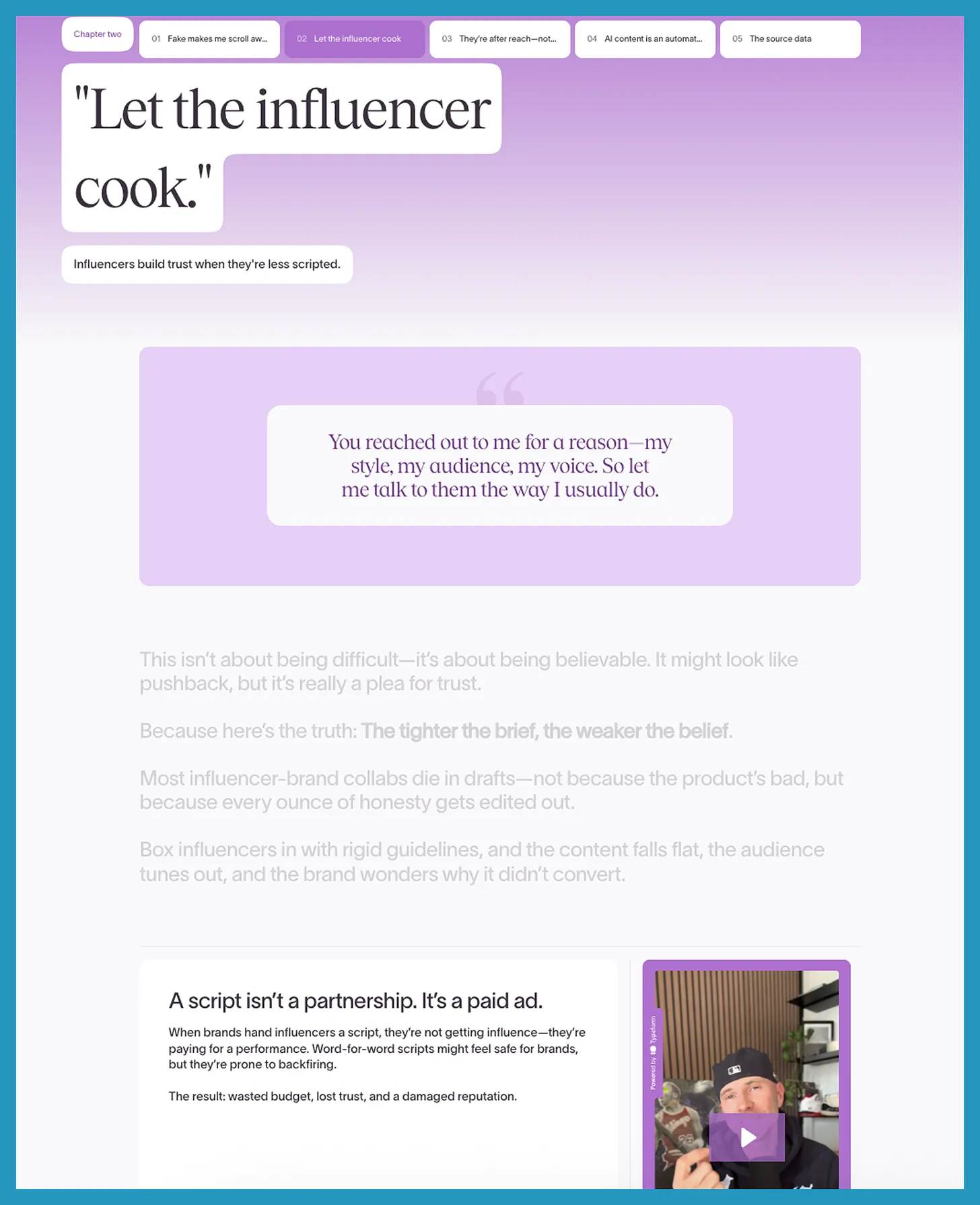
- Typeform’s ‘Get Real’ campaign surveyed 1,300 people about influencer marketing, then created an interactive landing page with video responses from 146 contributors woven throughout – making human voices part of the research itself whilst those contributors became natural distribution advocates for the findings.
- Air’s Zoltair Speaks asked 20 marketing leaders for one prediction each about 2026, keeping it simple whilst using contributors as a distribution engine through paid partnerships sharing their takes on LinkedIn.
- Ravio’s annual Compensation Trends report analyses hiring, attrition, salary changes, and shifts in benefits like equity using data from their platform. They collaborate with compensation experts, VCs, and consultants to bring human commentary into the data, supporting LinkedIn distribution through partnerships. The annual campaign has become a known moment HR teams plan around, repurposed into SEO blogs targeting trends keywords, and it’s something the brand is recognised for – whilst subtly demonstrating what their compensation data product can do.
Interactive content
Interactive content requires user input or participation, creating more engaging experiences than static text or images. This includes quizzes, assessments, interactive data visualisations, or tools that let users explore information dynamically.
It works because people engage more deeply with content they can interact with, it provides a memorable experience that links with the brand, and it often provides personalised value based on defined inputs.
Interactive formats can also enhance other content types – original research presented as an interactive experience rather than a static PDF creates more engagement and makes insights easier to explore.
Examples:
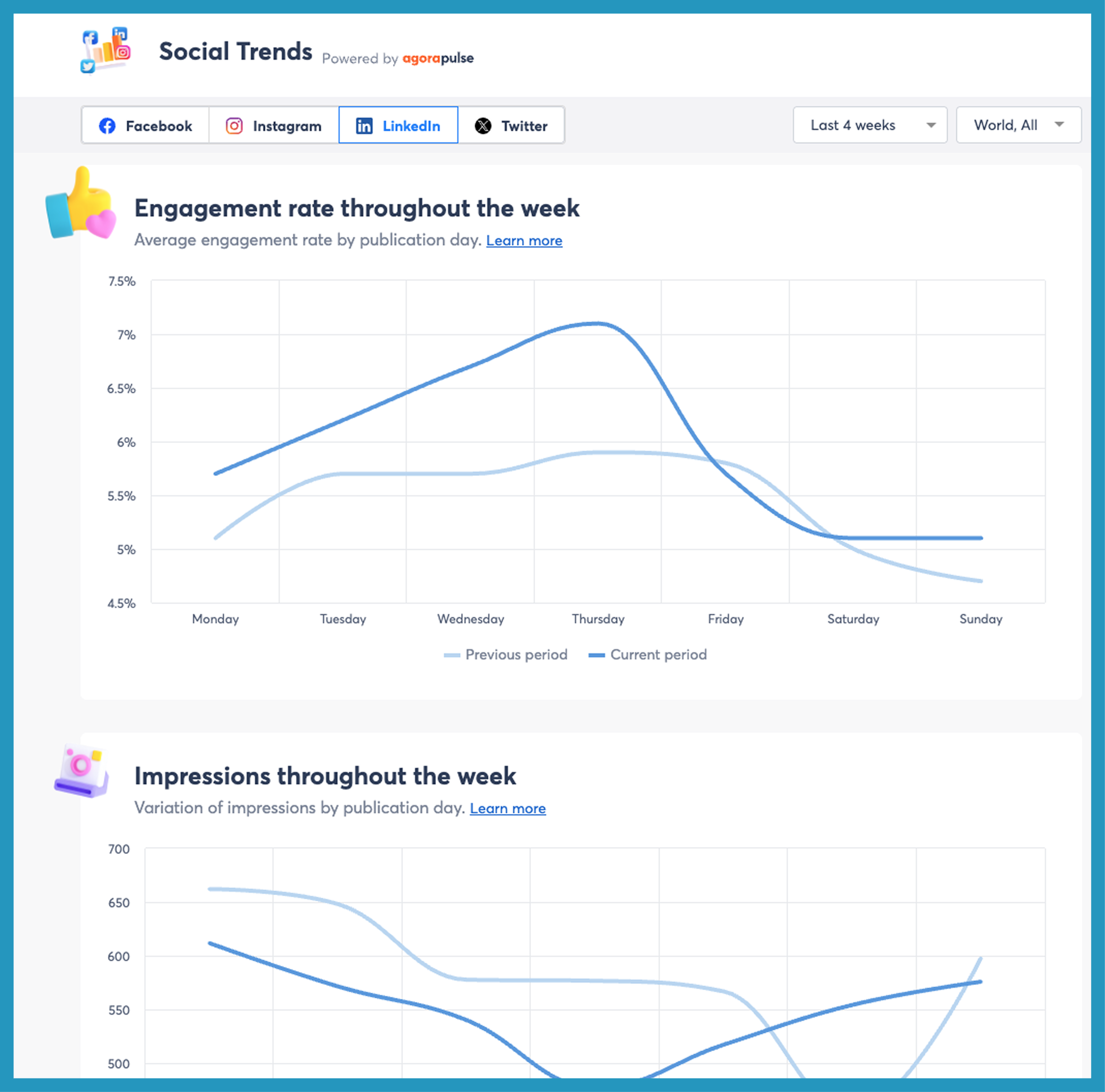
- Agorapulse’s Social Trends dashboard updates monthly with fresh social media performance data that’s filterable by region and industry – giving social media managers real benchmarks they can return to regularly, whilst matching how their audience actually wants to consume data rather than releasing a static annual PDF.
- Typeform’s ‘Get Real’ campaign presented their research as an interactive landing page where users could explore findings across five chapters with embedded video responses – creating a more engaging experience than a traditional report whilst making the insights easier to navigate.
Webinar series
Webinars are live or recorded sessions featuring conversations with industry experts, educational content, or deep-dives into research and insights. They work for building relationships with your audience whilst platforming voices they want to hear from.
Webinars can be one-off events tied to specific launches or campaigns, or recurring series with consistent formats and regular schedules that audiences come to expect – more like a TV show than scattered events.
Examples:
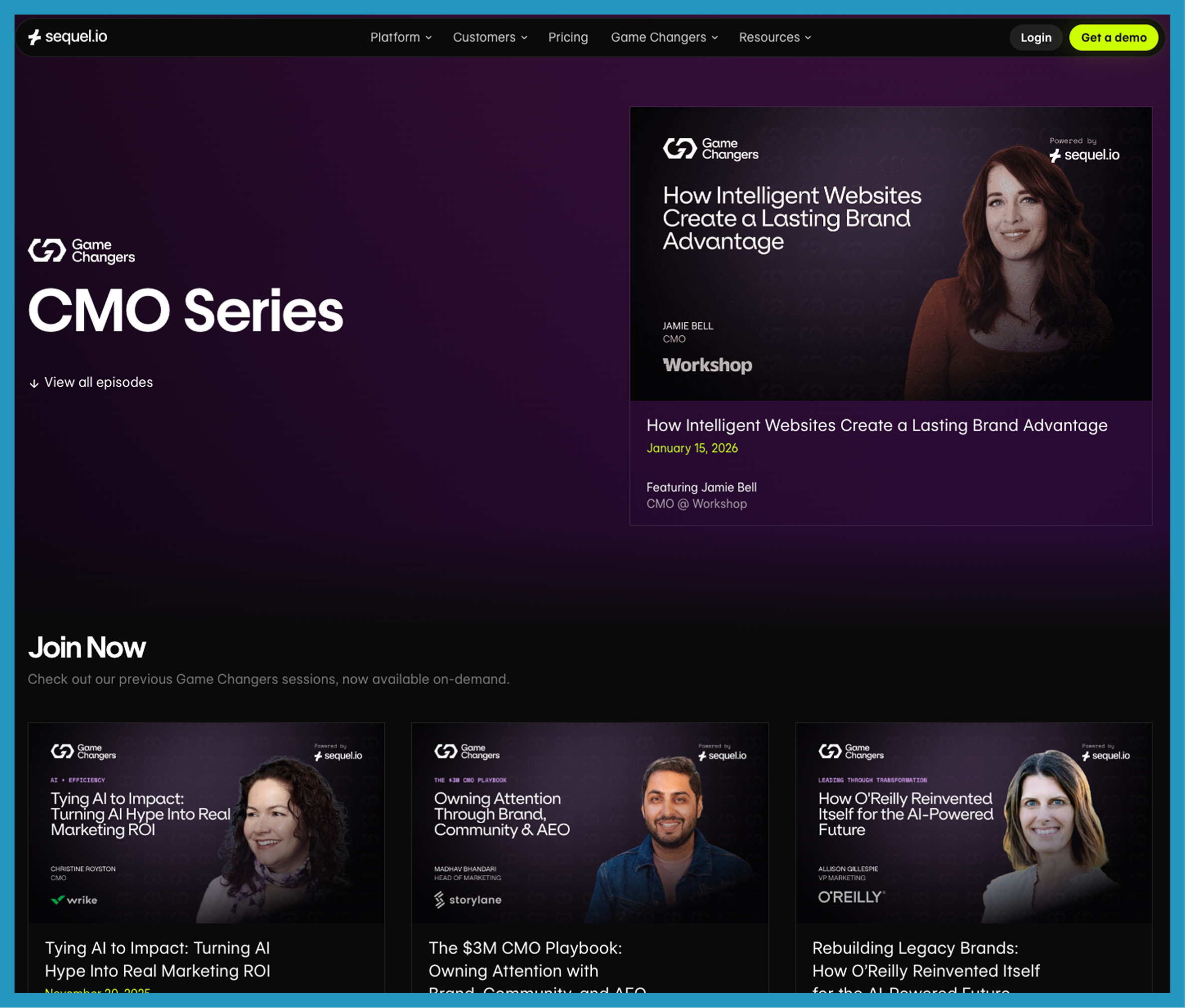
- Sequel’s Game Changers has been running weekly since September 2022 – one recurring format with CMO conversations, repurposed into replays, written summaries, and LinkedIn clips. It’s their entire content focus, with its own logo and spot in the main navigation, plus they’ve expanded with a Masterclass Series underneath the same brand showing how companies use webinars in their marketing, and published several guides explaining how they built their CMO webinar series too.
- Ravio runs launch webinars for their annual Compensation Trends report, bringing together a panel of experts to discuss the top findings – creating a live moment around the research whilst adding human commentary to the data.
Newsletter content
Newsletter content is email-based content that delivers value directly to inboxes. The strongest newsletters provide value on the page itself rather than just being link roundups to content elsewhere.
They work because they land in a space people already check regularly, building ongoing relationships through consistent delivery of useful or entertaining content.
Examples:
- Storyarb’s The Standard is designed like an old-school newspaper – each edition features a marketing leader sharing career-defining projects or trending topic takes, with repeatable sections like “From our marketing-inspo file to yours.” The newspaper aesthetic and “by Storyarb” framing creates editorial distance, making it feel like industry publication rather than vendor newsletter.
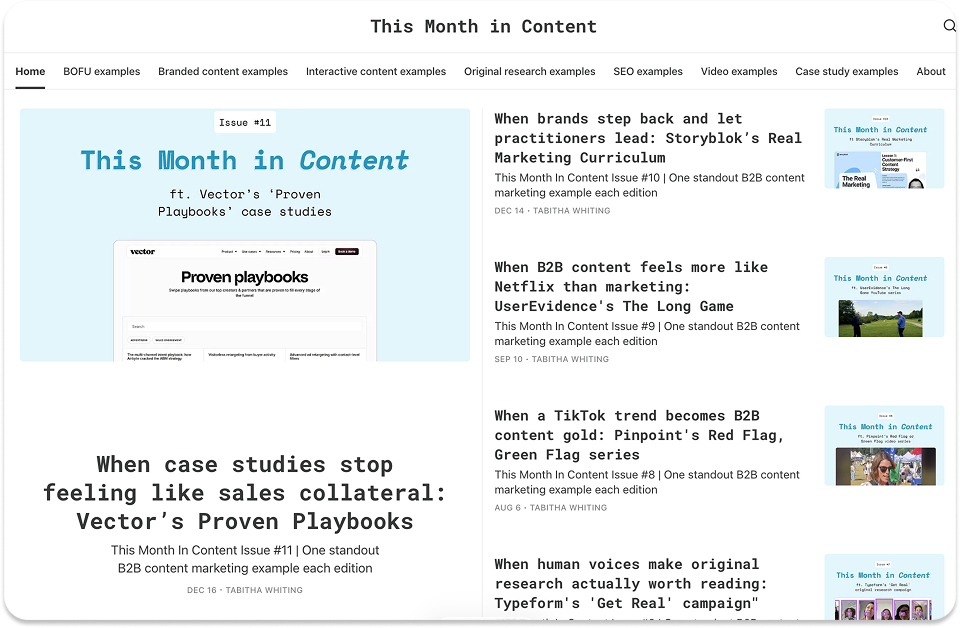
- Content Ideas breaks down one standout B2B content marketing example every two weeks – analysing what they did, why it works, and what you can learn from it. The consistent format helps content marketers stay sharp on creative approaches whilst building a library of inspiration they can reference when planning their own B2B content marketing strategy.
Social media content
Social media content builds visibility and makes your brand feel human through regular presence on platforms your audience uses. This includes founder or employee posts, short-form video, influencer partnerships, or user-generated content campaigns.
The strongest social content feels native to the platform and provides entertainment or value rather than just promotional messages.
Examples:
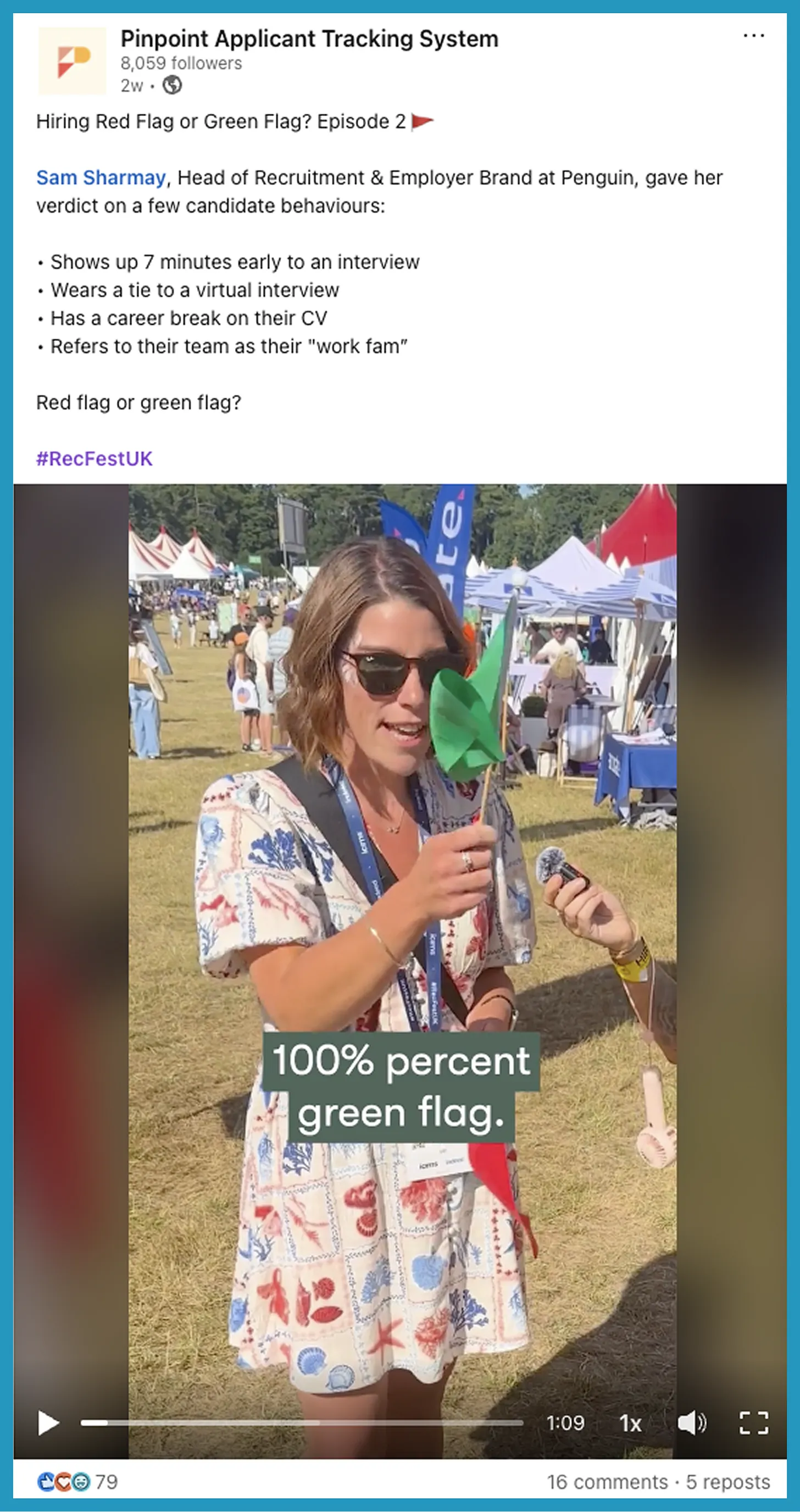
- Pinpoint’s Red Flag, Green Flag series filmed talent acquisition professionals at RecFest giving reactions to common candidate scenarios – creating distinctive short-form video content based on a trending format.
- Beehiiv’s CEO Tyler Denk posts regular ‘building in public’ content whilst other team members post frequently, creating a flywheel where brand visibility makes users want to share their own Beehiiv experiences. From Content Ideas #1 – October 2024
- Typeform worked with influencers who participated in their ‘Get Real’ research to distribute findings to their audiences through paid partnerships, turning contributors into authentic advocates.
Which types of content marketing should you use?
The types you choose depend entirely on what you’re trying to achieve.
If you need pipeline now, focus on product-led content that moves prospects closer to buying – case studies, product demos, competitor comparisons, tools that provide immediate value.
If you’re building for long-term brand recognition, invest in branded content that creates awareness and trust – editorial platforms, video series, original research, social presence (and choose based on a pre-defined content strategy that guides your decision-making).
The key is understanding the purpose each type serves, so you can make strategic decisions about where to invest rather than just copying what everyone else is doing.
Get fresh content marketing inspiration for your strategy – product-led, branded, and everything in between.
Subscribe to Content Ideas for one standout example of content that actually drives results, delivered every two weeks.
FAQs
What is content marketing?
Content marketing is creating and sharing information or entertainment that provides genuine value for your target audience. This includes blogs, videos, research reports, social media posts, podcasts, and more. The primary goal is typically to build brand awareness and relationships with an engaged audience – so when they eventually need what you offer, you’re the first company they think of. However, content marketing can also have a direct impact on revenue, educating target users on a product, targeting high intent SEO keywords to raise visibility with in-market buyers, and supporting larger-scale campaigns.
Why is content marketing important?
Content marketing builds relationships that eventually drive revenue. Unlike paid ads that stop working when you stop paying, effective content continues delivering value over time – attracting prospects through search, demonstrating your expertise, and building trust before anyone’s ready to buy. When someone finally needs what you offer, you’ve already established yourself as the obvious choice.
What are the different types of content marketing?
Most people think of content types by format – blogs, videos, podcasts, infographics, case studies, webinars, and so on. But a more useful way to categorise content is by purpose: what you’re actually trying to achieve.
Product-led content (like competitor comparisons, product demos, and case studies) exists to drive conversions by helping prospects evaluate solutions.
Branded content (like editorial platforms, video series, and original research) builds awareness and positions your brand in the market. Understanding this distinction helps you choose the right formats for your goals rather than just copying what everyone else creates.
How many types of content marketing are there?
There’s no definitive number – content marketing includes dozens of formats from blogs and videos to podcasts and interactive tools. What matters isn’t counting every possible format, but understanding what you’re trying to achieve so you can choose the types that actually serve your goals. Some frameworks organise content by format (blog vs video), others by channel (SEO vs social), but the most useful approach is organising by purpose – whether you’re trying to drive conversions (product-led content) or build brand awareness (branded content).
How do you know which content marketing types to use?
Start with what you’re trying to achieve. If you need pipeline now, focus on product-led content that moves prospects closer to buying. If you’re building long-term brand recognition, invest in branded content that creates awareness and trust. Most effective strategies include both types in different proportions depending on your business goals, audience, and where prospects are in their buying journey.

