I’m forever googling for things like ‘content repurposing examples’ – or any other type of content marketing example that you can think of.
The results are rarely what I’m looking for.
I want real-world examples that show me how real brands are using techniques like content repurposing, examples that will give me ideas and inspiration for my own work.
So, I’m taking the notion of ‘be the change you want to see in the world’ to heart, and making the content that I want myself – in this blog post you’ll find:
- Ideas of how to repurpose content
- Repurposed content examples, from brands putting those ideas into action.
Love learning from real examples?
Subscribe to This Month In Content for creative content marketing examples that’ll inspire your next campaign, in every edition.
Ideas of how to repurpose content
Repurposing content seems like a sensible approach in theory, but how do you actually repurpose content that you already have in your company’s content library?
There are two main ways to repurpose content.
Firstly, you can take individual ideas from a large piece of content (like a long-form blog, report, or ebook) and create shorter, standalone content for each of those smaller ideas.
Secondly, you can take existing content in one format, and transform it into a different format, like turning a blog into a YouTube video.
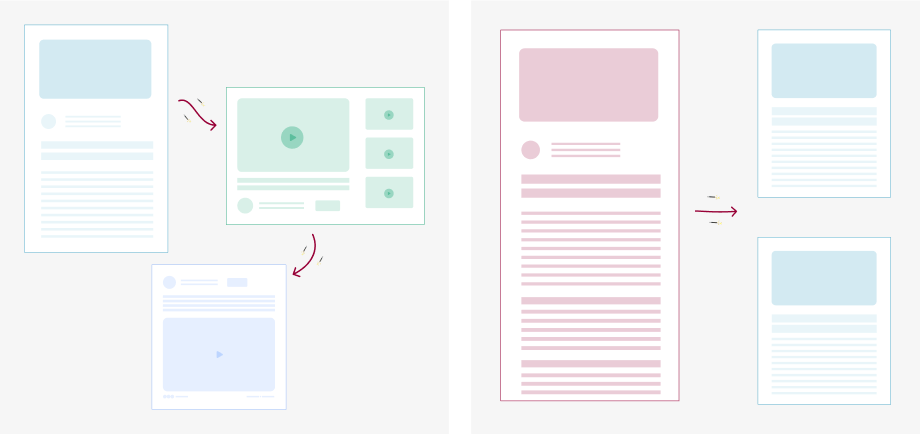
To bring that to life a little more, here’s 11 ideas for how to repurpose content:
- Original research report ➡️ standalone blogs
- Blog post ➡️ LinkedIn carousels
- Podcast episodes ➡️ blog post
- Podcast episodes ➡️ short form video clips for social media
- Webinar or event ➡️ blog post summary
- Webinar or event ➡️ short form video clips of interesting chats for social media
- How-to blog posts ➡️ YouTube ‘how-to’ video tutorial
- Blog post ➡️ podcast guest interview (i.e. a team member features on someone else’s podcast talking about insights from the blog)
- Blog post ➡️ free tool or template
- Blog post series ➡️ summary infographic
This is really only a starting point – every content format could theoretically be repurposed into all of the other content formats, it’s an infinite loop scenario.
In reality, only a small handful of these will be relevant for your brand, so it’s always well worth doing the thinking on your content repurposing strategy before you get started.
Real-world examples of repurposed content
Ideas are good, but examples are what we’re really here for.
So, without further ado, let’s take a look at 11 examples of repurposed content done by content teams in real life – one example for each of the ideas highlighted in the previous section.
- The Shopify Masters podcast – podcast ➡️ blog
- Grace Beverley’s Working Hard, Hardly Working – podcast ➡️ video clips for social media
- Ravio’s Compensation Trends report – report ➡️ blogs
- Lattiverse – event ➡️ blog
- Lattiverse pt.2 – event ➡️ video clips for social media
- Kamma’s insights – blog ➡️ LinkedIn carousel
- Cognism’s explainers – blog ➡️ video
- Tommy Walker’s State of (Dis)Content – report ➡️ podcast guest interview
- Lune’s business case for sustainability – blog ➡️ free tool or template
- Hung Lee’s Recruiting Brainfood – newsletter ➡️ LinkedIn post
- Cosy Homes Oxfordshire’s retrofit explainers – blog post series ➡️ infographic
The Shopify Masters podcast – podcast ➡️ blog
Shopify Masters is a weekly podcast by Shopify, where hosts Shuang Esther Shan and Adam Levinter interview entrepreneurs and industry experts about their experiences and advice for running successful online businesses.
The primary format is an audio podcast, available on platforms like Spotify and Apple Podcasts.
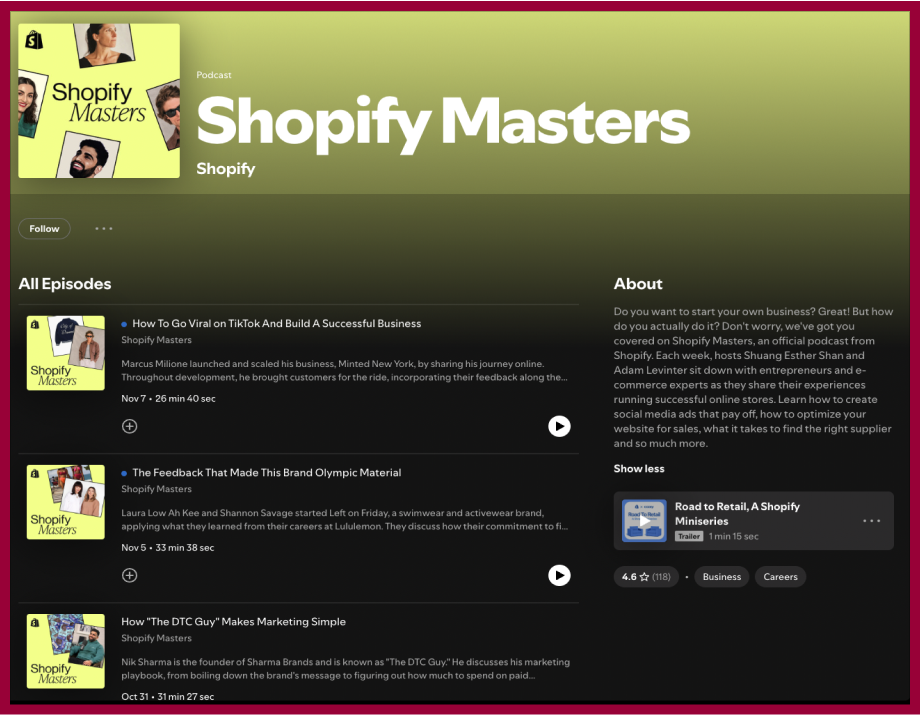
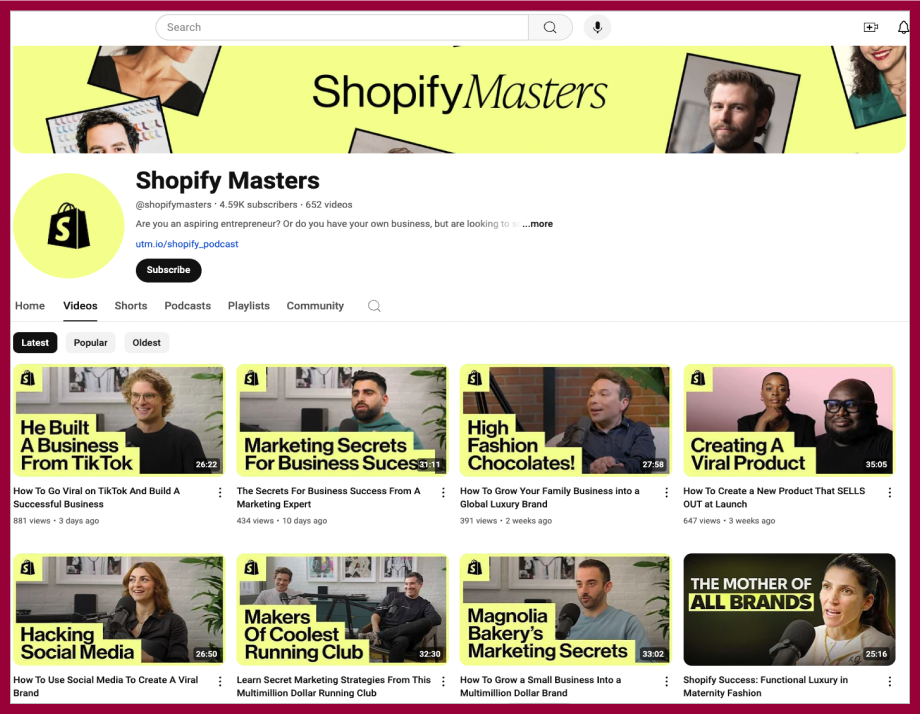
Each podcast episode is also filmed, with the video version of the podcast available via YouTube – a form of content repurposing in itself, using the same episode content across channels to capture both audio and visual listeners.
Beyond these core formats, Shopify’s content team also repurpose every podcast episode into a blog post, with the topic focused on the key lessons each entrepreneur imparts. An episode with Kat Kavner, co-founder of bean brand Heyday Cannings, for instance, was transformed into a blog on viral marketing – with the title ‘A Behind-the-Scenes Look at a Viral Marketing Campaign’.
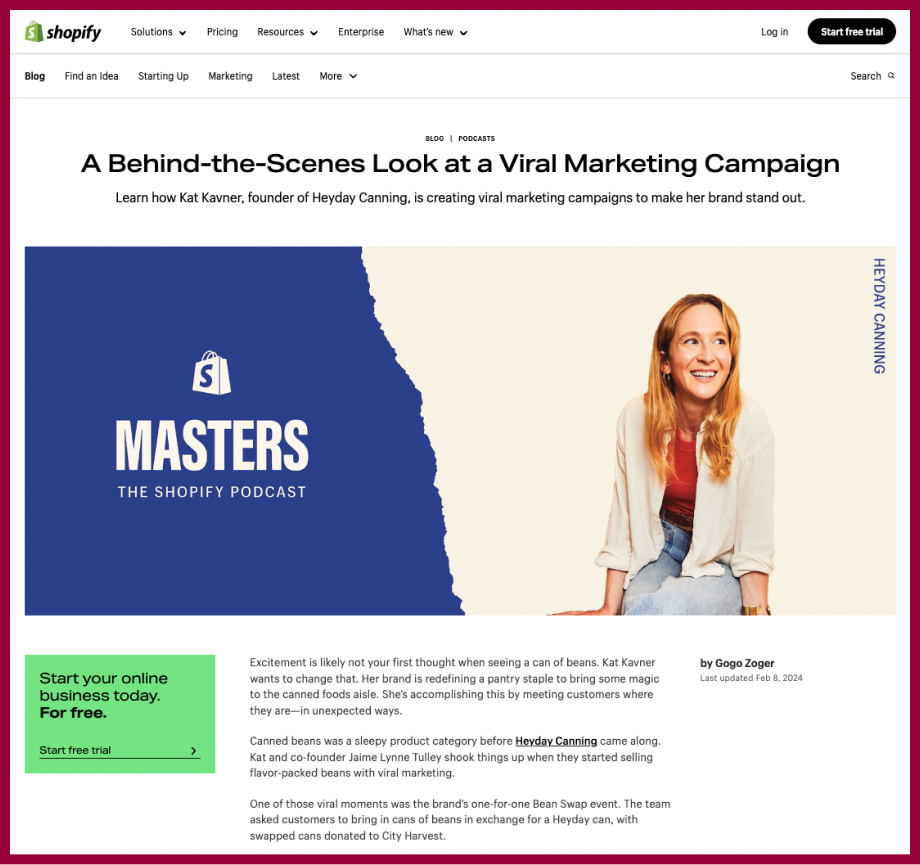
Turning the podcast episode into a written blog extends its reach because not every small business owner in Shopify’s ideal audience will be a podcast listener, some will prefer their content in written form. It also means each episode can be optimised for SEO to further expand reach – in this example, the blog is presumably targeting the keyword ‘viral marketing campaign’, for instance.
Insights from the podcast are then used across other blogs too.
Kat Kavner’s advice from the episode, for instance, features in a blog on using LinkedIn for marketing and a blog on personal selling:
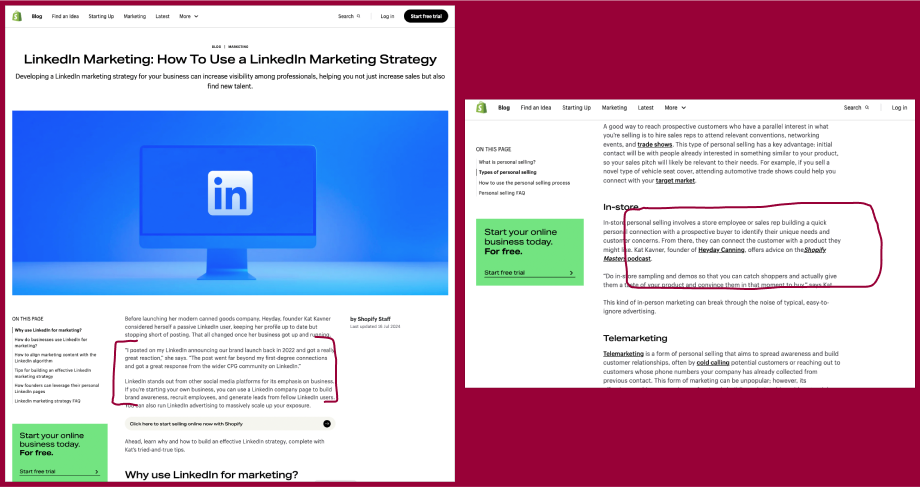
This is especially effective, because every podcast episode is an interview with a subject matter expert for Shopify’s audience – a business owner who has seen major success and growth. Dropping their insights and advice into relevant blogs instantly improves the quality of Shopify’s blogs, making them more trustworthy and valuable for the audience.
Grace Beverley’s Working Hard, Hardly Working – podcast ➡️ video clips for social media
Grace Beverley’s business began as a fitness YouTube channel named GraceFitUK.
As she built a loyal audience as an influencer, she began to monetise her brand, initially through selling fitness programmes and merch products like resistance bands, all still under the ‘Grace Fit’ name.
Over the years she evolved this into two thriving B2C e-commerce businesses: Shreddy (fitness products) and Tala (fashion), as well as being involved in countless other startups as an advisor, investor, or ambassador.
More recently, she’s been using her own business success to develop products and content aimed at other business owners – including her podcast Working Hard, Hardly Working, which centres around conversations between Grace and other successful entrepreneurs.
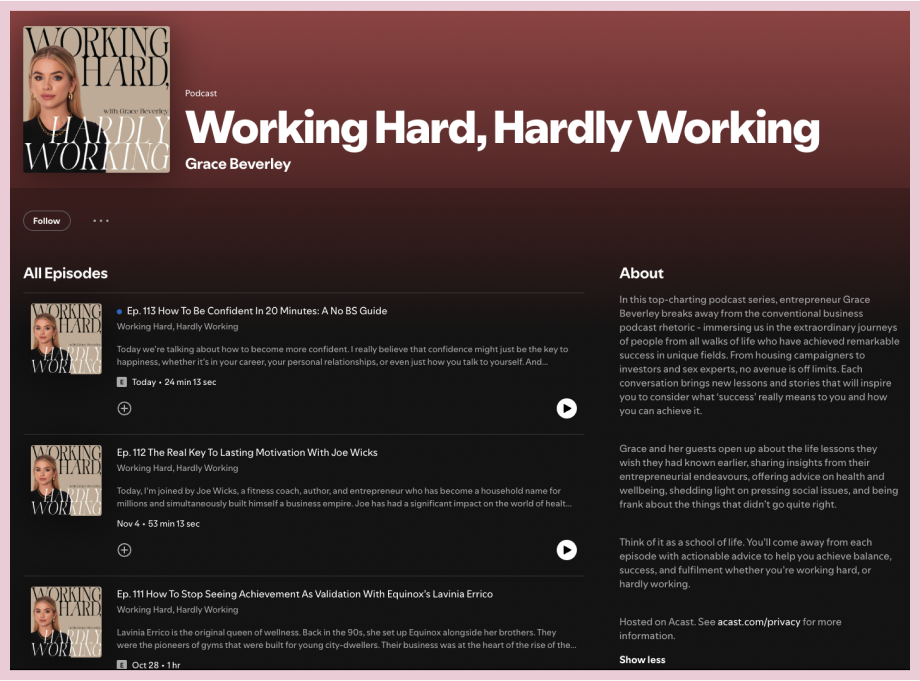
As someone who has built a business empire from a starting point as a YouTube and Instagram influencer, it’s no surprise that Grace is a dab hand at repurposing content for use across the channels that she has a presence on.
Particularly notable is the way that she harnesses short video clips from the podcast episodes across her social media channels.
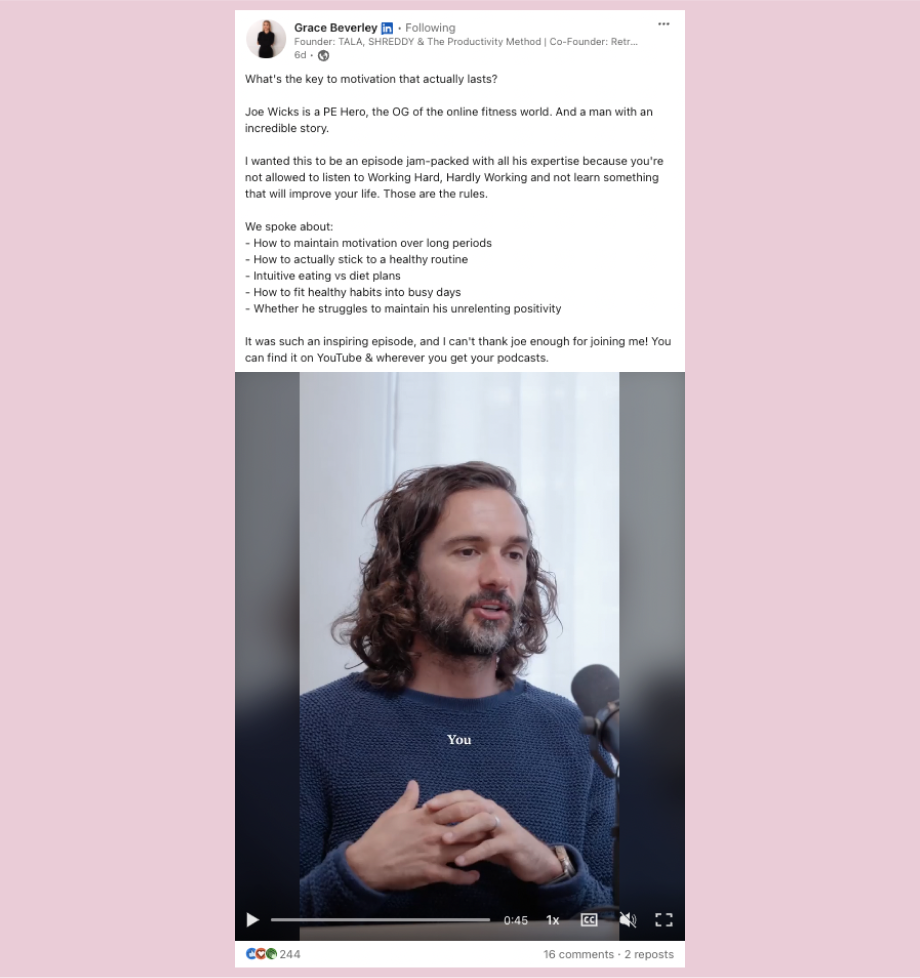
For instance, Joe Wicks featured in an episode of the Working Hard, Hardly Working podcast in November 2024.
Grace shared a 45 second clip of her conversation with Joe as a post on her personal LinkedIn:
And her Instagram:
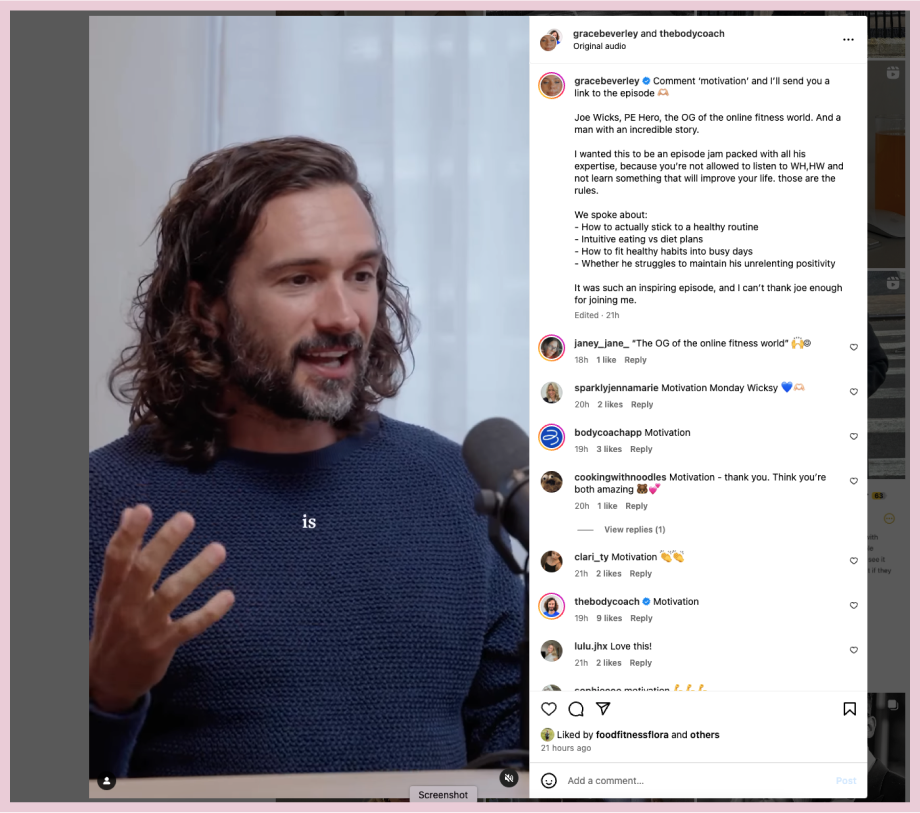
And she’s even re-used her YouTube channel for the podcast – the old GraceFitUK videos are gone, and the channel is now used to house full video versions of the podcast episodes, as well as YouTube shorts for short clips of the conversations.
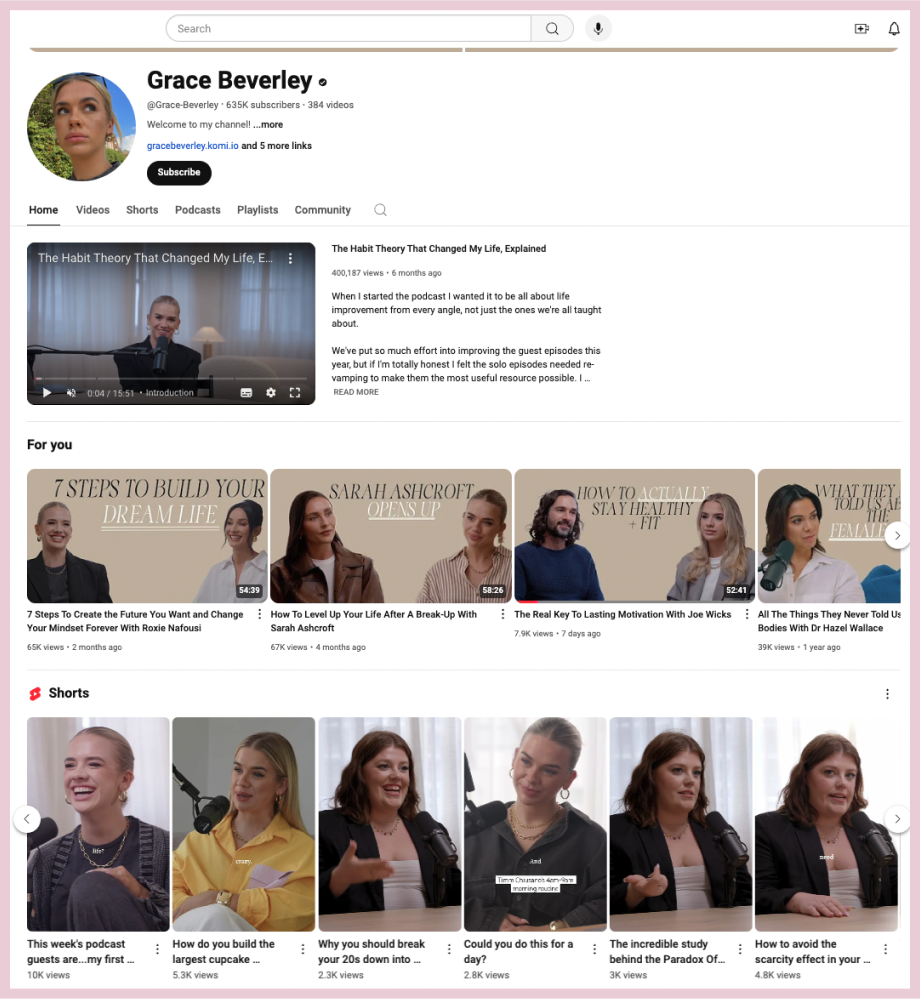
Given Grace’s presence and following across all of those channels already, repurposing the core podcast episode into multiple different formats makes total sense as part of the distribution strategy to maximise the reach of each podcast episode.
Ravio’s Compensation Trends report – report ➡️ blogs
Ravio is a compensation platform for HR and Reward teams which provides real-time salary benchmarking data – as well as a range of compensation management tools, such as salary bands and pay equity analysis.
A core part of Ravio’s content strategy is to draw insights and trends from the compensation database which lies at the heart of the Ravio platform, and turn those insights into uniquely valuable content.
As part of this, in 2024 I led on the launch of the first Ravio Compensation Trends report – a annual report which summarises key trends in hiring and compensation for the previous year from Ravio’s data, and surveys HR and Reward Leaders on their plans and priorities for the following year.

The report is a large-scale undertaking, a time-consuming piece of original research content with lots of stakeholders and moving parts involved. The result is a gated PDF report full to the brim with data and insights. The time and effort involved, and the sheer amount of valuable content created, means it’s even more important to repurpose the content from the report to increase its lifespan, and to maximise its reach and impact.
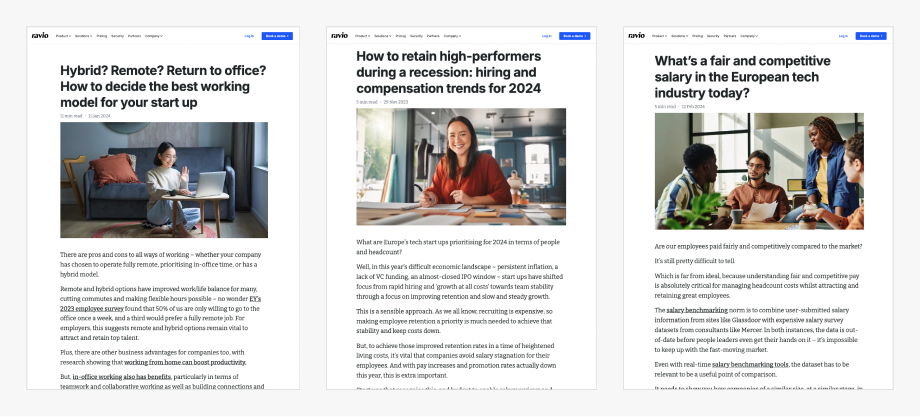
One part of the repurposing plan for the report was to turn each of the key findings and stories that surfaced throughout the report into a standalone blog post for the Ravio blog:
- How to retain high-performers during a recession
- Hybrid? Remote? Return to office? How to decide the best working model for your start up
- What’s a fair and competitive salary in European tech in 2024?
The report findings were also repurposed in many other ways.
From using the key findings as talking points for an in-person event (and the blog post summary of that event too). To using the data in other relevant blog posts, like the average salary increase section in this guide to compensation reviews. To harnessing the data for collaborations like this Techleap x Ravio report on tech startup employment in the Netherlands.
And much more – testament to the fact that one valuable piece of content can keep a content calendar full of opportunities for months.
Lattiverse – event ➡️ blog
HR platform Lattice hosts a free annual conference in San Francisco and London, called Lattiverse.
It’s a day filled with fireside chats, expert panels, and presentations – all of which is full of ideas and insights for valuable content.
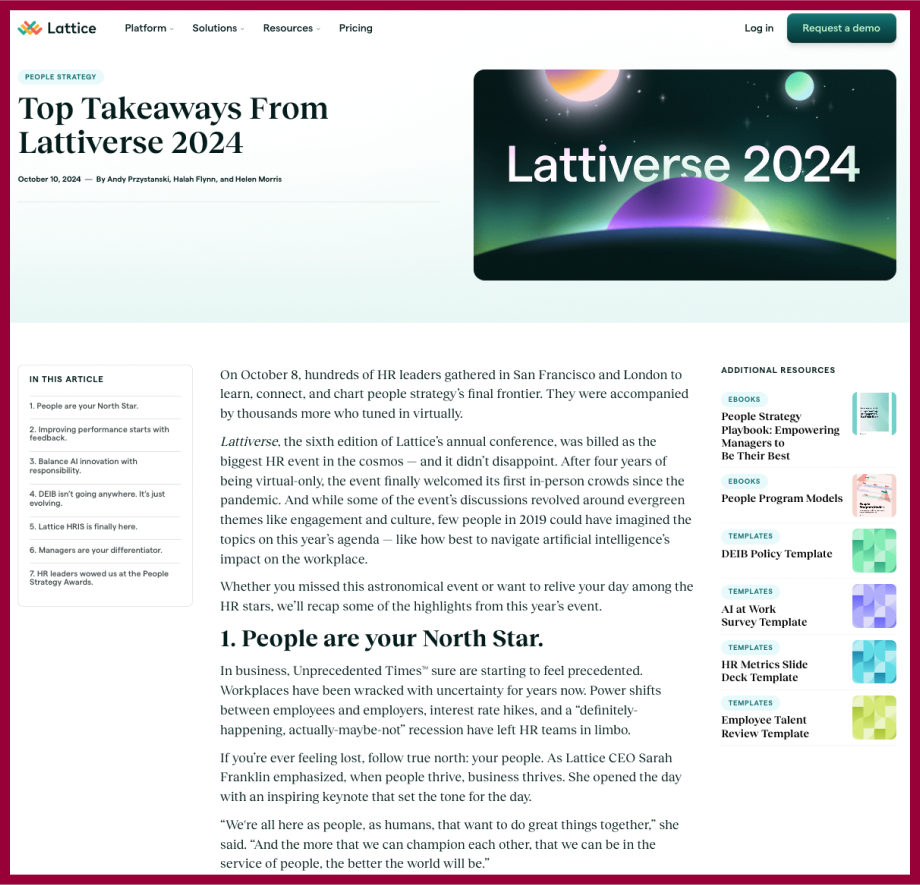
So it makes sense that Lattice’s content team create blog content from the event, pulling all the highlights together into a blog post on ‘top takeaways from Lattiverse 2024’.
Lattiverse pt.2 – event ➡️ video clips for social media
Whilst we’re on Lattiverse, it’s also a great example of repurposing a live event into on demand content – so let’s stick with it for a little longer.
Every Lattiverse session is held in person in San Francisco or London, but also broadcast online for those who can’t make it.
The recordings are made available on demand after the event finishes – hosted on ‘Lattice plus’, a landing page that houses all of Lattice’s on demand event recordings.
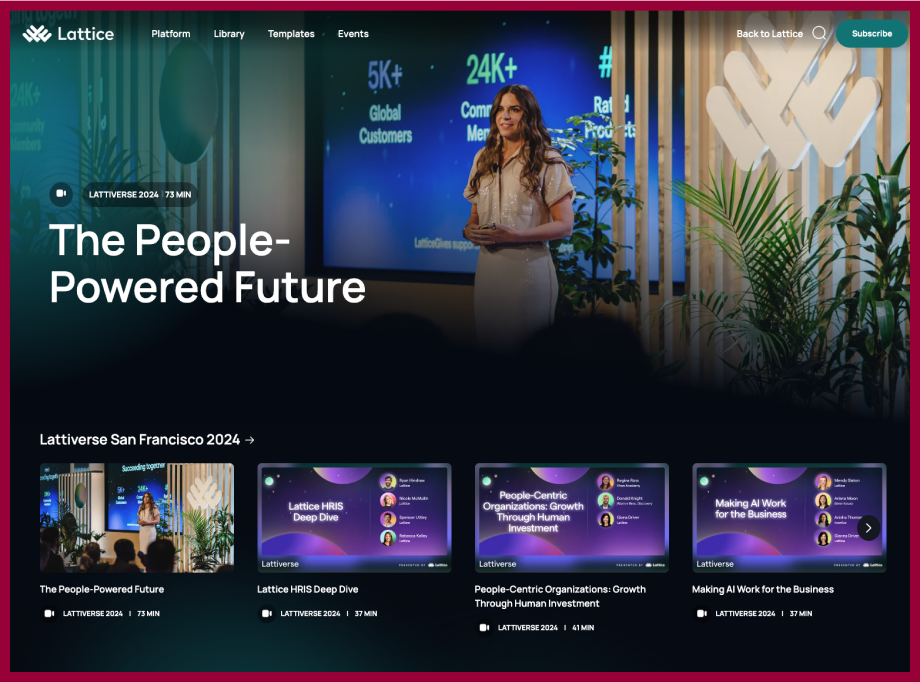
This event to on demand video repurposing flow is well worth doing to maximise viewers, both for in-person events and for webinars too.
Lattice also take short clips from the video recordings and use them as LinkedIn posts too, like this one, for instance.
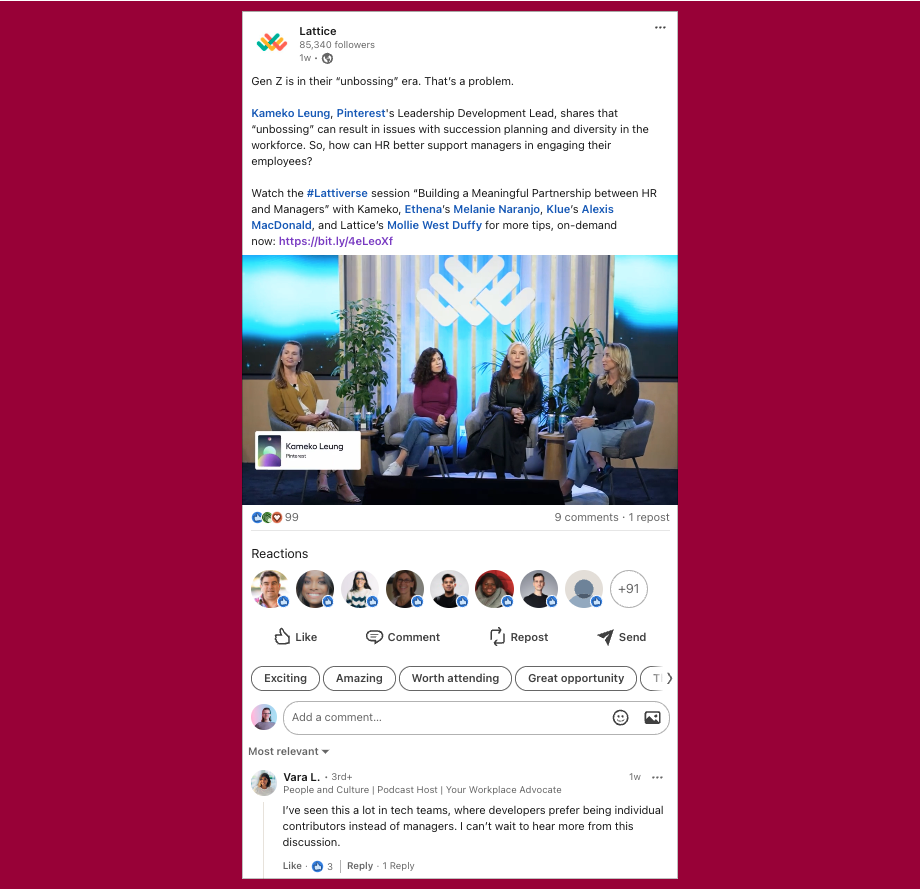
Lattice is one of the brands I look up to on subject matter expert content – every blog weaves quotes from several experts throughout the copy – so I’ve no doubt we’ll see content from the sessions repurposed further in other content over the weeks and months to come.
Kamma’s insights – blog ➡️ LinkedIn carousel
Carousels have been a favourite LinkedIn post format of mine for a couple of years now.
They always get a high engagement rate as users flick through the interactive slideshow PDF, so they’re a great way to repurpose blogs in a way that will have a higher impact on LinkedIn than simply sharing the blog link (which the LinkedIn algorithm hates!)
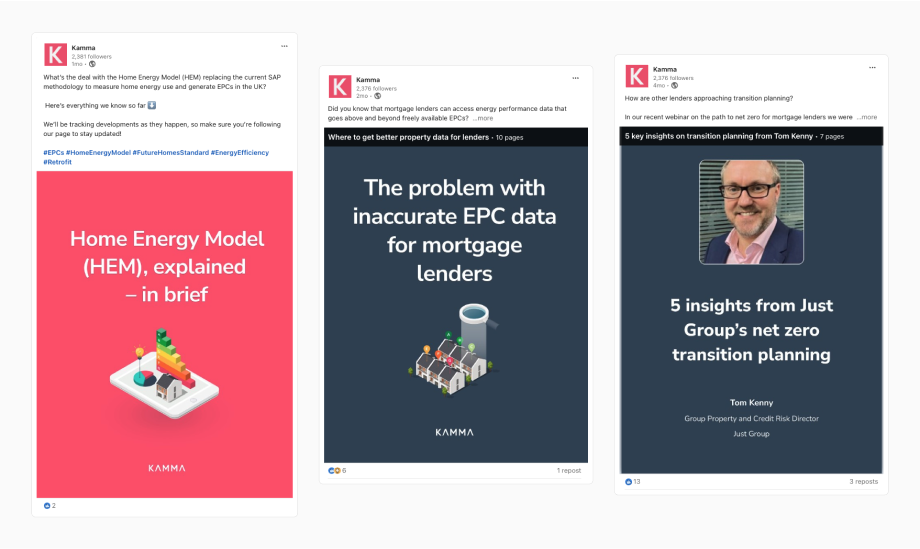
Here’s a few examples that I did for Kamma.
First up, an explainer on the Home Energy Model (HEM), which is repurposed from the ‘what is the home energy model’ section of the blog I wrote on the same topic.
Secondly, a listicle-style ‘5 key insights on transition planning’ from subject matter expert Tom Kenny, repurposing a discussion that took place during a webinar on best practice climate transition plans for mortgage lenders.
Thirdly, a carousel that highlights the problems with relying on the ‘status quo’ old school providers for climate data, repurposed from a blog I wrote on the problems with EPC data.
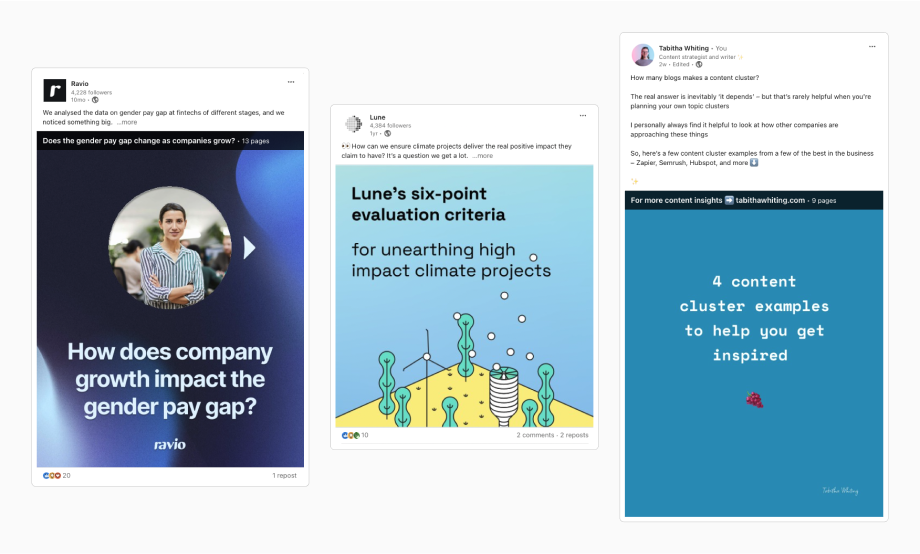
I’ve also repurposed blog content in the same way at Ravio – like this carousel which repurposes insights from a blog on the gender pay gap for FinTech startups.
And at Lune too – like this carousel which repurposes a guide I wrote on how Lune evaluates the quality of the carbon projects it offers to customers for offsetting.
I do it for my own content too – like this carousel which repurposes a blog of mine on topic cluster examples.
Cognism’s explainers – blog ➡️ video
The content team at Cognism are making a bet on YouTube as a strong channel for B2B content. With good reason, YouTube is a major search engine, and reaching a fraction of the audience on there could be hugely impactful.
Cognism has turned several of their blogs into YouTube videos.
This blog explaining the B2B sales process, for instance, has been turned into a talking head video, where Cognism’s Senior Video Marketer, Emily Liu, runs through the sales process.
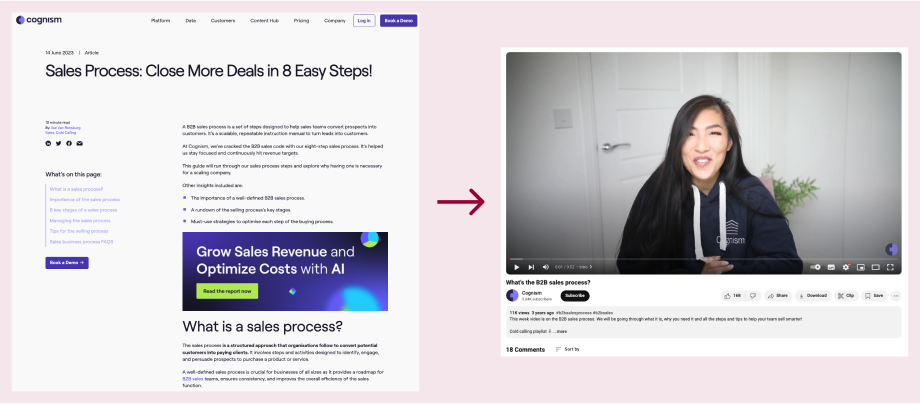
Not only is this a great shout to expand the audience potential of a piece of content, but the video repurposing is helping Cognism to dominate on SEO too. Video is becoming more and more powerful in SEO rankings, with videos typically taking up a chunk of the real estate on page 1 of Google.
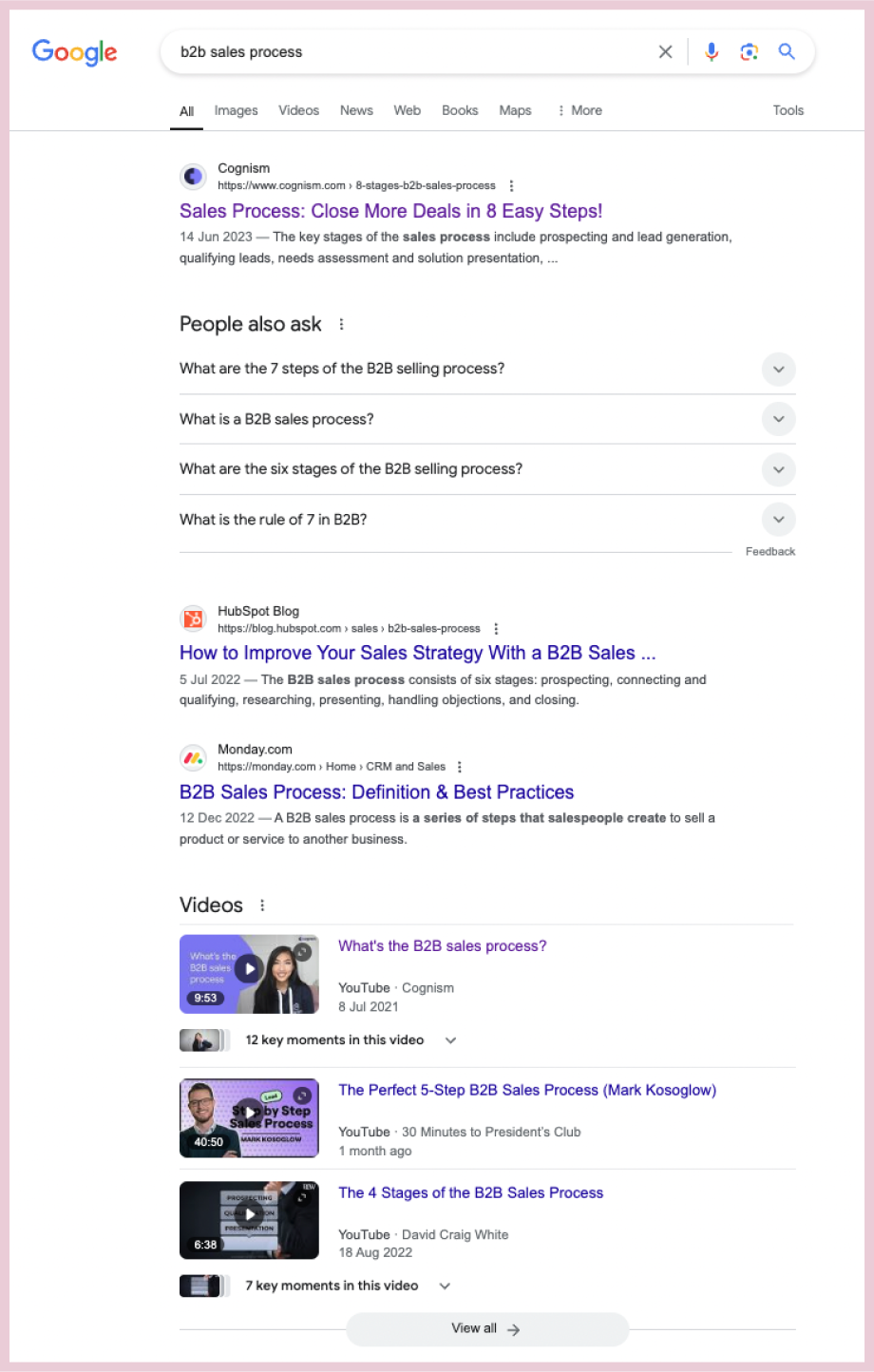
We can see that here for the search term ‘B2B sales process’, which Cognism holds the top spot for with the blog above, but also holds the top video spot lower down on page 1.
Tommy Walker’s State of (Dis)Content – report ➡️ podcast guest interview
Content expert Tommy Walker recently released the State of (Dis)Content – an original research report containing data insights and themes gathered from a survey of hundreds of content marketers.

He did a great job at teasing the results of the report over the weeks and days before launch, with LinkedIn posts sharing snapshots of the data before the full release.
That meant that by the time the report was ready to launch, Tommy was already being invited on podcasts to discuss the findings, and he featured as a guest on the Content, Briefly podcast by Superpath.
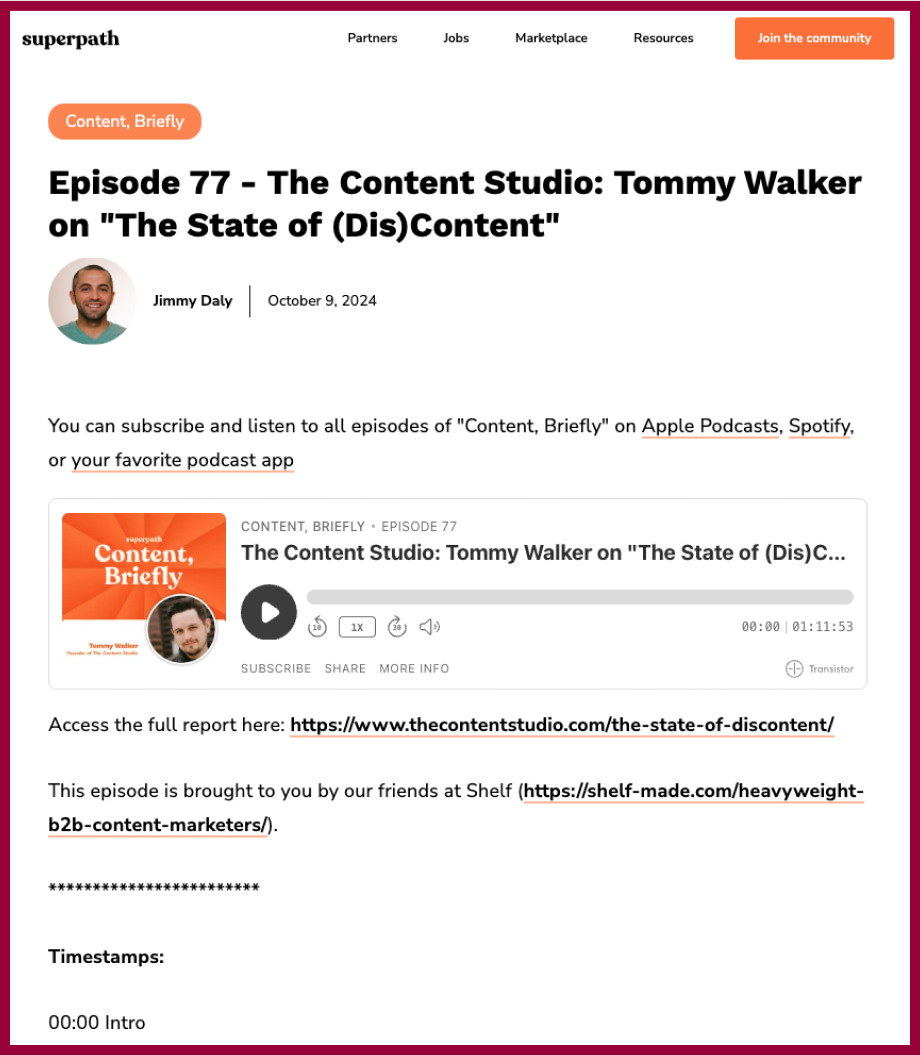
Original research content is particularly strong for this. The data often uncovers new angles and insights, which means its ripe for PR and guest opportunities, because the industry wants to jump on those new ideas quickly.
Thought leadership content is similarly strong: if known names like CEOs put strong opinions out there in the world, you’re likely going to be asked to come and discuss that opinion in further detail.
Lune’s business case for sustainability – blog ➡️ free tool or template
One of the key pain points and objections that I came across in my time at Lune is that sustainability leads were keen to implement a tool like Lune into the product (embedded carbon emissions calculations and quality offsetting) to reduce carbon impact, but were struggling to get buy-in from leadership.
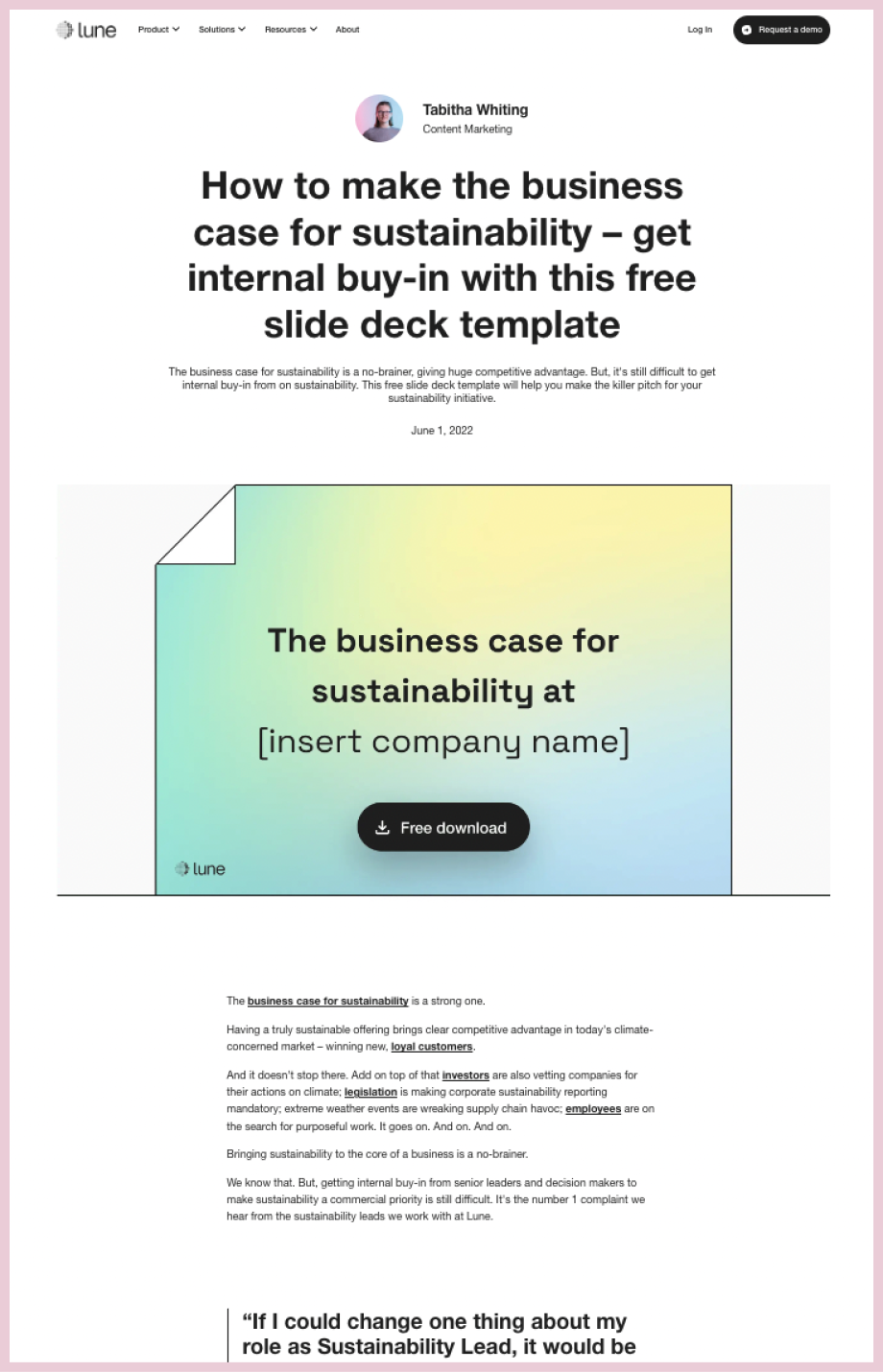
I created a blog post to address this, on the topic of how to make the business case for sustainability – demonstrating to leadership stakeholders the ROI and revenue impact that sustainability initiatives will have.
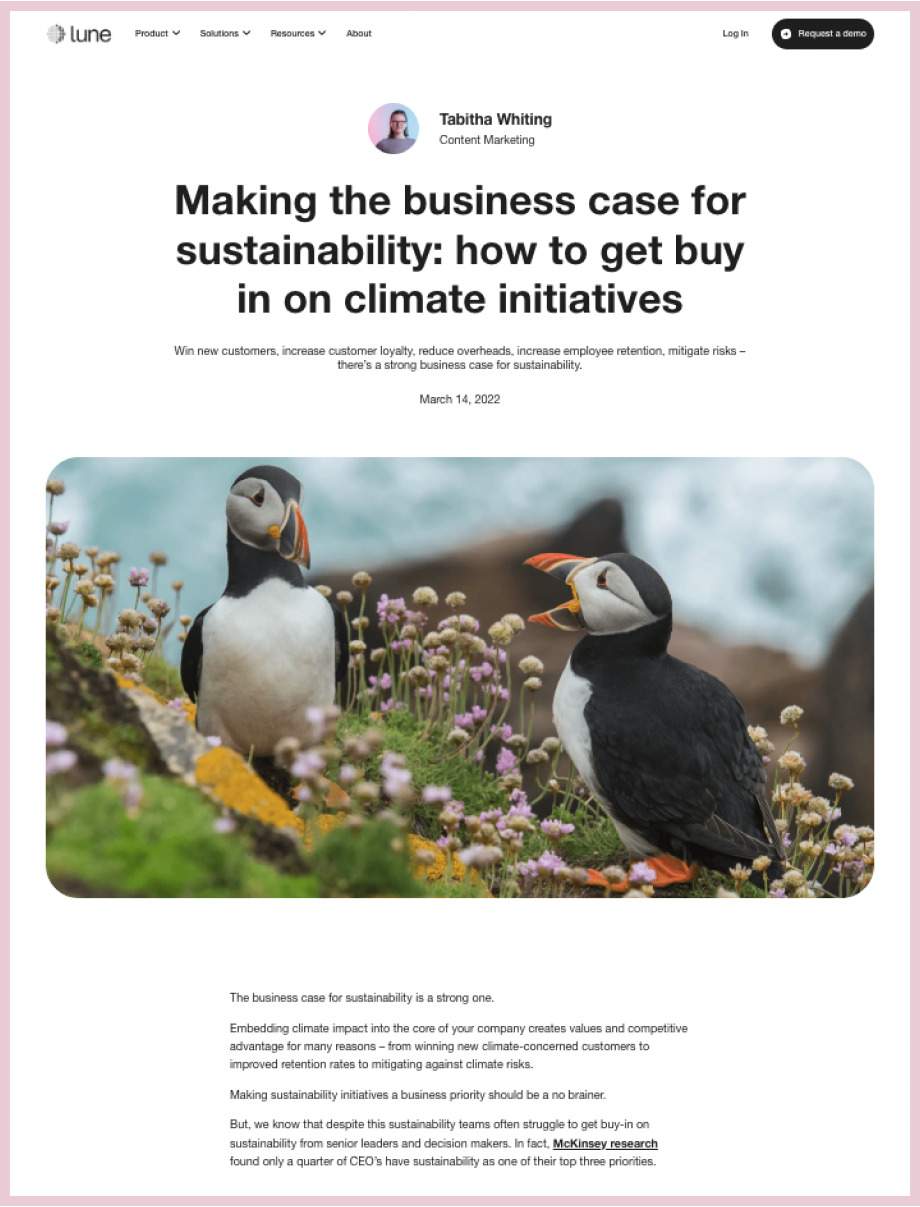
After further discussions with sustainability leads, it became clear that they largely wanted to use the insights from the blog to create a presentation that they could take to discussions with their leadership stakeholders to help them get buy-in.
So, I repurposed the blog into a free slide deck template, giving sustainability leads a starting point for the presentation they were keen to create.
The template performed well, and Lune was doubling down on the logistics market at the time, so I repurposed the template into one specific to sustainability leads in logistics companies.
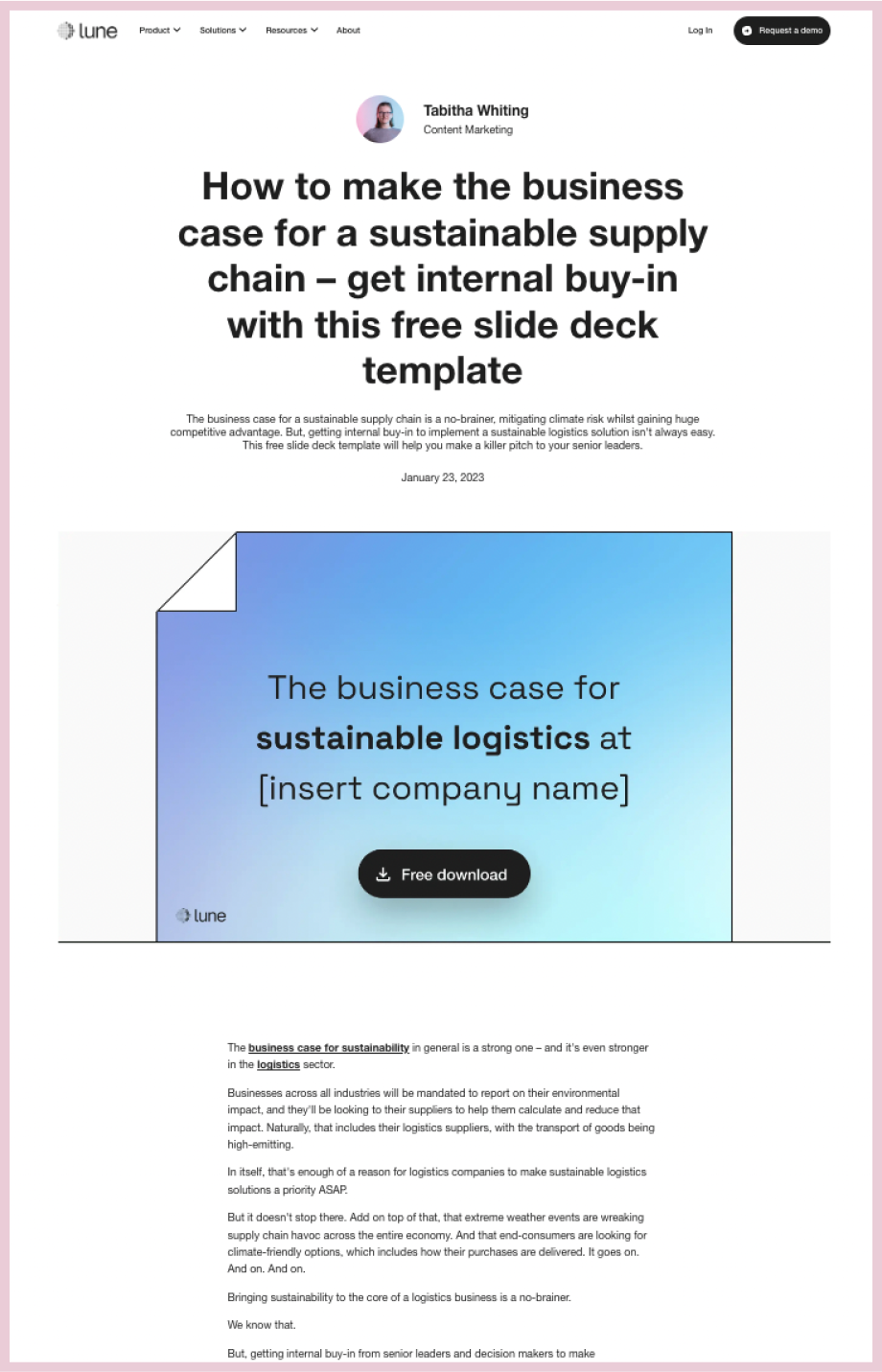
The slide deck templates were also repurposed internally for use as a sales enablement resource. For instance, the slide deck was used as the basis for a presentation co-developed with the team at Payhawk to gain stakeholder buy-in, which began their journey to creating Payhawk Green – and it worked, Payhawk are now a customer of Lune’s.
Hung Lee’s Recruiting Brainfood – newsletter ➡️ LinkedIn post
There are tons of newsletter tools and platforms out there today, but people tend to be loyal users of one or two, so if you have a newsletter it could be beneficial to use multiple platforms.
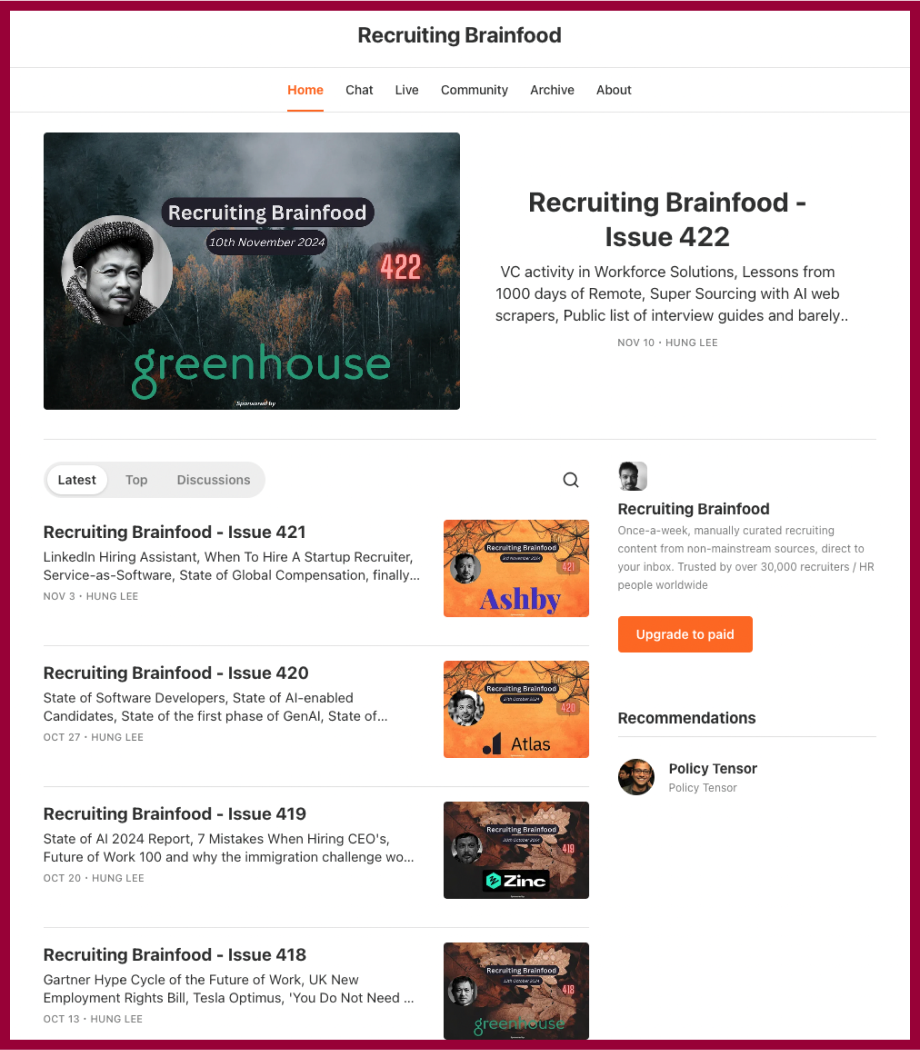
Hung Lee’s Recruiting Brainfood newsletter is a good example of this.
Recruiting Brainfood is primarily hosted on Substack.
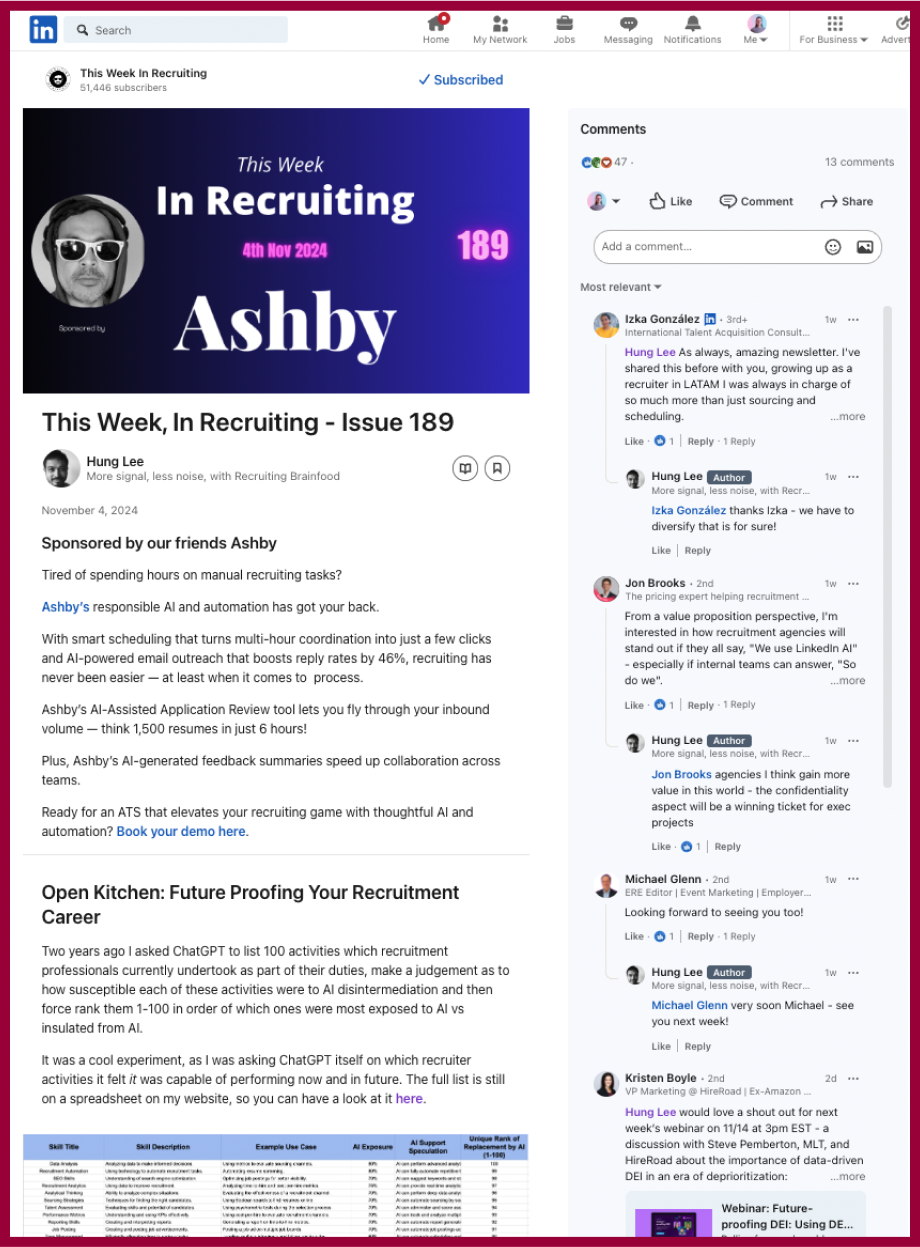
But Hung Lee also repurposes it as a newsletter on his personal LinkedIn profile – and with 51,000+ subscribers on LinkedIn, it’s clearly well worth doing.
Cosy Homes Oxfordshire’s retrofit explainers – blog post series ➡️ infographic
Cosy Homes Oxfordshire is a one-stop retrofit service, which I helped take to market during my time at the Low Carbon Hub (my all-time favourite role).
We quickly found a dedicated audience of retrofit fans, who were already exploring ways to improve the energy efficiency of their home, and knew all the retrofit lingo.
But, when we tried to expand our reach outside of that first adopter audience, education was a major barrier – most homeowners didn’t know what a heat pump was, or what they should look for to know if their home was well ventilated, or not.
So I developed a blog series of short explainer articles on all of the different energy efficiency measures – like biomass boilers, ventilation, air source heat pumps, and so on.

To make the most of that content, I used it as part of an infographic on home energy efficiency – highlighting the key places in a home that can be improved through retrofit for better comfort, lower energy bills, and lower carbon emissions.

Both the blogs and the infographic continued to perform well, so I developed the ‘Cosy House’ – using the image from the infographic but turning it into an interactive tool on the Cosy Homes Oxfordshire website, which highlights each part of the home and uses the content from the blog explainers to educate users on how to address energy loss in each area.

And I also turned it into a ‘how to’ video exploring how to retrofit a home:
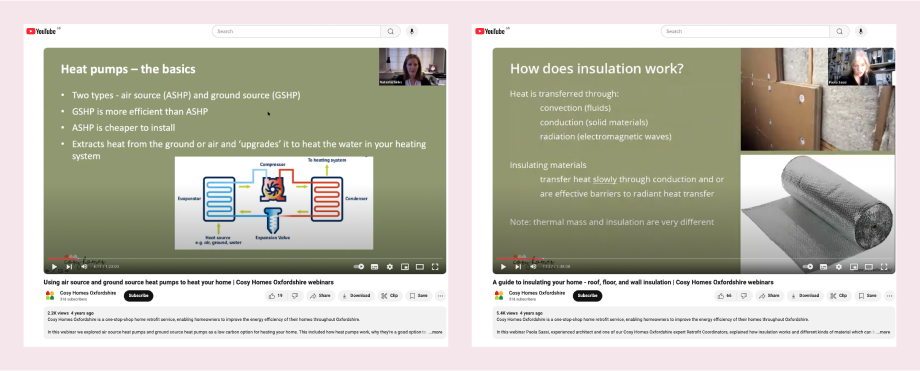
Plus, we also ran a series of webinars on some of the key retrofit measures that caused confusion – using the blog content as a basis for the webinar, but diving deeper with advice from an expert who worked in the field.
The webinars were recorded and uploaded as blog summaries to the Cosy Homes Oxfordshire website (insulation, heat pumps), as well as being uploaded to Youtube – where the videos are still performing well (insulation, heat pumps).
 Tabitha Whiting: High-impact content for high-impact startups
One thought on “11 ways to repurpose content [with real examples]”
Comments are closed.