
Content marketing. Paid ads. Conference speaker slots. Personal branding. Growth experiments.
There are a whole host of options out there when exploring the best marketing strategies to implement as a startup founder or marketing leader.
It’s hard to know which route is best – especially in a startup, where every decision feels magnitudinal.
The problem is that this leads many startups to try and do a bit of everything at once, taking a more generalist approach to marketing. But, without the time, money, and people to invest heavily in this, this leaves marketing efforts spread way too thinly and not seeing results.
So what’s a better approach?
Well, I’m here to advocate that content marketing is a highly effective place to start for startups.
If you can consistently create great quality content that is relevant to your audience and share it across the channels that they use, you’ll build brand awareness and reputation as a leading expert in the space and generate traffic which converts into leads over time.
Want to learn more? Then this complete guide to content marketing for startups is for you.
I’ve answered all of the FAQs on content marketing that I’ve heard throughout my career from startup founders, CEOs, and marketing leaders – sharing my best advice based on my experiences building high-performing content engines for early-stage and growth-stage startups, to help you do the same for your company.
Here’s what I’ll cover in the rest of the article:
- What is content marketing?
- What are the different types of content?
- TOFU vs MOFU vs BOFU content – what’s the difference?
- What is a pillar page in content marketing?
- What does a content marketer do?
- Should you hire a content marketer or work with a freelance content writer?
- Why should startups invest in content marketing?
- When should you start content marketing as a startup?
- What is a content marketing strategy?
- What is a content calendar?
- What’s the relationship between SEO and content marketing?
- How do you come up with content ideas?
- How do you do content marketing well?
Looking for content inspiration?
Subscribe to This Month In Content – one creative content marketing example every edition to keep your ideas flowing.
What is content marketing?
Content marketing is the practice of creating and sharing relevant information which provides genuine value or entertainment to a target audience, in formats such as blogs, white papers, videos, social media posts, etc.
The purpose of content marketing is to increase brand awareness and reputation, and build a relationship with an engaged audience – occupying mindspace so that they are more likely to be converted into loyal customers over time when a need arises which your product or service solves.
What are the different types of content?
There are many different types of content format that can be harnessed to maximise engagement with different messages and different audience members.
Here are the most common types of content to consider using:
- Blog posts
- White papers
- Original research
- Gated content
- Case studies
- Video content
- Webinars
- In-person events
- Podcasts
- Infographics
- Social media posts.
Let’s take a closer look at each, including examples from my own content marketing work.
Blog posts
A company blog has been a content marketing staple for a long time, and they’re still going strong today, particularly as a vital part of any SEO strategy.
Blogs can be short-form, addressing a single topic or solving a specific problem area or sharing updates. Here’s a few typical short-form blog formats, complete with examples written by yours truly:
- Explainers e.g The Home Energy Model, explained or What is an emission factor?
- How-to guides e.g. How to use equity refresh grants for retention
- Industry news or trends e.g. How should employers prepare for the EU Pay Transparency Directive
- Listicles e.g. The top 5 UK mortgage lender climate transition plans in 2024
- Competitor comparisons e.g. The best tools for salary benchmarking or Kamma vs EPC open data
- Event recaps e.g. How to build and retain great teams in 2024: event summary
- Problem solution / customer FAQ e.g. How to handle missing EPC data in a mortgage portfolio or
- Company updates e.g. Equifinance partners with Kamma or Lune carbon project updates (monthly series)
- Written case studies e.g. Meet Vestre.

Or they can be long-form articles which go a little deeper into a topic area, typically reaching the 2,000+ word count mark. Typical formats include:
- Topic guides or deep dives e.g A deep dive on Direct Air Capture or A complete guide to compensation reviews
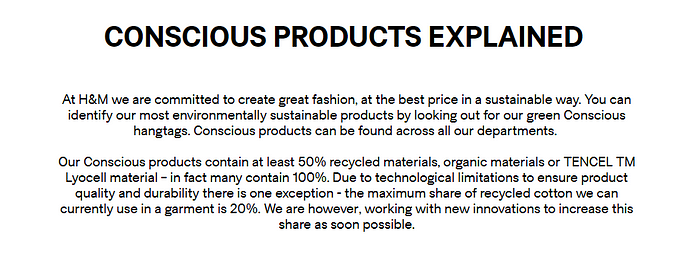
- Thought leadership or opinion pieces e.g A best practice approach to salary bands or ‘Sustainable style’: The greenwashing truth behind H&M’s Conscious Collection
- Expert insights or interviews e.g Expert insights on compensation review or How tech enhances transparency: catching up with Harry Grocott and Rob Godfrey
- Data analysis e.g How does EPC data impact affordability assessments or Building an effective management structure

White papers
White papers are long-form, in-depth pieces of content on a specific topic area. They are typically educational and aim to demonstrate expertise, presenting a problem or industry trend and provide a brand or individual’s perspective on a solution or methodology to address that problem area, which can sometimes be quite technical. They’re typically published as a standalone PDF which is often gated.
White papers tend to be a more formal content format than other types of content such as blogs or videos – in the UK, for instance, the government issues white papers which are designed to outline their proposals for future pieces of legislation. For this reason, they’re typically associated with larger and more established corporate brands.
Here’s a couple of examples of white papers:
- Klarna’s Influencer Marketing white paper
- Deloitte’s Metaverse white papers
- UK government white paper ‘Powering our net zero future’
- Kamma’s The Hidden Cost of Free Data white paper.

Original research
In original research content the findings from a bespoke piece of research are analysed, with key recommendations or conclusions outlined.
Research reports are a particularly strong type of content for tech startups that have proprietary data from their product which can be harnessed to give new insights to an industry. Here’s a couple of examples that I’ve worked on:
- Ravio’s 2024 Compensation Trends report
- Kamma’s The State of the Climate Transition for UK Mortgage Lenders in 2024
However, it’s also very possible for companies that don’t have their own data to pull from to produce original research.
A common approach is to conduct an industry survey and use the findings from this to produce a report, such as Lattice’s State of People Strategy report which uses survey findings from their audience of HR leaders.

Gated content
Gated content refers to any content which has access to it restricted until a user inputs their contact information – sometimes also referred to as lead magnets.
The core purpose is to generate leads by gathering the email of users who are interested in the content, which can then be used for marketing or sales campaigns, with the aim of eventually converting the user into a customer.
In-depth and long-form content formats like white papers, original research reports, e-books, or guides are typically used as gated content, where there is a large amount of value given within the content in exchange for the user’s email address. Here’s a few examples:
- Lune’s Carbon Project Evaluation guide
- Ravio’s 2024 Compensation Trends report
- Kamma’s The State of the Climate Transition for UK Mortgage Lenders in 2024
Tools or templates e.g. Kamma’s retrofit messaging toolkit or Ravio’s salary band progression calculator are also commonly gated.

Case studies
As a type of content marketing, a case study tells the story of how you (or your company) successfully worked with a customer to solve their problem.
The aim of a case study is to demonstrate how your product or service can address the problems of your target audience and to build social proof by showing how other companies have had success through relying on you or your company.
Case studies can be written and published as blog posts or as web pages. Or,they can be in a video format and feature interviews with the customers you’ve worked with.
Here’s a few examples of case studies that I’ve worked on over the years:
- Webpage and video: Energy Solutions Oxfordshire – The Abbey and Chapman Robinson & Moore
- Webpage and video: Cosy Homes Oxfordshire
- Webpage (video coming soon): Kamma x Atom bank
- Blog: Lune x Vestre
- Blog: Lune x Coolset
Video content
Videos can be a highly effective way to convey a message or story to an audience, and are a very common type of content today across many key channels such as YouTube or social media platforms like LinkedIn, Instagram, or TikTok.
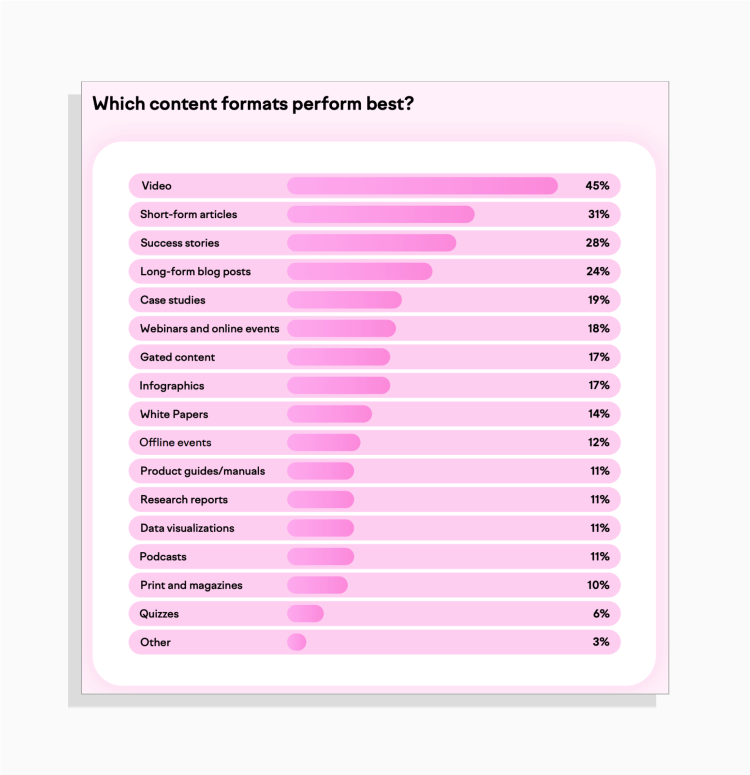
In fact, in Semrush’s State of Content Marketing 2023 report video came out on top when marketers were asked which content format performs best for their organisation.
There are a myriad of different ways to use video for content, including:
- Educational videos: Some brands have great success with using videos in the same way that you would use blogs (or even repurposing blog content into a video format), to educate their audience on relevant topics or problems. It could be a talking head video where a member of the team talks the audience through a topic, or it could be animated with a voice over.
- Product video / demo: Videos can be an effective way to introduce potential customers to your product or service, showing how different aspects of your offer works.
- Event recordings: Recording webinars or in-person events and making it available as an on-demand video is a great way to make the most out of an event.
- Case studies: Video case studies or testimonials that feature happy customers are a great way to demonstrate social proof and build trust in your product or service.
Videos need to be optimised differently depending on the platform they’re being shared on to be successful – a landscape, 20 minute, ‘how to’ video might perform well on YouTube, but will be completely incompatible for TikTok.
Webinars
A webinar is simply an event that takes place online. It will typically include a presentation as well as time for discussion or audience Q&A.
There are many different formats for a webinar which can work well for different audiences.
For instance, it could be an educational webinar (or series of webinars) where a subject expert takes the audience through a deep dive into a specific topic area.
An example of this is Cosy Homes Oxfordshire’s retrofit webinar series that I ran back in 2021. The target audience typically had lots of questions around how different energy efficiency measures worked, so this educational style of webinar with plenty of time for questions worked well. The video recordings have also continued to build views on YouTube ever since.
Panel webinars are another common format, bringing together several industry speakers with different perspectives on a topic.
Ravio, for instance, has had success with panel webinars. Their core topic of compensation is one in which there is no one ‘correct’ approach, and so bringing together several experts with differing views and experiences brings a breadth of knowledge to the audience and helps to demonstrate the power of the Ravio community.

It’s also common to use webinars as a way to launch new product offerings or research reports, with an internal speaker giving a presentation about the key findings or the problem being addressed, before opening the floor to audience questions.
At Kamma, for instance, a webinar was a core piece of the launch campaign for the new research report I authored: ‘The State of the Climate Transition for UK Mortgage Lenders in 2024’.
Podcasts
Podcasts are a type of audio content (although video podcasts on platforms like YouTube are also now common). They usually make up a themed series on a particular topic e.g. true crime podcasts or like My Favourite Murder or content marketing podcasts like Content, Briefly or book review podcasts like Overdue (and these examples also give you a nice snapshot into my favourite podcast topics!)
If educational or thought leadership focused content is a key part of your content marketing strategy then a brand podcast could be a great medium to test – it can be a great way to explore key topics in depth and demonstrate your expertise, without bringing sales-focused messaging into play.
One example of a podcast that I’ve worked on is the How Researchers Changed the World podcast by Taylor & Francis (now ended).
This was an interview-led podcast, a series of 12 audio interviews with highly successful academics whose research has had a positive social or environmental impact – with topics spanning from the role of music in dementia (Orii McDermott) to the ethics of AI (Steve Omohundro) to the relationship between cycling and relationship-building (Marco te Brömmelstroet).
The purpose was to demonstrate the positive impact of the academic research published in Taylor & Francis journals, building brand awareness and reputation, and encouraging early-career researchers to choose to submit their own research to those journals

Infographics
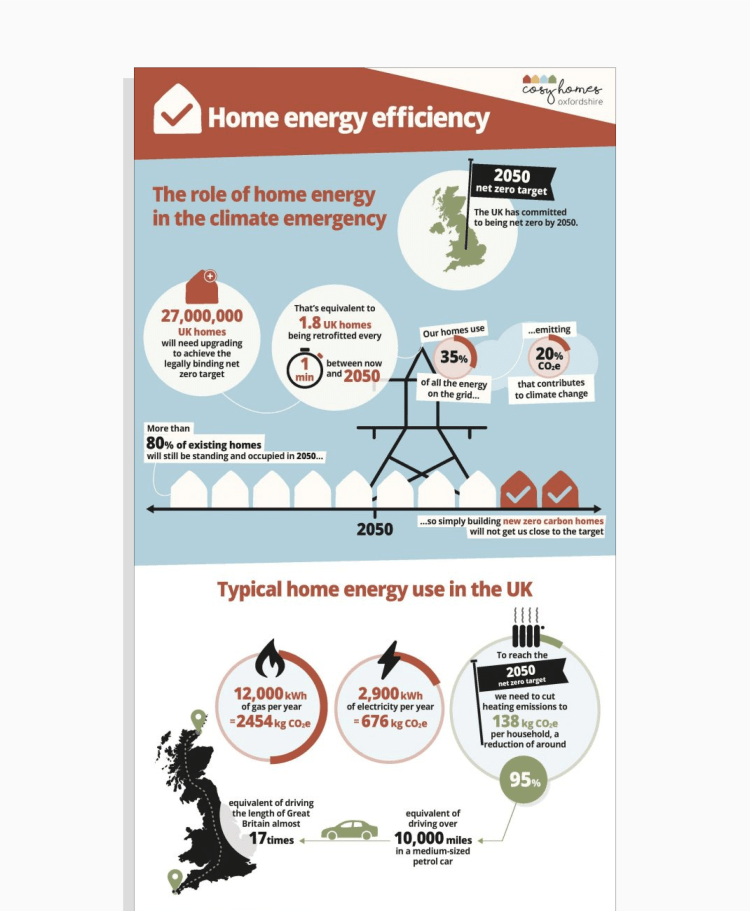
Infographics are a visual form of content, aiming to convey information, data, or statistics in an accessible way.
It might be a large, standalone infographic which is embedded on a webpage or made shareable as a downloadable PDF – like this infographic on home energy efficiency that I worked on for Cosy Homes Oxfordshire, for example.
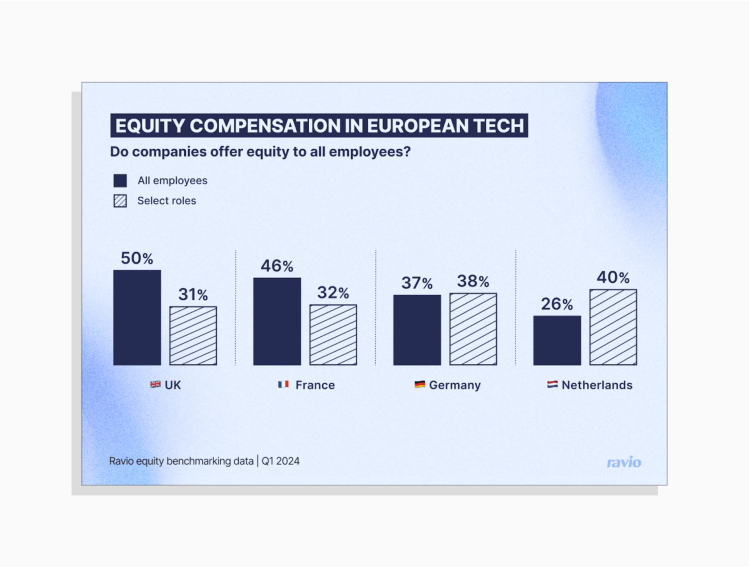
Or it could be a smaller infographic which conveys one specific piece of information or one finding as a small snapshot – these kinds of standalone graphics can make great images for social media or for use within blogs.
Here’s an example that I designed for Kamma, originally for use within a press release on the impact of the Labour party returning to the UK government in 2024 and then later shared on the Kamma LinkedIn page too.

And here’s an example I designed for Ravio, originally for a blog on the topic: ‘Should you grant equity compensation to startup employees?’ and again later used as an image on LinkedIn too.
Social media posts
Social media posts are also a type of content marketing. Social media posts are short-form content that can either be text-only, or can include an image or video alongside text.
It’s common to repurpose other forms of content (e.g. blog posts, videos, reports, etc) into shorter summaries or clips to be shared as social media posts.
For this reason, there’s a lot of overlap between content marketing and social media marketing. The key difference is that social media is a channel, whereas content marketing is a strategy – so social media platforms may be one of the channels that you decide to distribute content through.
TOFU vs MOFU vs BOFU content – what’s the difference?
When you’re exploring different types of content you might come across the terms TOFU, MOFU, and BOFU content.
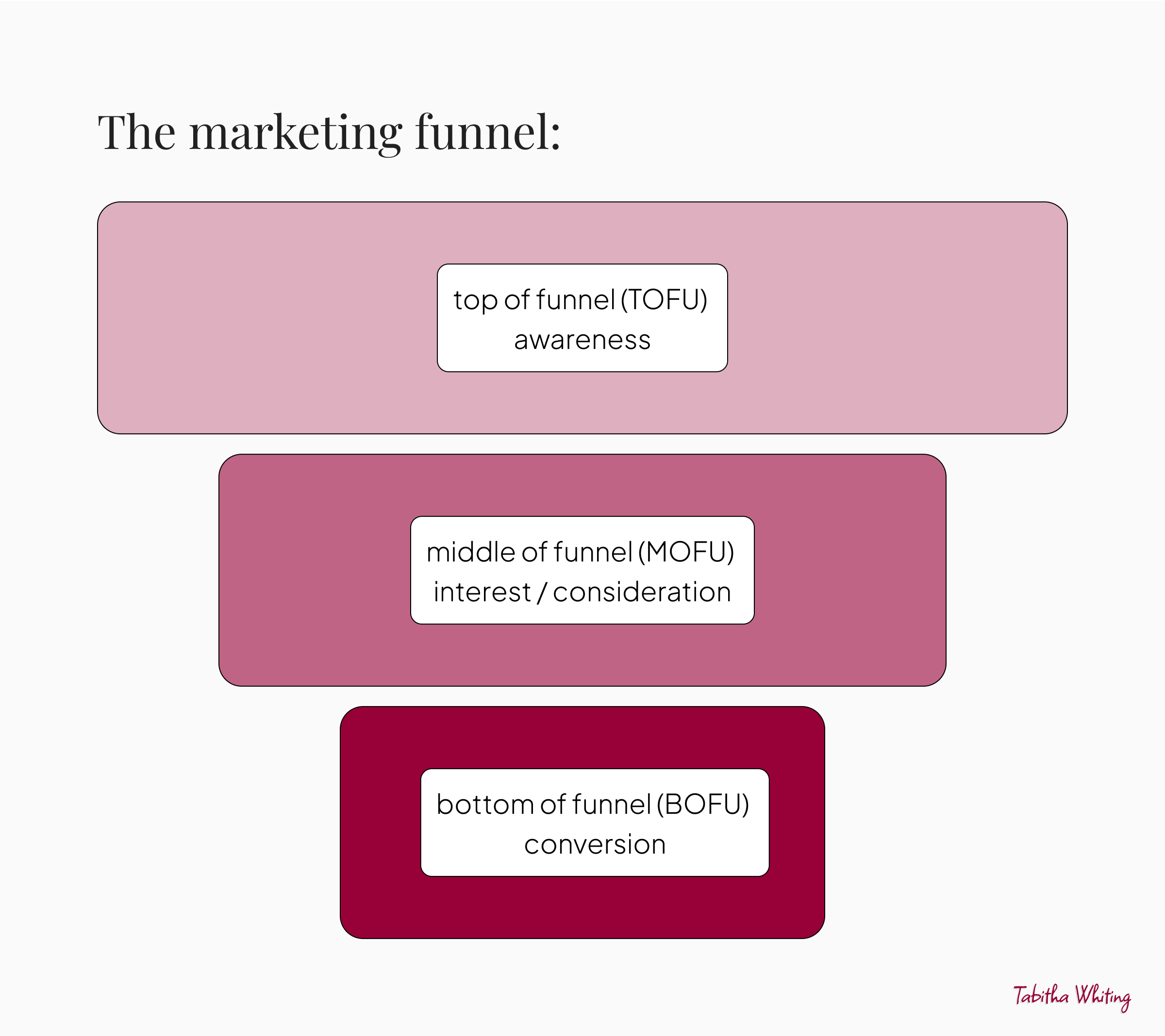
TOFU, MOFU, and BOFU are short for top of funnel, middle of funnel, and bottom of funnel – with funnel referring to the marketing funnel i.e. how new leads are generated and nurtured to eventually become customers.
Leads require different types of content at different stages of the marketing funnel, which is why you’ll often see TOFU, MOFU, and BOFU referred to in relation to content types.
Let’s take a closer look at the difference between TOFU vs MOFU vs BOFU content.
TOFU content
Top of funnel (TOFU) content targets members of your audience who are not yet familiar with your brand, product, or service – the ‘awareness’ stage of the marketing funnel.
The aim is to create content that offers genuine value to your target audience in the subject area that you have expertise in – whether it aims to answer a specific problem the audience typically has, provides information to support their research, or simply entertains them.
So, through this TOFU content, you can build awareness of your brand with a broad audience and capture the attention of audience members who have the potential to become warm leads through demonstrating your expertise in a topic area.
TOFU content can take many forms, spanning any and all educational and informational content.
It often includes explainers with headlines like:
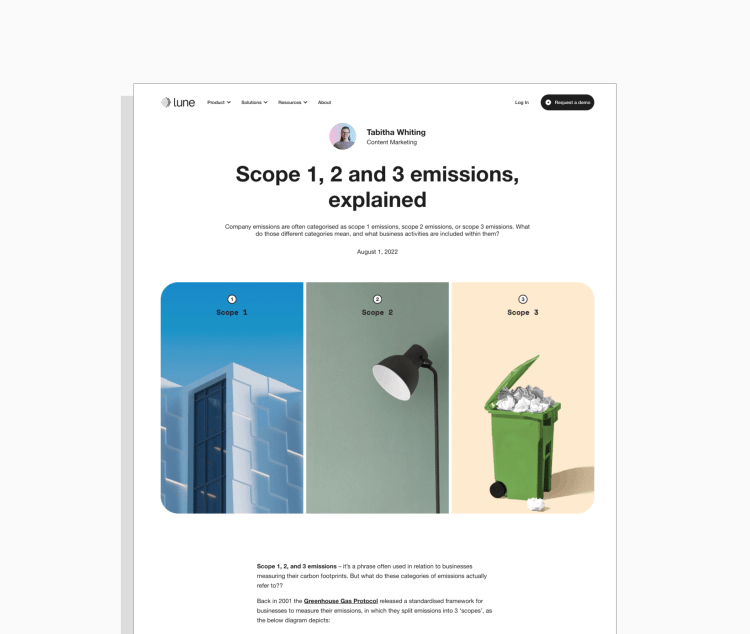
- ‘What is X?’ e.g. Lune’s Scope 1,2,3 emissions explained
- ‘How to X’ e.g. Ravio’s how to create a best practice level framework
- ‘5 tips for X’ e.g. Kamma’s 6 problems with EPC data
- ‘The complete guide to X’ e.g. Ravio’s EU Pay Transparency Directive legislation guide
These could be in any content format from blog post to YouTube video to podcast episode to LinkedIn post to webinar – depending on where your audience typically hangs out and what kinds of content they typically consume.
MOFU content
Middle of funnel (MOFU) content targets members of a target audience who are in the ‘interest’ or ‘consideration’ stage of the marketing funnel.
They are aware of your brand and the types of product or services you offer. They may have relevant problems that they’re looking to solve, but they are more likely to be looking for advice or information on how to solve that problem themselves – they aren’t yet ready to evaluate different products or companies and make a purchase.
The purpose of MOFU content, therefore, is to demonstrate that your company has a deep understanding of the problems that the audience member is facing and has the necessary expertise to help them solve that problem.
To target the middle of the funnel it’s therefore very important to build that understanding of the problems and pain points of your target audience so that you can address them through content – meaning you should be regularly analysing sales conversations (tools like Gong that automatically record or transcribe sales calls are super helpful here), interviewing ICPs in your network, researching the kinds of questions and discussions arising in relevant communities, and so on.
It also helps to increase the quality of the content at this stage if you can incorporate expert viewpoints (either internally from your team members or through collaborating with external partners or subject matter experts) or new data analysis.
With MOFU content you also want to start weaving product messaging into the content to raise awareness of the products or services that you have to offer in relation to the problem faced, but it isn’t explicitly product focused.
Here’s a few examples of MOFU content I’ve worked on which address specific pain points of an ICP audience:
- Ravio – What’s a fair and competitive salary in European tech? This blog targets users who are either evaluating what salary to offer a new hire or starting a compensation review and don’t have an accurate picture of the current market for salaries. They’re looking for information on salary data and so a salary benchmarking tool like Ravio is the perfect solution for them, but they aren’t explicitly looking for external products or services to solve their problem yet.
- Ravio – Building an effective management structure: how to know if your company is too top heavy. This question of ‘how do I know if my org structure is top heavy’ (i.e. has too many managers) is a common question that came through from the sales and customer success team at Ravio and so was clearly a problem that many of our target audience were dealing with – so this blog post explicitly targets that. It includes proprietary data from Ravio which helps to shine a light on how other companies think about this problem. It also includes advice from three highly experienced People Leaders (JooBee Yeow, Jessica During, Andrew Duncan) who I interviewed for the article.
- Kamma – The State of the Climate Transition for UK Mortgage Lenders in 2024. Kamma’s ICP audience are ESG / Sustainability leads at UK mortgage lenders. They often act alone but have a big responsibility to drive the sustainability strategy for a whole company, a topic area which is still in its infancy for many companies. We regularly heard from our customers, therefore, that they were keen to understand how other ESG leads were approaching climate transition planning and climate disclosures. This report is the result of that: an in-depth analysis of the climate plans and progress of 85 lenders and a survey of ESG leads to identify key barriers and priorities.
- Kamma – How to handle missing EPC data in a mortgage portfolio. This blog post addresses a major pain point for Kamma’s audience who struggle to accurately calculate company carbon emissions due to many mortgaged homes not having a valid EPC. The blog features proprietary data from Kamma’s dataset, as well as introducing Kamma’s own solution of predictive EPC modelling.
- Lune – $500 vs $5: Why does the cost vary so much in carbon credit pricing? Sustainability leads who are considering carbon offsetting as part of their company’s sustainability strategy often end up confused about the pricing of carbon credits because there is so much variance in price and quality. This blog addresses that pain point for audience members who are already considering offsetting, whilst also introducing Lune’s value proposition of offering only the highest quality carbon credits at a range of prices, to eliminate this sourcing problem.
- Lune – How to make the business case for sustainability. This blog (and free slide deck template) addresses the most common pain point of the Sustainability Leads we worked with at Lune: getting buy-in on climate propositions from stakeholders.

The middle of the funnel is also where content for nurturing potential leads comes into play.
This means identifying the members of your audience who have already shown an interest in your brand and creating content that aims to ensure they remain engaged and keep you top of mind, which could include:
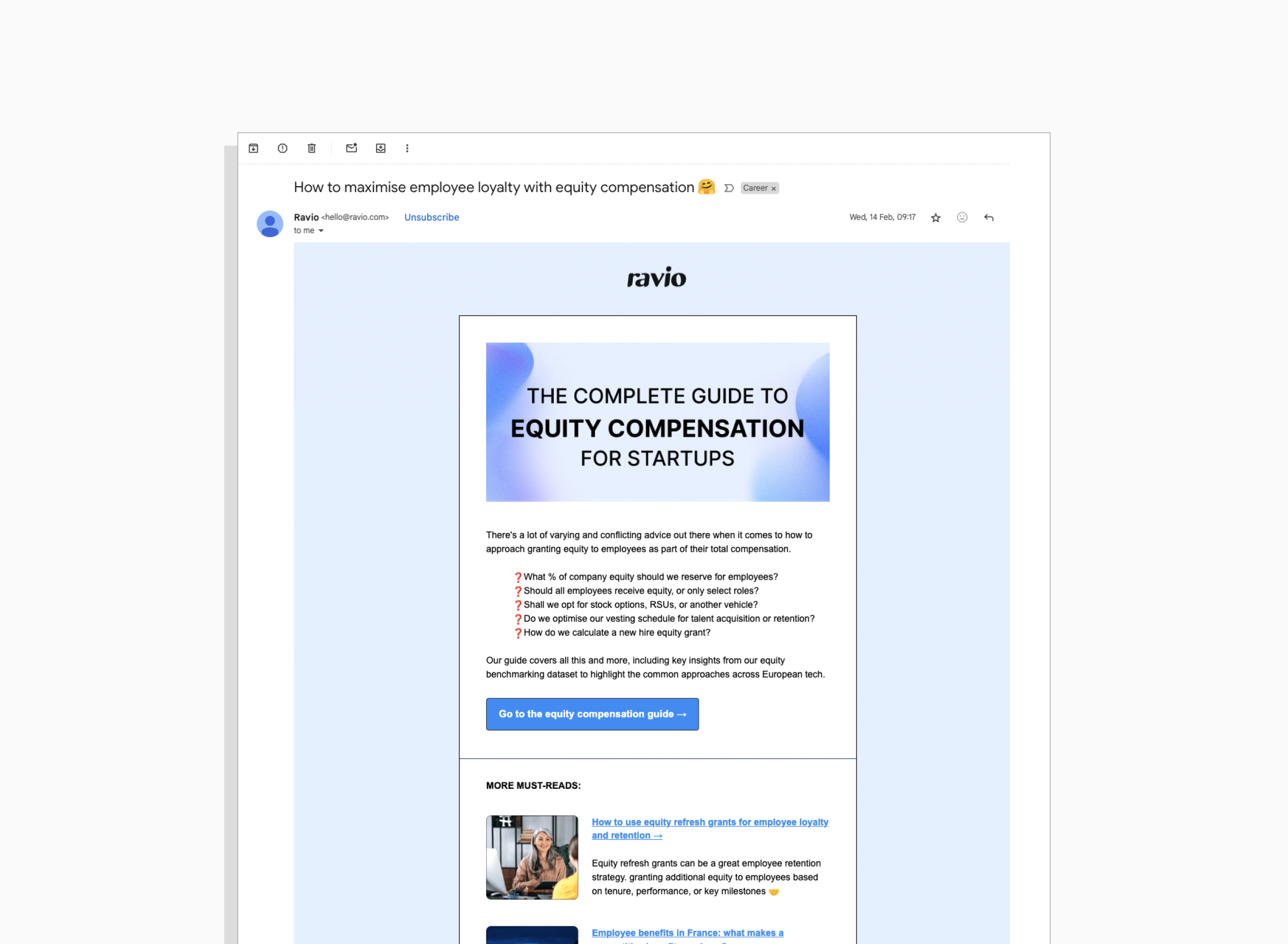
- Email subscribers. If you gather emails for a newsletter subscriber list, these are middle of funnel contacts. They will typically be nurtured through a regular (monthly) newsletter which shares any new content, company updates, industry updates, etc.
- Gated content downloads. If you have any content on your website that requires a user to submit their email address to access the content, those users that do submit their email are middle of funnel contacts – they’ve shown enough interest to exchange their email for that content. They will typically be nurtured through semi-regular emails, which could be set up as an automated nurturing workflow through a CRM like Hubspot.
- Webinar / event attendees. A user who has registered and attended an event or webinar that you’ve hosted is a middle of funnel content. As with gated content downloads, it’s well worth continuing to keep in touch and nurture those leads over time to keep them interested and introduce them via MOFU content to areas of your product that could help to solve their problems.
BOFU content
Bottom of funnel (BOFU) content targets members of a target audience who are actively evaluating products or services to solve a problem they have. They likely already know your brand but they may also be looking at your competitors too. They may be an existing lead or prospect that your sales team is speaking with.
The primary purpose of BOFU content is to drive conversion i.e. to turn that lead into a customer, through demonstrating that your company is the best option to help them solve their problem.
BOFU content should always be optimised for SEO because it naturally aligns perfectly with the search terms that users input when they are evaluating different options – terms like ‘Hubspot vs Salesforce’ or ‘Hubspot reviews’ or ‘best CRM tools for marketers’.
The typical formats for BOFU content include:
- Competitor comparisons that aim to demonstrate why your company is the best choice. Common headline formats include: ‘[your brand] vs [competitor brand] and ‘[competitor brand] alternatives’ – like this ‘Kamma data vs EPC open data’ blog post, for example.
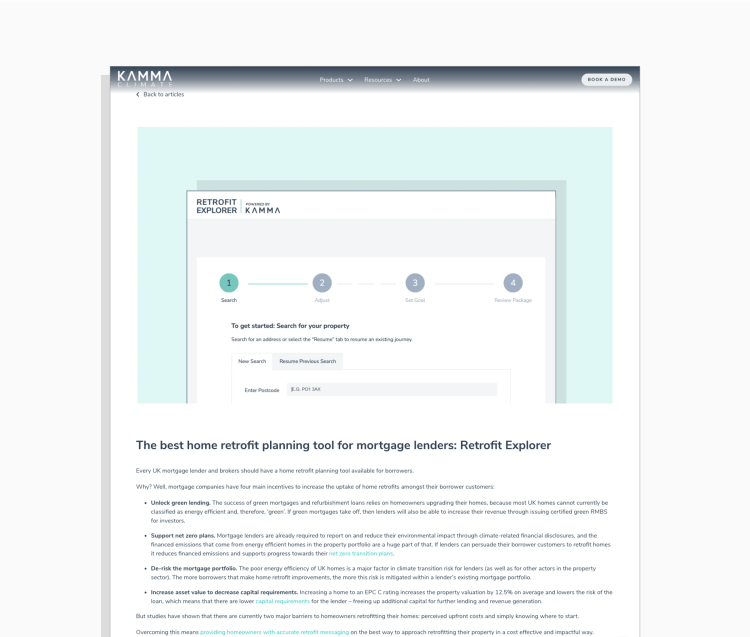
- Best tools / software blog posts are always an SEO hit for SaaS companies because searches like ‘best CRM tools’ or ‘best freelance content marketers UK’ are so common in this consideration and evaluation phase – blogs like Ravio’s ‘The best (and worst) salary benchmarking tools’ or Kamma’s ‘The best home retrofit planning tool’, for example.
- Product guides that answer common questions that arise during the sales process – such as this blog post I wrote for Ravio which outlines how they calculate their equity compensation benchmarks, or this guide for Lune which explains their methodology for deciding which carbon projects to offer.
- Product pages or videos that explain how your products or services solve the problems that the user is looking to solve – this overlaps with Product Marketing who are typically responsible for developing product and value messaging, but these product pages can be great for SEO so worth considering in your content plan too.
- Case studies or reviews that provide vital social proof that other companies are working with you and having success from it. This could be about compiling written or video case studies (see case study section above) or it could be a marketing push to build a library of testimonials or reviews for a site like G2 which is commonly used during evaluation.
What is a pillar page in content marketing?
A pillar page in content marketing (sometimes also called an anchor page) is a long-form article or blog post that covers all possible aspects of a topic in one large overview.
Pillar pages are a core part of a topic cluster model in content marketing and SEO, wherein the pillar page provides the overview of a topic and then links out to several other blog posts that cover specific aspects of the topic in much more depth.

Topic clusters are great for demonstrating the depth of your expertise on a specific topic area which is relevant to your target audience.
They’re great for SEO because they demonstrate your brand’s authority on the topic to search engines like Google, making the content more likely to rank highly. They also naturally create the ability to create a structure of internal links linking between relevant pieces of content on your website, which also boosts SEO.
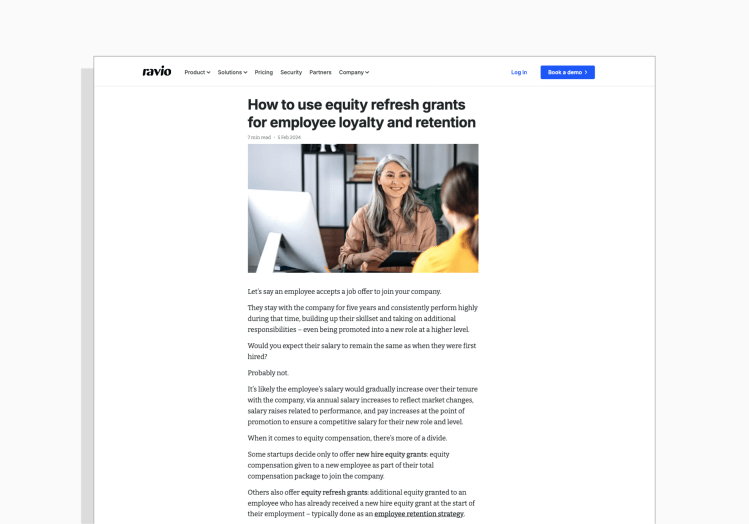
One topic cluster example is a group of content on the topic of equity compensation that I delivered for the Ravio team.
The pillar page for the cluster is a blog article titled: The complete guide to equity compensation for startups. This article broadly covers all the basics on how to structure an equity compensation package for employees, as well as a whole host of FAQs on the topic.
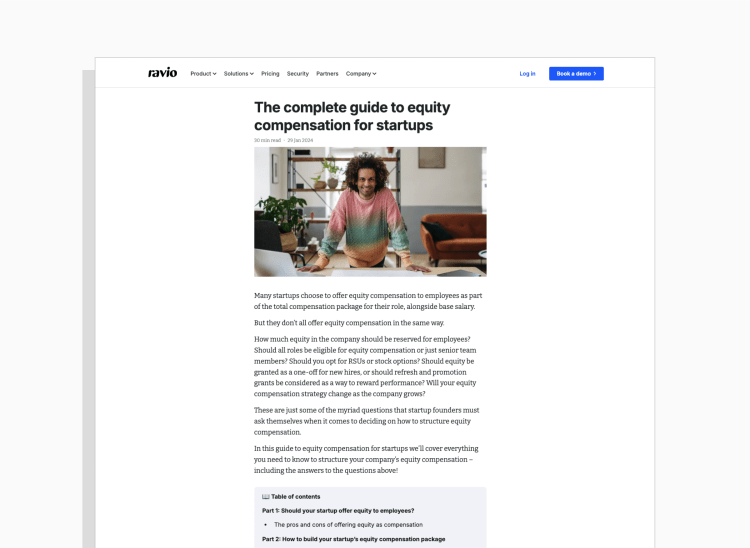
The pillar page then links out to several blog posts that dive deeper into specific aspects of the topic of equity compensation and showcase Ravio’s expertise and data on equity benchmarking:
- How to use equity refresh grants for employee loyalty and retention
- Should you grant equity compensation to all employees?
- What is the most common vesting schedule in European tech?
- How Ravio calculates equity benchmarks using the Black-Scholes Model
The topic cluster model can also be used to build backlinks (again, hugely beneficial for SEO) by working with partners or subject matter experts to develop guest posts or collaborative pieces of content.
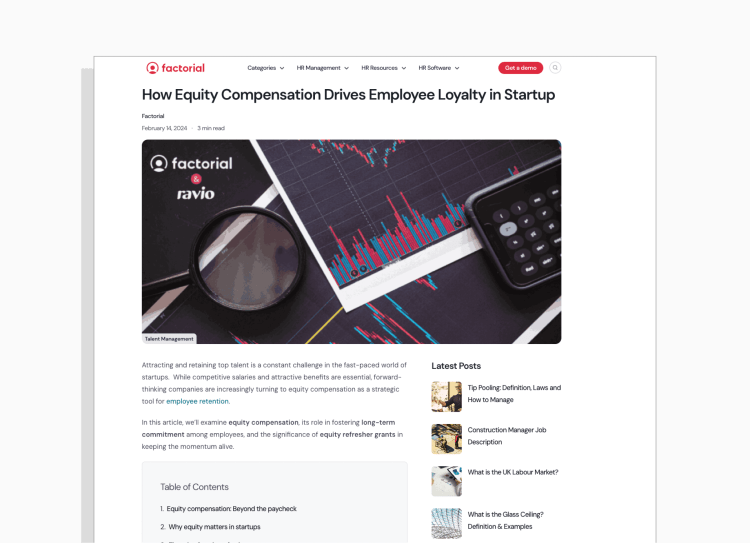
For Ravio’s equity compensation cluster, for instance, I also developed two partner content pieces which each link back to Ravio content:
- Factorial: How Equity Compensation Drives Employee Loyalty in Startups
- Equity People: How to reduce the impact of a volatile stock market on employee equity as a public company.
What does a content marketer do in a startup?
Content marketers are responsible for planning, producing, and distributing content. The aim is to increase brand awareness and reputation amongst a target audience, with the ultimate goal of attracting and converting more leads into paying customers.
A startup will typically have only one content marketer (at least in the early stages), and so they will be responsible for the entire content programme – setting the content strategy, creating content (which could be in collaboration with freelance content writers, designers, video producers, etc), and distributing that content via the relevant marketing channels.
Should you hire a content marketer or work with a freelance content writer?
There are pros and cons both to hiring an in-house content marketer or working with a freelance content writer or strategist.
Hiring a content marketer onto your in-house team typically comes with a higher total cost once you factor in recruitment costs as well as ongoing payroll and expenses.
However, an in-house content marketer has the time and focus to quickly pick up in-depth knowledge on the industry and the specific product or service you offer. They’re able to be very hands-on, flexing to create whatever content has the highest potential each quarter. They’re also able to spend the time to analyse and measure content performance to understand what’s working and drive the ongoing strategic direction of the content function in collaboration with other teams. They’re able to grow with the company, perhaps taking on responsibility for other content writers or junior content marketers as the team scales.
Working with a freelance content writer or strategist is much more flexible and cost effective, as you’re able to work with them on specific one-off projects and book more or less of their time depending on needs. You’ll get the benefits of working with a highly experienced content writer who has delivered quality content for several different companies and understands what works – which can be especially beneficial in early-stage startups who want to test content marketing but might not be ready to commit to adding headcount to the team.
However, a freelancer will typically have less in-depth knowledge of your product and your audience so you still need to make sure that they’re briefed well in order to ensure the quality of content is high.
Ultimately there’s no ‘right’ or ‘wrong’ answer to the question of whether you should hire a content marketer or outsource content marketing to a freelance content writer or strategist.
Often a combination of the two works especially well – an in-house content lead who owns the strategy and planning, but who works with a freelance content writer to increase capacity to deliver new content.
Why should startups invest in content marketing?
A key challenge for many startups (especially in the early stages) is that your audience doesn’t know you exist.
It’s hard, because you’ve spent a lot of time and money building a product that you genuinely believe solves a real problem for an audience, and solves it way better than any of the well-known competitors do.
But you’re getting very little interest in that product.
So you’re spending even more time and money on cold outreach by your sales team (or often by the founder / exec team themselves in the early days) to try and hustle up sales.
That outbound motion is crucially important. But you also want to be planting the seeds for inbound leads – the customers that come to you directly to find out more about your product. If no one knows your brand exists, those inbound leads will never come.
Content marketing is a highly effective way to do this.
Through creating high-quality branded content that provides real value to your target audience, showcasing the expertise of your team on relevant topics and demonstrating how your product can solve real problems, you’ll increase brand awareness and reputation amongst your target audience. Your brand becomes a trusted and top-of-mind source of information so that, when problems arise, you’re an option on the table and those audience members come to you as an inbound lead.
As I see it, there are three main areas of value that a strong content marketing engine offers for startups throughout the lead lifecycle:
- Elevate the brand. Regular, high-quality content builds a recognisable and trustworthy brand voice through providing expert information, insights, or education on the real problems of the target audience.
- Drive warm inbound leads. Showcasing the expertise of the brand and the value of the solution(s) you can offer to the real problems of the target audience builds a pool of warm leads who know and trust your brand. These warm leads could be built through driving SEO and inbound website traffic, an engaged set of followers on a relevant social media channel e.g. LinkedIn for B2B startups, a list of email subscribers who want to keep updated with your latest content, a group of users who have downloaded gated content from your website, etc.
- Convert leads into customers. Conversion-focused content which aims to educate leads on why you are the best option for them and how you’re successfully working with other customers can hold huge value for startups by driving the conversion of leads into customers, ultimately increasing revenue.

This also aligns with the idea of TOFU vs MOFU vs BOFU content, as these three areas of value align with the marketing funnel (see section above).
Content marketing has the added benefit of being cost effective. All you need is a person to build and run the content engine (whether you hire an in-house content marketer or work with a freelance content strategist and writer like me) and you’re off to the races.
It’s also long-lasting. If you create genuinely valuable content that addresses real problems then it will last forever – you’ll just need to occasionally run a content audit and make a few updates to make sure it stays accurate with new developments in your industry.
When should you start content marketing as a startup?
The sooner the better.
As soon as you’re ready to launch your startup and go public you need a strong content marketing strategy to build your brand, drive inbound leads, and support the sales cycle.
I typically recommend that early-stage startups start their marketing team with a product marketer and a content marketer – the two go perfectly hand-in-hand to ensure a strong brand presence and a clear understanding of your product from the very beginning.
I’ve had great success with this approach myself at Lune and Ravio, building the content function alongside the very brilliant Alicia Carney as the lead on product marketing.
What is a content marketing strategy?
A content marketing strategy is a document that defines the direction and plan for how content will successfully support the most important business goals a company has.
The content marketing strategy is typically created at the point when a company decides to actively use content marketing as a key part of the overall marketing strategy, which might align with when the first in-house content marketer is hired at a startup. It should then remain a living document, updated and refreshed regularly (typically quarterly, at least annually) to remain in line with business priorities and developments.
An effective content marketing strategy should always include:
- Content marketing objectives. What do you want to achieve through content marketing? What wider business goals are being driven through content?
- Target audience. Who are we aiming to reach through content marketing? How do we want to influence them?
- Competitor analysis. What areas of content (topics, content types, channels, unique angles, etc) are our key competitors currently winning in? Do we want to try and beat them at that? Are there gaps in the market that we could aim to fill with our own content strategy?
- Content pillars. What are the most important topics for that target audience? Which topics do we have subject expertise on? Which topics align best with our product or service? Which topics are less well-covered by competitors or other outlets? I typically recommend having three core content pillars.
- Content formats. Which formats do the target audience like to consume their content in (reports, blogs, press articles, social media posts, videos, podcasts, etc)? Which formats do we have the in-house expertise to deliver? Could we work with freelancers for other formats?
- Content channels. Which channels do the target audience hang out in (search engines, LinkedIn, TikTok, Slack communities, media outlets, Reddit, etc) and that, therefore, we should distribute our content through? Which channels do we have the in-house expertise and resources to manage? Could we work with freelancers for some channels (e.g. social media management)?
- Collaboration ecosystem. Do we have internal subject matter experts that we could harness to increase the quality of our content? Are there external experts in our network? Do we have a partnership ecosystem that we could harness as a content distribution channel? Are there partners that we could collaborate with on shared content or guest posts? Should we work with influencers to increase the reach of our content?
- Content cadence. How often do we want to publish new content on each of the key channels we aim to use?
- Content marketing budget. Do we have any budget to work with freelancers to increase our capacity for content creation or to help with certain formats (e.g. content design, video production, etc)? Do we have any budget for content distribution to increase the visibility of our content through paid channels e.g. social media ads, google ads, paid placements in media outlets, influencer partnerships, etc.
Content strategy guide: How to build an impactful content engine
If you’re looking for more guidance on how to develop your content strategy, head to my guide on the topic – it’s a step-by-step guide which also includes examples and templates to help you create a practical strategy that will guide content decisions.
Go to the content strategy guide >
What is a content calendar?
A content calendar (or editorial calendar) is a schedule which shows when you will be publishing new content via core marketing channels e.g. blog posts, LinkedIn posts, email newsletter, podcast episodes, etc.
It’s a living document which is kept up-to-date by a content marketer or marketing team, helping to organise content publishing and ensure a consistent stream of new content without lots of overlap with several pieces of new content posted on the same day on the same channel.

📣 Free content calendar templates
I’ve turned my own trusty content calendar format into two free templates to help you get up and running quickly with content planning and management.
Go to the templates >
What’s the relationship between SEO and content marketing?
SEO and content marketing are very closely intertwined.
Content marketing is an overall strategy which aims to build brand awareness and drive inbound leads through creating and distributing content that provides value to a target audience.
SEO (Search Engine Optimisation) is a more specific channel or tactic which aims to drive website traffic through implementing techniques that make specific pieces of content (typically blog posts but also videos, LinkedIn posts, webpages) rank highly in search engine results pages (SERPs).
SEO is, therefore, typically a very important part of any content marketing strategy – a vital channel for distributing content which will help to increase the number of users that engage with any piece of content over time.
Here’s an example of a piece of content – Ravio’s French employment law guide – that I specifically optimised to rank highly for the search term ‘france employment law’. As you can see, it’s now the top result on Google for that search term, as well as being featured in the AI overview and in the featured snippets for more specific questions like ‘What are the employment laws in France?’

How do you come up with content ideas?
Great content answers the real questions and problems of your target audience, and so coming up with content ideas means uncovering what their most pressing questions and problems are.
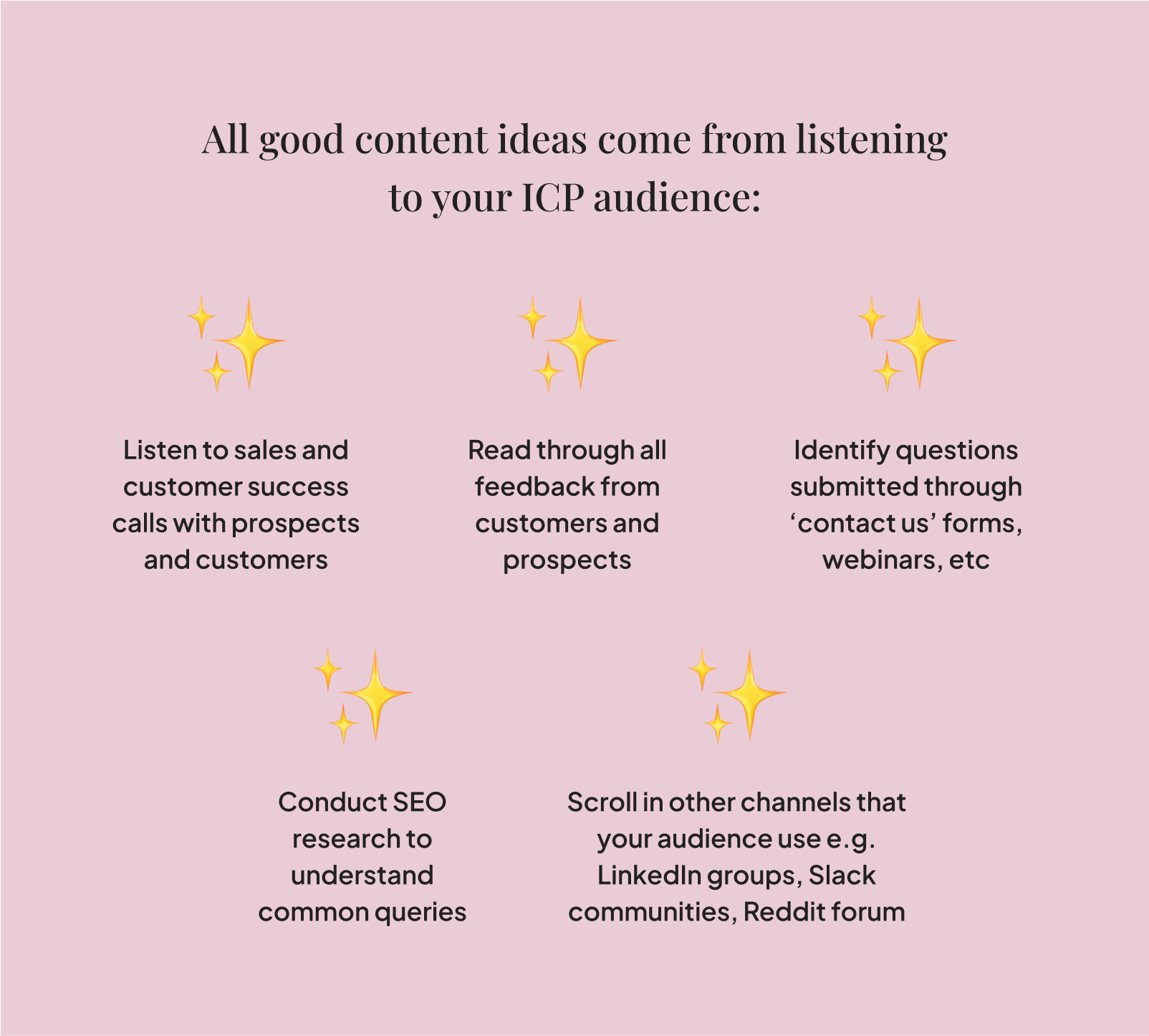
So, whilst exploring examples of how other brands approach content is great for inspiration, the best content ideas will always come from listening to your ICP audience.
This can be done through:
- Listening in to sales or customer success calls – getting your commercial team into the habit of recording all calls using a tool like Gong is incredibly valuable to start building a picture of the most common questions and pain points of your target audience, which can be addressed via content.
- Internal feedback loops – similarly, ensuring all commercial team members are regularly sharing ideas and feedback from prospects or customers means that any recurring topics can be addressed via content.
- Identifying questions submitted to the team via contact forms or during events / webinars
- SEO research – conducting keyword research on various relevant topic areas via an SEO tool like Ahrefs or Semrush or a social listening tool like Answer The Public will enable you to identify the common search queries of your target audience, which can be addressed via content.
- Research via other channels e.g. social media or forums – searching key terms or questions related to the most important topics for your brand on channels like LinkedIn, Reddit, or Quora can highlight the kind of questions or problems that your target audience are regularly trying to find answers about, which can be addressed via content.
Looking for content ideas?
Subscribe to This Month In Content – one creative content marketing example every edition to keep your ideas flowing.
How do you do content marketing well?
In my experience, effective content marketing boils down to the following:
➡️ The delivery of quality (well-researched, well-written or produced, to-the-point) content…
➡️ Which deliberately showcases the unique value of your brand and your expertise in a set of key topic areas that are highly relevant to your target audience…
➡️ And which is published consistently over a long period of time across the top channels that your target audience uses every day.
In combination, this content builds the authority of your brand and brings the right audience to your brand’s core channels.
Achieving this boils down to having a super strong content marketing strategy as the foundation which sets the strategic direction for all content creation and distribution (see section above).
If you need help with putting that strong content marketing strategy into place, or you have a question that I haven’t answered in this article, then please do get in touch – I’d love to chat!


























 Tabitha Whiting: High-impact content for high-impact startups