
In the course of my career I’ve built content marketing from the ground up at B2B startups with very different social purposes: HR tech focused on fair pay (Ravio) and climate tech working on emissions reduction (Lune, Kamma).
All build towards positive change, but the marketing contexts have felt very different.
Ravio tackles pay equity. It’s a mission that matters deeply to the team, but it’s not the primary problem our buyers are trying to solve. HR leaders come to us because they have an urgent need to pay fairly and competitively to attract and retain employees. The social impact is valuable, but it’s the cherry on top.
In climate tech, I found the opposite. The mission was front and centre, and the path from ‘this will save the planet’ to ‘this solves my business problem’ was much less clear.
I reached out to 11 expert marketers who operate in the climate tech space – from positioning consultants to in-house marketing leads to freelance writers – to find out the unique challenges and opportunities that resonate across the sector.
Tomorrow’s problems don’t motivate today’s buyers
Climate change is an undeniably urgent problem. The science is clear, the impacts are accelerating, and we’re running out of time to act. But this hasn’t yet translated into the corporate world – most businesses aren’t feeling the urgency in their day-to-day operations.
In traditional B2B SaaS marketing, you find your ICP’s deep pain points and create positioning and content that shows exactly how your product overcomes them, with the aim of generating demand – finding those who know they have a problem, and showing them the solution.
In climate tech, you’re a step behind doing demand creation instead: convincing prospects that climate change is a business problem worth spending time and money on now, when they have more pressing issues on their plate. You’re selling the problem before you can sell the solution – and that’s not a position any startup wants to be in.
“In climate tech you’re often marketing a solution to an audience who aren’t yet affected by the problem. It defies the traditional marketing playbook: identify the pain point, pitch the solution. With climate tech it’s more complicated, because the massive disruption of climate change hasn’t quite hit the pockets of those holding the purse strings yet.”

“The uphill battle with skeptics can be tiring. It can feel like you’re constantly converting non-believers who view climate solutions as ‘nice to have’ rather than essential. But I’ve learned that focusing on ROI, tangible benefits, and crystal-clear value propositions cuts through that resistance better than any climate argument.”

“In climate tech, you’re not just marketing a product. You’re marketing a version of the future. The challenge is to help customers see themselves in that future, to make it feel both inspiring and achievable. That means cutting through complexity, building trust and showing how today’s actions lead to tomorrow’s impact. And you have to do all of that while staying laser-focused on your customers – solving real, urgent problems they’re facing right now. It’s not enough to be right. You have to be relevant.”

Greg McEwan
Communications Lead at Kaluza
Linkedin
“At both Lune and Kamma, I watched lead after lead move to ‘closed lost’ because buyers didn’t see emissions measurement or climate risk analysis as urgent problems worth solving now. We ended up spending most of our marketing time and effort selling the problem, desperately trying to convince doubtful buyers that there was future risk to get ahead of, or profit opportunities in green propositions.”

What this means for your climate tech marketing
Stop trying to convince buyers that climate change is an urgent problem for their day-to-day work. It either is, or it isn’t.
Instead, reverse your approach: start with speaking with your ICP buyers to find out the pain points that are keeping them up at night and the frustrating problems they’re actively trying to solve. Then work backwards to see how your climate solution addresses those pain points.
Back to the top ↑
Onto lesson two ↓
Regulations make terrible foundations for positioning
When you’re struggling to create urgency around climate solutions, regulations seem like the obvious answer. “You’ll need to comply with this new climate regulation next year” feels much more immediate than “climate change will impact your business eventually so start acting now.”
The problem is that climate regulations are frustratingly unstable.
They get announced, delayed, watered down, or scrapped entirely. What looks like a strong compliance driver one quarter can disappear the next, leaving your entire positioning strategy in ruins.
Kamma, for instance, is a property data business originally focused on property licensing. When the Labour UK government introduced strict new Minimum Energy Efficiency Standards (MEES) proposals in 2021, Kamma built a climate tech arm focused around the environmental property dataset they’d already been building – thinking that these new regulations would bring new urgency. The proposal was scrapped two years later, and the company learned the hard way that positioning based on future climate compliance is incredibly risky, even now.
Plus, as Jacob Dowling, Product Marketing Manager at NatureMetrics, pointed out when I spoke to him about climate tech marketing, even when regulations do stick around, the guidance for meeting them is often vague enough that companies can comply with minimal effort. And competing on “good enough for compliance” in that context, is shaky ground.
“For me the biggest marketing challenge is that climate (and especially biodiversity) is an emergent-regulatory environment. This makes positioning incredibly difficult. Positioning against regulations is dangerous because, even when regulations exist, guidance for how to meet them is loose and it’s often possible for companies to tick box these regulations using quite basic tools. So, the positioning has to be about going beyond the regulations to be future-proof, avoid reputational risk, be a market leader, etc. You need to convince them that it’s worth spending more on your solution because your data is more robust and reliable and credible (assuming they even care about those things). This is a much harder sell.”

Jacob Dowling
Product Marketing Manager at NatureMetrics
Linkedin

What this means for your climate tech marketing
Use regulations as supporting evidence, not primary positioning. Build your case around business problems that exist regardless of what politicians decide – operational efficiency, risk management, competitive pressure, cost savings.
But, do monitor regulatory changes. There may come a time where the regulatory environment is much more stable, and will become an important input for positioning and content production.
Back to the top ↑
Onto lesson three ↓
Sustainability is too broad to be your market
“We help companies with sustainability” might sound comprehensive, but it’s actually a positioning nightmare. Sustainability means completely different things to different people. The procurement manager worried about supply chain emissions, the facilities director implementing renewable energy, and the CSO building an ESG strategy have almost nothing in common except a vague shared label.
Climate tech founders often fall into this trap because they understand the interconnected nature of climate solutions. Your carbon accounting platform could theoretically help with scope 1, 2, and 3 emissions across any industry. Your energy management software could work for manufacturing, offices, retail, or even homes. But trying to be everything to everyone makes your messaging generic and your sales efforts unfocused.
At Lune, for instance, we started with broad messaging for any company that wanted to buy quality carbon offsets. The positioning was all about the climate benefits and scale of impact. In reality, this was far too broad and the climate impact didn’t resonate as strongly as we’d hoped.
What actually worked was niching down to speak specifically to supplier businesses (logistics, procurement, payments) who were under pressure from their customers to provide emissions information for their supplier scope 3 reporting. Same product, same API, but suddenly our content and positioning could speak directly to the specific pain points that logistics companies face. We could create case studies about delivery companies, write content about last-mile emissions, and build partnerships with logistics platforms. The focused approach made our solution feel purpose-built rather than generic.
The temptation to cast a wide net is there for any startup, but it feels particularly strong in climate tech because you’re often desperate to find any customer who cares about climate impact. But a spray-and-pray approach rarely works, and you end up with messaging that doesn’t strongly resonate with anyone.
“‘Climate’ is a huge, variegated, fragmented space. It’s truly global, and there are SO MANY disciplines and personas and focus areas. It’s tough to reach the right audience. The digital channels you associate with ‘climate’ or ‘sustainability’ are way too broad for almost every company working in this space. If you buy a list associated with climate keywords, it’s probably a lot of people who buy ‘eco-friendly’ consumer goods, maybe job seekers. You have to build and curate the right people over time. I’ve found that some of the old-school B2B tactics really work in this context: email-gated research, webinars, in-person events. People appreciate thoughtful, in-depth, well-researched analysis and are willing to “give-to-get” that, which helps you build that audience over time.”

Matthew Klassen
Content Marketing Lead at Patch
Linkedin
“It’s surprisingly common that I ask a climate founder who their buyer is, and they have no idea. They want to see sales, and they’ll take a spray and pray approach to get there – it’s almost like climate tech is 10 years behind other tech sectors. The ideas are great, but without focused positioning, they won’t see the commercial success they need.”

What this means for your climate tech marketing
Resist the urge to cast a wide net, and instead focus on niching down first.
Pick one vertical, one use case, one type of buyer. Write positioning that speaks directly to their specific challenges, not general sustainability concerns. Create content, case studies, and partnerships that establish you as the obvious choice for that specific problem.
Look at which deals are actually being won, and who’s getting the most value from your solution right now, and find out what specific problem you’re solving for them. That’s your starting point.
Once you dominate that niche, you can carefully expand to adjacent ones using your proven positioning framework. But start narrow and go deep.
Back to the top ↑
Onto lesson four ↓
The people who care aren’t the people who buy
Climate tech sales rarely involve just one decision-maker: you’re navigating a web of stakeholders with completely different priorities, knowledge levels, and budget authority.
The sustainability manager who discovered your solution is excited about the climate impact and understands exactly why your technology matters.
But the CFO who controls the budget cares about cost savings and ROI, the technical team who’ll implement it wants to know about integration complexity, and the CEO who gives final approval is thinking about risk and competitive advantage.
Whilst your sustainability lead champion might be won over by the climate impact, they often aren’t the person who can actually buy it.
Different messages are needed for different stakeholders. Anything you can do to help your champion sell internally to people who speak entirely different languages and evaluate success by completely different metrics, is going to help increase win rate.
During my time at Lune, for instance, we connected with a Product Marketing Manager at Payhawk who wanted to embed emissions calculations into their payments platform. She was sold on the impact and knew it was something end customers were asking for, but still struggled to get buy-in from leadership. We worked with her to build a business case for introducing a ‘Payhawk Green’ feature (which now exists), including a survey of real Payhawk customers about whether they would pay for the ability to calculate and offset emissions associated with their payments. This data-driven approach to demonstrating business value was what ultimately helped win the deal.
At Kamma, I saw the same theme: ESG Leads who wanted to introduce a green mortgage proposition, but weren’t able to demonstrate commercial success. We needed to coach them with resources like a retrofit messaging toolkit that would help them tap into the actual needs of homeowners and get clear on the market opportunity.
“Time and again at both Lune and Kamma, I saw enthusiastic sustainability champions who couldn’t get budget approval from their leadership teams. The person who understood our value wasn’t the person who controlled the budget. The challenge wasn’t convincing our point of contact – it was helping them convince people who spoke an entirely different language about success.”
What this means for your climate tech marketing
Your sustainability champion is excited about your solution, but they need ammunition to convince budget holders who care about completely different metrics. Create bridge materials that arm your champion with what they need to sell internally using business language, not climate language.
That might mean ROI calculators, customer surveys, competitive analysis, or business case slide templates that your champion can use to build internal support and translate climate benefits into business benefits for their colleagues.
Back to the top ↑
Onto lesson five ↓
Climate founders have a tendency to default to mission-first messaging
The climate tech community comes with a shared sense of purpose that attracts like-minded brilliant colleagues who are genuinely excited about their work.
That mission alignment can bring clarity to strategic conversations, making it easier to find alignment – which tends to be a blocker in any startup environment. This is something that Kait Payne has found in her role as Marketing Lead at Overstory: “alignment on strategy and development comes so much easier when you’re in agreement on the problems you’re trying to solve… we’re asking one question of ourselves ‘what can we do to help the most’”.
However, that mission-above-all focus can also become a major downfall for climate tech marketing and positioning.
Founders and leaders naturally want to lead with the mission, the climate impact, the world-changing potential of their solution, because that’s what drives them and what feels the most important to convey.
But, as we saw in Lesson 1, buyers aren’t feeling that urgency and need to act on climate change in their day-to-day roles in the same way that your team is. And even when the buyer does feel the urgency, their budget-holder often isn’t. We saw that time and time again at Lune – the Sustainability Leads we connected with were keen to introduce climate initiatives, but the CEO they reported to cared only about the ROI vs other projects.
Leading with the mission in your positioning, messaging, content, then, almost always falls on deaf ears.
Plus, as Lena Andican observed of climate tech LinkedIn when I spoke with her, when the majority are positioning themselves in this way, the climate community quickly becomes an echo chamber: “Climate tech marketing right now is interesting only to those working in the space. We’re cheering on climate solutions and impact stories as feel-good content, but there’s no discussion on the commercial success of those solutions – which is what LinkedIn is full of for every other part of the tech industry.”
Your buyers aren’t scrolling LinkedIn celebrating every new climate milestone – they’re worried about quarterly targets, operational efficiency, and keeping their jobs.
“Alignment on strategy and development comes so much easier when you’re in agreement on the problems you’re trying to solve. At Overstory, when we’re considering challenges like powering hospitals during catastrophic storms or protecting communities from devastating wildfire, we’re ultimately asking one question of ourselves: ‘what can we do to help the most?’. That question is behind every product decision and customer conversation.”

Kait Payne
Marketing Lead at Overstory
Linkedin
“I work a lot with scientist-founders on messaging, and they tend to want to focus on how their solution will drive positive change. For instance, I recently worked with two founders on the VC fundraising pitch for their ocean restoration business. Their initial pitch led with the ocean, climate, and local community benefits of their product – all of which are important, but don’t align with what the audience actually cares about. When we’re speaking to investors or B2B buyers the social impact is secondary: they need to see the ROI potential first. Often my messaging work centres on dialling down the impact side, and dialling up the commercial side.”
“Climate tech brands sometimes act like the environment is the customer. The value proposition has to be more than just sustainability if you want it to resonate with the actual buyers – especially with the US and EU pulling back on corporate sustainability compliance. As marketers we need to find the day-to-day pain points the customer is actually facing, whether that’s related to ROI, convenience, or performance.”

What this means for your climate tech marketing
The company’s climate mission absolutely matters, but to find product-market fit and grow as a company, you need to find the real business problems your product solves for your target buyers.
If you’re working with founders who are less commercially minded, it may well be up to marketing and commercial teams to coach on this shift. Audit existing messaging, and survey or interview your ICP audience to find out the real problems they’re facing. Then build new positioning and test it with those real ICP buyers. Use the findings to build the case to your founder of why positioning is key, and why the current mission-focused messaging isn’t cutting it.
The goal isn’t to hide the mission – it’s to lead with value.
Back to the top ↑
Onto lesson six ↓
Language matters in climate tech marketing
Unlike other tech sectors where you’re mainly competing on features and benefits, in climate tech you might be fighting scepticism, greenwashing accusations, and outright distrust before you even get to your value proposition – which means the language that you use matters.
This is compounded by the multi-stakeholder problem we explored in lesson 2.
Your sustainability lead champion might respond well to language about “carbon reduction” and “net zero goals”. But, at the same time, they’re also hyper-aware of greenwashing and will scrutinise every ‘net zero’ claim – as Karen McCandless, a freelance copywriter specialising in climate tech put it when I spoke to her about the challenges of climate tech marketing: “it’s always good to avoid jargon such as ‘carbon neutral’ or ‘net zero’ used without nuance”.
Meanwhile, the CFO approving the budget could see those same terms as vague buzzwords, virtue signalling – and any sense of urgency or disaster framing around climate action can make these business stakeholders feel like they’re being preached to rather than presented with a compelling business case.
As Karen explains, “I’ve been told to not mention the words ‘sustainability’ and ‘climate change’ in marketing comms before, and to instead focus on how the tech can cut costs, boost efficiency, and improve performance, metrics which everyone cares about.”
“Linguistics really does matter when marketing climate tech. One important learning is that you have to be specific about the tech. Used without nuance, jargon like ‘carbon neutral’ or ‘net zero’ over-promise– usually your climate tech solution can’t deliver that without other internal shifts. . Other examples to avoid are “solution” as this implies there is one neat little thing you can do to “solve” emissions, or “eliminate emissions”, again another over-promise.”

“In climate tech, getting the language right isn’t just about avoiding greenwashing accusations, it’s about applying communication principles to make complex climate solutions feel relevant and compelling to all stakeholders. That means adhering to the fundamentals of effective climate change communication, like understanding each stakeholder inside out, finding messengers your buyers actually trust, sharing human stories rather than abstract statistics, balancing fear with hope, and starting conversations rather than lectures.”
What this means for your climate tech marketing
Firstly, be specific about what your technology actually does and how it plays a role in the wider world of climate solutions, avoiding broad terms that might feel like exaggerated claims and greenwashing red flags.
Secondly, we saw in lessons 1 and 2 that leading with business benefits tends to be more effective, and that’s true here too – avoid language that will alienate stakeholders who switch off when they hear more ‘preaching’ about the urgency of climate change.
As with any messaging or marketing, be led by the voice of your specific buyer profiles. Speak to them regularly, understand what they’re struggling with, use language that reflects their own, and keep testing and improving your messaging and positioning over time to align with what truly resonates.
Back to the top ↑
Onto lesson seven ↓
Climate tech demands content for both PhDs and beginners
Marketing climate tech means becoming a subject matter expert fast.
Whether you’re explaining carbon markets, direct air capture, or biodiversity credits, you need deep technical knowledge to create credible content and have meaningful conversations with sophisticated buyers who really know what they’re talking about.
Plus, with sustainability marketing being full of greenwashing, dubious claims, and solutions that sound too good to be true, the need for credible content to build brand authority in the space is even more important.
This also follows through to your company as well as your solutions – if you’re asking customers to invest in sustainability projects, you need to practice what you preach and show how you’re building a genuinely sustainable company. At Lune, for instance, we publicly shared our own carbon footprint calculations and offset them with high-quality carbon removals, demonstrating commitment to their own solution. Other climate tech startups like Climatiq have pursued B Corp certification to validate their sustainability commitments beyond just their core product.
But, as we’ve seen in earlier lessons, the people who understand the technology also aren’t always the people who approve the budget. So whilst your point of contact might be a Sustainability Lead who wants detailed methodology and peer-reviewed research, but your budget holder might be a CFO who needs to grasp the basics.
All of this means building two levels of content: expert-level materials that prove your credibility to technical buyers, and accessible explanations that help decision-makers understand why they should care. As a content marketer, that means levelling up your subject matter expertise fast, and having the skills to translate those complexities into clear language that’s accessible for any level of understanding – which can be demanding.
“Climate tech is very technically complex and the founders and subject matter experts are often very technical and committed to technical detail and precision. On one level this is great, but it can make it challenging to step back and tell an engaging story to different audiences. My approach is to relentlessly ask and remind about the target audience and what they are actually looking for.”

“At Climate Investment, I focus on translating complex science into clear, credible stories. It’s essential to incorporate factual, data-driven content —especially for audiences who may pilot or deploy the technologies. But I also strive to keep it accessible for those simply looking to understand.”
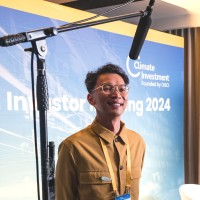
Jason Dela Cruz
Marketing & Comms at Climate Investment
Linkedin
“There are so many layers of messages to consider. Before I started at Patch, I thought I was well-read on climate change, but there was another level of sophistication (emissions scopes, trading systems, claims policy, marginal abatement costs, etc). And within that there are levels of expertise too – new CSOs from a marketing or legal background, longtime climate experts with an academic background, etc. You HAVE to speak the language at a level that meets your audience where they are.”
Matthew Klassen
Content Marketing Lead at Patch
Linkedin
“There are issues around the technical language, complexity and the interconnected nature of climate solutions which are difficult to translate into punchy copy. But having a solid grasp of the landscape of climate threats and solutions, and communicating their necessity in a direct and human way goes a long way to solve this.”
“The curse of knowledge is extreme. When you’ve spent years developing carbon capture technology, it becomes incredibly difficult to remember what it’s like to not understand molecular processes. My biggest takeaway is that people don’t buy the best climate solutions. They buy the ones they can understand fastest. Superior technology fails because customers don’t ‘get’ it, not because it doesn’t work.”
Expert library: The responses in full
The insights throughout this piece are drawn from conversations with 11 expert marketers who operate in the climate tech space.
Each was asked the same question: “What makes marketing in climate tech uniquely different from other industries you’ve worked in, and how has this shaped your approach with the companies you’ve worked with?”
Below are their full, unedited responses. If you’re interested in connecting with any of these contributors or learning more about their work, their LinkedIn profiles and websites are included too.
Andrew Copeland | Freelance content strategist and writer
Linkedin | Website
Some of the biggest challenges I’ve encountered are:
- Inconsistent budgets (a lot of stopping and starting) due to changes in policies and funding
- Simplifying complex topics for a nontechnical audience
- Avoiding blanket statements and making transparent claims backed by real evidence
- Keeping up with changing policies and regulations.
Greg McEwan | Communications Lead at Kaluza
Linkedin
In climate tech, you’re not just marketing a product. You’re marketing a version of the future.
The challenge is to help customers see themselves in that future, to make it feel both inspiring and achievable. That means cutting through complexity, building trust and showing how today’s actions lead to tomorrow’s impact.
And you have to do all of that while staying laser-focused on your customers – solving real, urgent problems they’re facing right now. It’s not enough to be right. You have to be relevant.
Jacob Dowling | Product Marketing Manager at NatureMetrics
Linkedin
IMO, the biggest challenge is that climate (and especially biodiversity, where I focus) is an emergent-regulatory environment. This makes positioning incredibly difficult.
Positioning against regulations is dangerous because, even when regulations exist, guidance for how to meet them is loose. And it’s often possible for companies to tick box these regulations using quite basic tools.
So, the positioning has to be about going beyond the regulations to future-proof, avoid reputational risk, be a market leader, etc. You need to convince them that it’s worth spending 10x more on your solution than is strictly needed to be compliant, because your data is more robust and reliable and credible. (But do they really care?) This is a much harder sell.
A couple years ago, many companies built commercial strategies around the concept of ‘Purpose’ (there’s a lot of literature on this from Deloitte, in MarketingWeek etc). Brands like Unilever and Pepsico etc. really pushed having an environmental/social purpose to their products in the belief that this would generate growth.
They’ve since discovered this was a false hypothesis and many brands are now rolling back on their social and environmental commitments in favour of a renewed, traditional focus on P&L, efficiency, etc. This has impacted marketing climate/esg/biodiversity solutions, because these no longer automatically align with company strategies and culture. Many of these companies are also scaling down their sustainability teams as a result, who are the main point of contact and heroes for our solutions; smaller, more stressed sustainability teams with less weight in the boardroom has a knock-on effect on our ability to sell.
As I said, I believe these are true of climate in general but especially true of biodiversity / nature impact reporting, which many commentators believe is tracking about a decade or more behind climate in terms of its maturity. So for biodiversity, you have the additional challenge of not just selling product or building brand, but also building the category and educating your target customer.
Jason Dela Cruz | Marketing and Communications Manager at Climate Investment
Linkedin
Marketing in climate tech is unique because you’re not just promoting a product—you’re communicating a mission.
At Climate Investment, I focus on translating complex science into clear, credible stories. It’s essential to incorporate factual, data-driven content – especially for audiences who may pilot or deploy the technologies. But I also strive to keep it accessible for those simply looking to understand. This balance has made me more strategic and mission-driven in how I craft narratives that inspire action.
Kait Payne | Marketing Lead at Overstory
Working in climate tech is uniquely exciting because alignment on strategy and development comes so much easier when you’re in agreement on the problems you’re trying to solve. At Overstory, when we’re considering challenges like powering hospitals during catastrophic storms or protecting communities from devastating wildfire, we’re ultimately asking one question of ourselves: “what can we do to help the most?”.
That question is behind every product decision and customer conversation. It guides the decisions we make about how we grow our business and the story we tell in the market. It makes the wins feel even better when we can see real impact on real people.
Compared to other industries, climate tech feels much more community-based. It’s about bringing people and stories together to solve pressing global issues, which is the dream from a marketer’s perspective. It’s simpler to convince people that what we’re doing matters when we’re literally saving lives.
In a moment when people around the world are suffering so much, it feels meaningful to get to spend my time working on something important alongside a wonderful community of mission-driven folks.
Karen McCandless | Freelance copywriter specialising in climate tech
Climate tech is still a controversial topic. Climate tech companies are worried about greenwashing and being seen as jumping on the bandwagon. The target audience sometimes isn’t fully on board with the idea of climate change. I’ve been told to not mention the words “sustainability” and “climate change” in marketing comms and to instead focus on how the tech can cut costs, boost efficiency, and improve performance, metrics which everyone cares about. In some more traditional industries, the idea of “climate tech” gets push back from the people that are using it. And rightly so. Sometimes companies do implement climate tech just to appease shareholders or to tick regulatory boxes. There is a fair amount of distrust.
If you’re marketing climate tech to consumers, you have to be careful not to lecture or alarm them, or be sensationalist. In eco linguistics, we talk about something called the “Disaster Frame”. This is when you say things like, “We’re running out of time”, or “The ice caps are melting”, or even “It’s too late”. It can make people feel powerless but it also plays into the idea that many people feel such a sense of fatigue. They’ve heard it all before and they don’t want to hear this scaremongering again.
Linguistics really does matter when marketing climate tech. This is one area more than any other I’ve worked in (maybe other than healthcare) where you need to be specific when you’re talking about the tech. In healthcare, companies generally stay away from talking about a “cure”. Climate tech is a similarly specific and technical industry. It’s always good to avoid jargon such as “carbon neutral” or “net zero” used without nuance. Those words over promise on what is usually not something climate tech can deliver without other internal shifts. It’s also important to avoid talking about a “solution” as this implies there is one neat little thing you can do to “solve” emissions. “Eliminate emissions” is another over promise as that’s often something climate tech can’t do.
If talking to consumers, avoid anything too over the top like, “save the planet. Instead use gain-framed language (“live better,” “save money,” “protect what you love”), activate agency (“you can help,” “we are building solutions”), and localise and personalise (“in your neighbourhood,” “your children’s future”).
Lena Andican | Positioning and messaging expert
Linkedin | Website
Key insights discussed in a video call – full transcript available upon request.
“Intellectual arrogance” and lack of marketing appreciation: Climate tech founders often exhibit what one VC calls “intellectual arrogance” – believing scientific expertise is superior to commercial understanding. Unlike B2B SaaS founders who value marketing as a strategic function, climate tech founders see marketing as a “colouring in department” and often ask about channels without understanding basic buyer personas.
Extreme marketing fundamentals gap: When asked “who is your buyer?”, climate tech founders often have no answer. They lack awareness of needing marketing fundamentals in place before pursuing sales, instead taking a “spray and pray” approach. The sector is years behind B2B SaaS in marketing sophistication and playbook awareness.
Mission vs. commercial messaging challenges: Working with founders on messaging often requires “dialling down the impact side and dialling up the commercial side.” Example: ocean restoration funeral business founders wanted every slide focused on social impact, but investors need to see ROI potential first. Climate tech’s political sensitivity means leading with climate benefits rarely works commercially.
Problem awareness is low: It’s difficult convincing founders they have a marketing problem, which makes consulting challenging. Many resist considering messaging changes, preferring to focus on tactics or saying they’ll address fundamentals “once sales get going” – backwards thinking that perpetuates the problem.
Content quality and community issues: Climate tech LinkedIn content is mostly Instagram-style feel-good posts about impact rather than strategic business discussions. Unlike B2B SaaS feeds full of growth tactics and strategic advice, climate tech content adds little commercial value and represents a missed opportunity for meaningful professional discourse.
Market timing and funding reality: The climate tech funding boom allowed companies to avoid commercial fundamentals, but with declining investment and questions about second rounds, startups must mature their approach. Many founders still expect 10+ year R&D periods before commercialization, showing disconnect from current market realities.
Matthew Klassen | Content Marketing Lead at Patch
Linkedin
I’d say I had a couple key takeaways as I got to know our audience (largely corporate sustainability leaders, as well as some on the supply side, and the larger carbon market ecosystem).
‘Climate’ is a huge, variegated, fragmented space. It’s truly global, and there are SO MANY disciplines and personas and focus areas – some of them never intersect with each other, really. I went to a conference and met a person working in regulatory compliance for a regenerative agriculture company. I met a VC for reforestation projects. I met an economics student. There’s science, business, tech, academia, etc. The digital channels you associate with ‘climate’ or ‘sustainability’ are WAY too broad for almost every company working in this space. If you buy a list associated with climate keywords, it’s probably a lot of people who buy ‘eco-friendly’ consumer goods, maybe job seekers; it’s tough to get at the right audience. You have to build/curate the right people over time.
On a similar note, there are so many layers of messages to consider. Before I started at Patch, I thought I was well-read on climate change, but there was another level of sophistication (emissions scopes, trading systems, claims policy, marginal abatement costs, etc.). And within that there are levels of expertise – new CSOs from a marketing or legal background, longtime climate experts with an academic background, etc. You HAVE to speak the language at a level that meets your audience where they are. You don’t have to convince anyone that climate change is actually happening.
Because of those 2 things, I’ve found that some ‘old-school’ B2B tactics really work. Email-gated research, webinars, in-person events. People appreciate thoughtful, in-depth, well-researched analysis and are willing to ‘give-to-get’ that. Brand really helps.
MK McGowan | Climate comms consultant
Linkedin | Website
I think climate tech marketing sits at this complex intersection of technical complexity, urgent global need, and business pragmatism.
Here are my thoughts on what makes climate tech marketing uniquely challenging:
The translation gap is massive. I’ve found that 87% of founders I’ve interviewed struggle to translate technical concepts for non-technical buyers. You’re explaining breakthrough science to procurement teams who just want to know ROI.
Many founders assume environmental impact sells itself, but I’ve found 62% had to pivot away from climate-first messaging to business-first approaches after market feedback. I’m not saying to green-hush your message, but lead with user benefits and ROI.
Multiple stakeholder complexity is challenging. You’re selling to sustainability teams (who care about impact) AND finance teams (who care about cost) AND technical teams (who care about implementation) simultaneously.
The curse of knowledge is extreme. When you’ve spent years developing carbon capture technology, it becomes incredibly difficult to remember what it’s like to not understand molecular processes.
The uphill battle with skeptics can be tiring. It can feel like you’re constantly converting non-believers who view climate solutions as “nice to have” rather than essential. But I’ve learned that focusing on ROI, tangible benefits, and crystal-clear value propositions cuts through that resistance better than any climate argument.
My biggest takeaway is that people don’t buy the best climate solutions. They buy the ones they can understand fastest. Superior technology fails because customers don’t ‘get’ it, not because it doesn’t work.
Rebecca Cooke | Freelance climate copywriter
Linkedin | Website
What makes marketing and communications for climate tech uniquely different from other industries is that, oftentimes, you’re marketing a solution to an audience who aren’t yet affected by the problem. It defies the traditional marketing playbook: identify the pain point, pitch the solution. With climate tech it’s more complicated. We know the climate crisis is here. We know massive disruption to life, the ecosystem and the economy is inevitable if we don’t act. But, as of today it hasn’t quite hit the pockets of those holding the purse strings yet, so it’s more difficult to attract buy-in.
There are other issues around the technical language, complexity and interconnected nature of climate solutions which are difficult to translate into punchy copy. But having a solid grasp of the landscape of climate threats and solutions, and communicating their necessity in a direct and human way goes a long way to solve this.
Essentially, in the future, all products and services will have to consider climate effects and limitations by necessity. So those that incorporate this now are leading by default.
Rebekah Mays | Executive ghostwriter
Linkedin | Website
Climate tech marketing is unique in that brands sometimes act like “the environment” is the customer.
Especially now — with both the US and the EU pulling back on corporate sustainability compliance — climate tech marketers have to think hard about their value proposition and make sure it’s resonating with their customers.
In other words, the value proposition has to be more than just “sustainability.” It needs to address day-to-day pain points the customer is facing in their industry — whether that’s related to ROI, convenience, or performance.
Basically we want to make sure that aside from climate benefits, there’s a clear value prop & messaging that resonates with their target audience and solves real problems.
Tegan Tallulah | Sustainability copywriter
Linkedin | Website
The biggest thing that comes to mind is I think climate tech is very technically complex and the founders and subject matter experts are often very technical and committed to detail and precision, which is great but it can make it challenging to step back and tell an engaging story. In most content and copywriting, being able to simplify complexity into accessible, human terms is really important. I guess this isn’t unique to climate tech but I think it’s particularly challenging as leaders/clients can be very wedded to the technical detail.
My approach is generally to relentlessly ask/remind about the target audience and what they are looking for. Because in some cases it does make sense to go into the weeds for niche audiences, but other times it really doesn’t, and they need to see that.
 Tabitha Whiting: High-impact content for high-impact startups