
Know your audience, and understand what they value the most.
That’s step 1 in the start of any marketing campaign or piece of content – and it’s even more crucial when communicating about climate change.
Why does understanding the target audience matter in climate change comms?
There are two reasons that make understanding your climate change target audience absolutely essential:
- Climate change can be interpreted in a multitude of different ways
- Climate change is inherently polarising.
Climate change can be interpreted in a multitude of different ways
Climate change is inherently difficult to communicate about.
As George Marshall puts it, climate change is “exceptionally multivalent.”
It’s simultaneously an urgent, life-threatening crisis and something intangible that we can’t see, touch, or feel day-to-day.
“Climate change is, I suggest, exceptionally multivalent. It lends itself to multiple interpretations of causality, timing, and impact. This leaves it extremely vulnerable to our innate disposition to select or adapt information so that it confirms our pre-existing assumptions. If climate change can be interpreted in any number of ways, it is therefore prone to being interpreted in the way that we choose.”
– George Marshall, Don’t Even Think About It: Why Our Brains Are Wired To Ignore Climate Change
This ambiguity leaves climate change naturally open to wildly different interpretations by different audiences – depending on their existing worldview.
No piece of communication ever stands alone, because humans will always take new messages and immediately mould them to fit our existing opinions, beliefs, and worldviews – known as confirmation bias.
When you combine this with a topic like climate change that’s already wide open to interpretation, you end up with vastly different existing connotations depending on your target audience.
So, having the context of those existing opinions, beliefs, and worldviews of the audience you’re trying to communicate with about climate change is incredibly important to understand how your messaging will be interpreted.
Climate change is inherently polarising.
Climate change as a concept has become increasingly polarised in society, over time becoming intrinsically linked with politics and identity.
Generally speaking, liberals or left-leaning people will tend to see climate change as scientific fact which needs to be urgently addressed, whilst more conservative and right-wing people are skeptical and generally less concerned.
The debate on climate change has evolved into a moral one socio-cultural one, with an ‘us vs them’ dynamic and strongly held beliefs on all sides of the equation.
If you don’t take the time to understand your specific climate change target audience’s existing knowledge and viewpoint, then you risk deepening the already enormous divide that exists on this topic, potentially generating heated contention rather than productive conversation.
There’s no one-size-fits-all in climate change comms – tailor to your target audience
The key takeaway is this: there is no universal approach when it comes to communicating about climate change – tailoring the message to the audience you’re targeting is a must.
As Katharine Hayhoe writes in her excellent book ‘Saving Us: A Climate Scientist’s Case for Hope and Healing in a Divided World‘:
“On climate change and other issues with moral implications, we tend to believe that everyone should care for the same self-evident reasons we do. If they don’t, we all too often assume they lack morals. But most people do have morals and are acting according to them; they’re just different from ours. And if we are aware of these differences, we can speak to them.”
Katherine Hayhoe, Saving Us
So, messages and campaigns about climate change must always start with a nuanced understanding of the specific audience receiving the communication.
Only then can your message be carefully tailored to resonate with who that audience is, how they already see the world (and climate change), and what they care deeply about.
Consider these drastically different climate change target audiences:
- A right-wing leaning policy maker in America
- A masters student studying sustainable tourism
- A rural coffee farmer in Indonesia
- A small business owner in a UK seaside town
These different people will all have drastically different reactions to the same climate change communication campaign.
So, depending on your goal, you would want to tailor your message to each specific audience to maximise impact.
Examples of tailoring messages to your climate change target audience
Let’s explore some real-world examples of how to effectively tailor climate communications to specific audiences.
Example 1: The Conservative Climate Leadership Council for politically conservative audiences
The Climate Leadership Council targets conservative Americans by framing climate action around economic opportunity, national security, and market-based solutions.
The campaign’s core pillars are:
- Carbon advantage. By manufacturing goods with lower emissions, America can improve its economy whilst also lowering emissions.
- Trade. By rewarding and encouraging lower carbon supply chains we can reduce the impact of the global trade system.
- Carbon dividends. The ‘Baker-Shultz Carbon Dividends Plan’ is a proposal to charge fossil fuel companies a carbon fee, and put that fee back into the pockets of all American families – as well as doing the same at borders for global trade.
- Measuring emissions. Supporting a clearer view of climate impact through a streamlined emission measurement and reporting approach.
All of these pillars focus on the economy, trade, wealth creation – topics which are typically associated with that more conservative audience.
By building a campaign around market-based solutions, the Climate Leadership Council is able to push for change whilst not alienating its target audience.

Example 2: The Laudato Si’ Movement for religious audiences
The Laudato Si’ Movement (formerly the Global Catholic Climate Movement) engages religious communities in climate change by framing climate action as a moral and spiritual imperative.
Their approach centres around:
- Creation care theology. Climate action is presented as “caring for our common home” and protecting God’s creation, drawing directly from Pope Francis’s encyclical Laudato Si’.
- Intergenerational justice. Their messaging emphasises our moral responsibility to future generations, framing climate inaction as a failure of stewardship.
- Concern for the poor. They highlight how climate change disproportionately affects the world’s most vulnerable populations, connecting environmental action to core religious teachings about caring for the poor.
- Parish-level engagement. The Laudato Si’ Action Platform provides practical tools for local religious communities to reduce their environmental impact through concrete actions.
By connecting climate action to deeply held religious values and existing moral frameworks, the Laudato Si’ Movement reaches an audience that might otherwise be disconnected from climate messaging.

Example 3: Project Drawdown’s solutions framework for climate-aware audiences
Project Drawdown targets liberals and progressives who already accept climate science but need direction on specific solutions.
Instead of focusing on the problem (which this audience already understands), they emphasise comprehensive, actionable paths forward.
Their approach includes:
- Solutions rankings. Their research ranks climate solutions by effectiveness, costs, and benefits, appealing to the data-driven, evidence-based mindset of many progressives.
- Sector-specific tools. They offer targeted resources for different sectors (food, transport, buildings, etc.), allowing people to focus on areas most relevant to their existing interests.
- Co-benefits framework. Each solution is presented not just for its climate impact but also for its benefits to health, equity, and economic wellbeing, connecting climate action to broader progressive values.
- “Climate solutions at your fingertips” messaging. Their communications emphasise agency, hope, and empowerment rather than doom-and-gloom scenarios that can lead to eco-anxiety among the already concerned.
By moving beyond problem statements to detailed solution pathways, Project Drawdown gives already-convinced audiences a constructive way to channel their existing climate concern into specific, effective action.

How to tailor communications to different climate change target audiences
Here’s a few practical steps to follow to effectively communicate about climate change with your specific audience.
Step 1: Get clear on your target audience first
Before crafting any climate communication, define your audience as precisely as possible:
- What’s their context? Location, age, profession, interests, etc.
- What do they care most about? Health, family, financial security, community?
- What are their existing political beliefs, values, and worldviews? How does climate change fit into those frameworks?
- How concerned are they about climate change? How are they (or people in their circle) likely to be impacted?
- What communication channels do they use? What other climate change messaging might they be receiving there?
The more specific you can be, the better – “UK homeowners aged 35-55 with centre-right political views who are moderately concerned about climate change but prioritise financial security” is going to be much more useful than simply “homeowners.”
2. Research and listen to understand their worldview
To effectively tailor a message, you then need to gain a deep understanding of that audience’s values, beliefs, and communication preferences, through techniques such as:
- Conduct formal research: Surveys, focus groups, or interviews with your target audience
- Monitor relevant online communities: Forums, social media groups, comment sections
- Review existing studies: The Yale Program on Climate Change Communication, for instance, segments audiences into “Six Americas” based on their climate beliefs, with a substantial amount of research on how these different audiences relate to climate change.
Look for:
- What language and terminology they use when discussing climate issues
- Which values they prioritise (e.g., family safety, economic security, community wellbeing)
- What concerns or objections they commonly express
- Which sources of information or messengers they trust – scientists, social media influencers, celebrities, friends and family, etc.
3. Clarify your core message and desired outcome
Be explicit about what you want your audience to think, feel, or do:
- Knowledge outcome: What specific information do you want them to understand?
- Attitude shift: How do you want their feelings or perspectives to change?
- Behavioural change: What specific action do you want them to take?
4. Align your message with your findings
Based on your deep understanding of the audience, now it’s time to frame your message in a way that will resonate with them.
For instance:
If your audience is already highly concerned about climate change: Focus your message around impacts, action, solutions, and hope. Avoid dwelling too much on doom-and-gloom scenarios, as this audience is already aware and might experience eco-anxiety. Project Drawdown’s solutions-focused approach works well here.
If your audience is religious: Focus on the moral imperative to protect people and the natural world. Frame climate action as stewardship of creation and emphasise the disproportionate impact on vulnerable communities, following the Laudato Si’ Movement’s approach.
If your audience is primarily concerned with economic issues: Highlight the economic opportunities in clean energy, the job creation potential, and the financial risks of inaction. Frame climate solutions as smart investments in the future, similar to the Climate Leadership Council’s market-based approach.
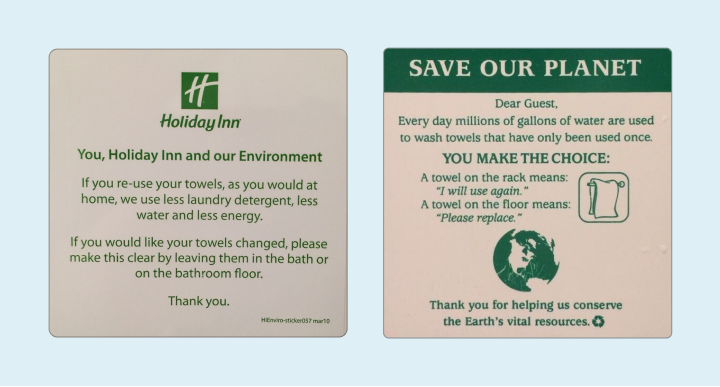
If your audience is highly influenced by their peers: Play into ideas of social norms and what others are doing in response to climate change – the Robert Cialdini “Don’t Throw In The Towel” study is a classic that demonstrates the power of social influence on behaviour change.
Climate Outreach recommends narrative workshops where climate messages are developed and tested directly with members of the target audience.
5. Choose appropriate messengers, channels, and formats
Research consistently shows that trusted messengers are critical in effective communication – for instance, a 2019 study published in Nature Climate Change found that messages from trusted in-group members were significantly more effective at changing climate beliefs than identical messages from outgroup sources.
So, it’s crucial to align this with your audience too:
- Select credible voices: Identify who your audience already trusts (community leaders, industry experts, peers)
- Use appropriate channels: Meet your audience where they are (social media platforms, community events, industry publications)
- Consider collaborative approaches: Partner with organisations or individuals already respected by your target audience.
If we can find that sweet spot where our message truly resonates with what our climate change target audience cares most deeply about, that’s where real impact happens.
Understanding your climate change target audience isn’t just about making your message more palatable – it’s about making it more effective. It’s about ensuring that your communication actually leads to the change you want to see, whether that’s shifting perceptions, changing behaviors, or driving policy support.
By taking the time to truly understand your audience’s values, concerns, and worldview, you can craft climate change messages that don’t just get heard, but actually inspire action.
And in a topic area as critical as climate change, that’s what really matters.
This article is part of a series on core principles for effectively communicating climate change, with other topics in the series including:
 Tabitha Whiting: High-impact content for high-impact startups