Building a brand POV and search presence from zero for an agritech startup
Company name: Ostara
Industry: Agritech – climate control software for polytunnel growers
Funding stage: Spin-out from LettUs Grow
Timeline: November 2025 to May 2026
My role: Freelance content strategist and writer
The challenge:
Ostara had built control software for polytunnel growers that brought monitoring, control and automation into one platform. The team behind it had years of data and growing expertise from their time at LettUs Grow.
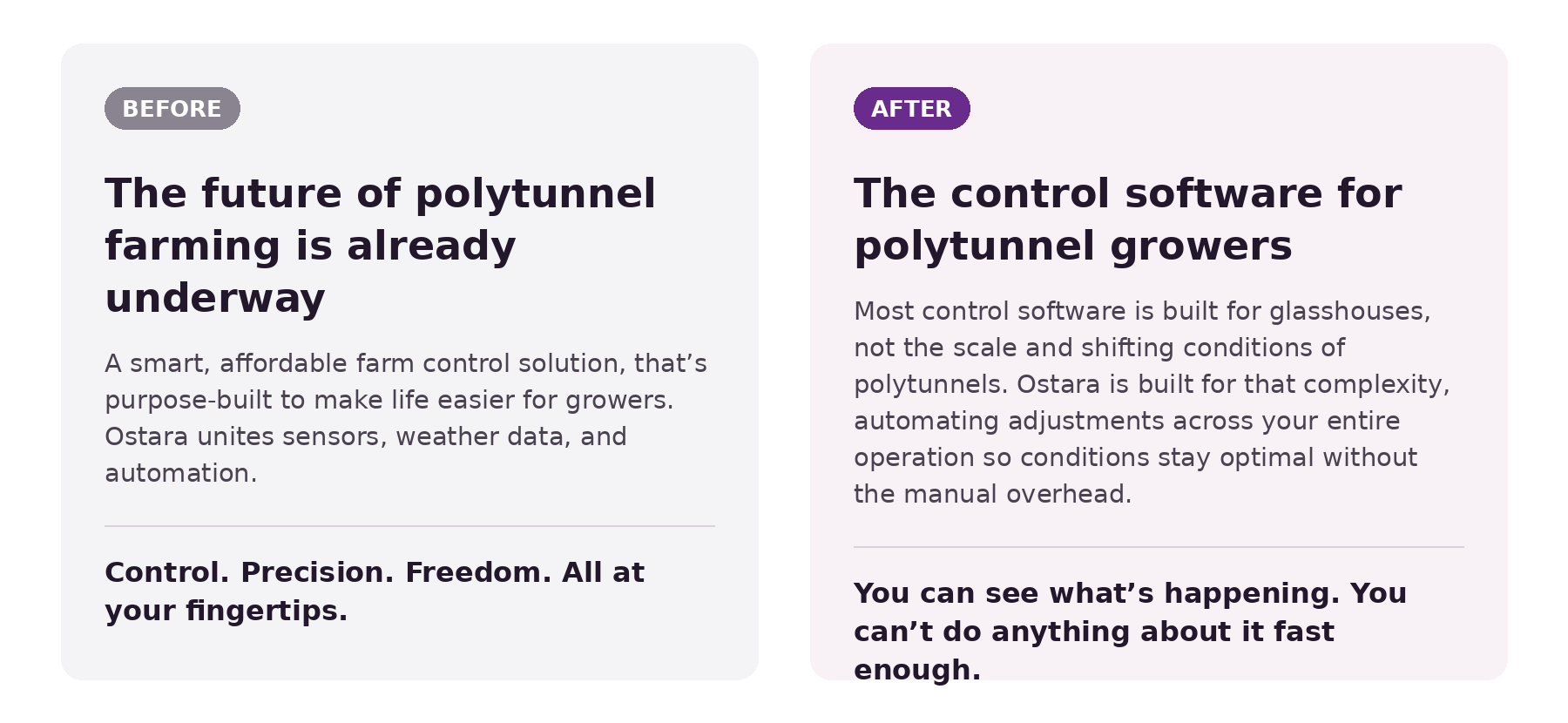
But marketing hadn’t kept pace with the product. One person was covering both sales and marketing, there was no content in place, and the website leaned on lines like “Control. Precision. Freedom.” that could have belonged to any agritech startup.
The founders wanted Ostara to be known as the go-to voice on tech-enabled protected growing, and nobody else in the space was doing that well yet.
Finding the right strategy:
I started by interviewing the founders and commercial lead, and going through sales conversations to understand who Ostara’s growers were and what they struggle with day to day.
They’re growers at small and mid-sized fruit farms. They work on thin margins where labour makes up around half their costs, and they spend their days reacting to weather changes. Many have been burned before by tech that generated data without helping them act on it, so they’re wary of vendors and put far more trust in what other growers say.
The founders also had a strong view on their market that hadn’t made it into their marketing. Almost all investment in protected agriculture goes into high-tech greenhouses, which make up 9% of covered growing globally. The other 91% happens in polytunnels, where the hardware is often capable but under-used, because adjusting it manually takes more labour than growers can afford.
That view became Ostara’s core narrative, and it ran through every piece we created: polytunnels are the pragmatic future of protected agriculture, and software is what’s missing.
The strategy then set out:
- Three content pillars. The first was pain point content, working through each grower challenge with a topic education piece, a solution education piece and a case study. The second was industry perspectives to build Ostara’s POV. The third was high-intent SEO for growers already comparing options.
- Content principles shaped by that wariness of vendors. Every piece started with a grower problem rather than a product feature. Claims were backed with trial data and expert input. And the content assumed growers know their crops better than we do.
- Four LinkedIn voices, each with its own angle. Paolo (CEO) covered industry economics, Adam (CTO) how the technology works, and James (Commercial Lead) what he hears from growers. The company page made the fourth.
Putting it into practice:
Industry perspectives
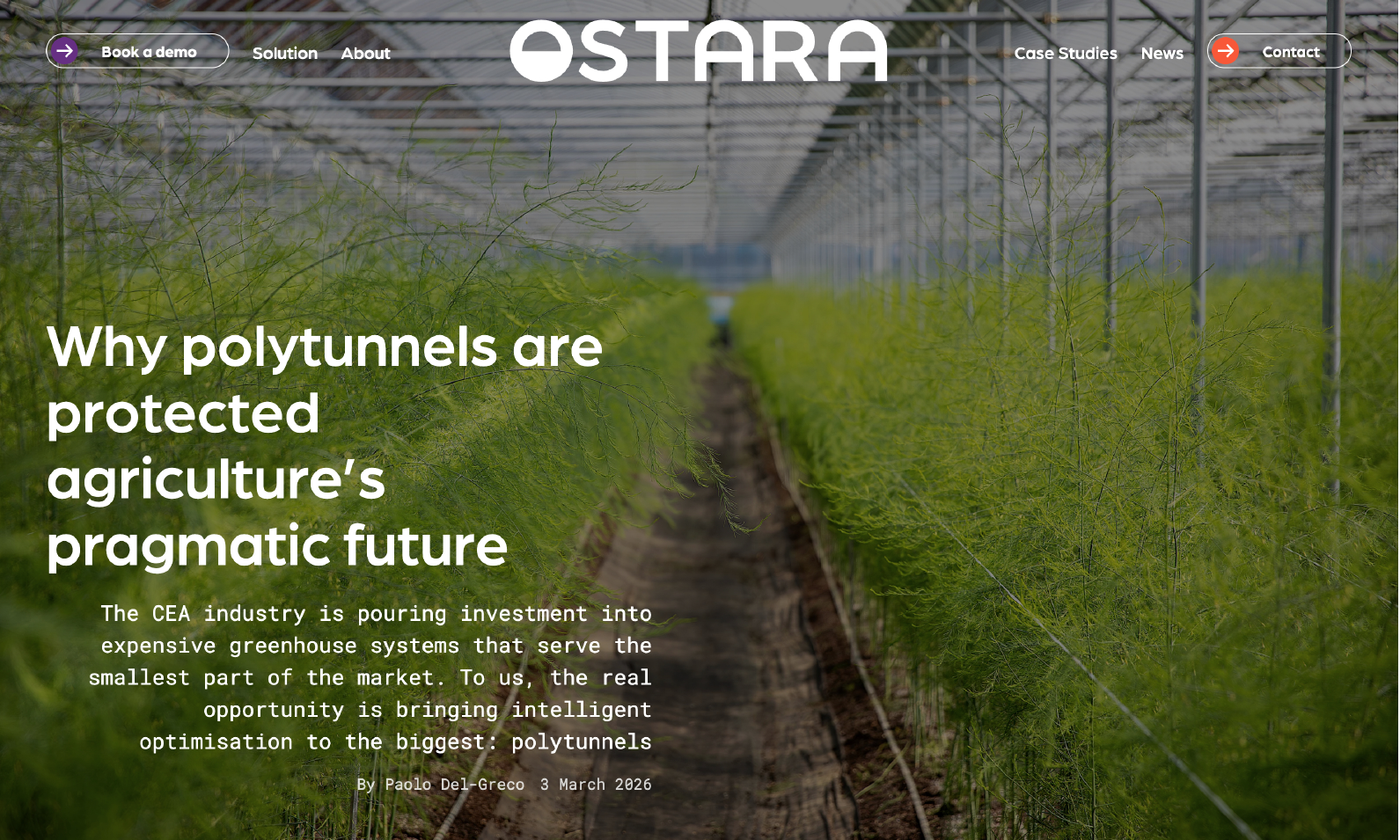
Paolo’s piece on why polytunnels are protected agriculture’s pragmatic future set out the core narrative, framed around the economics through his finance background.
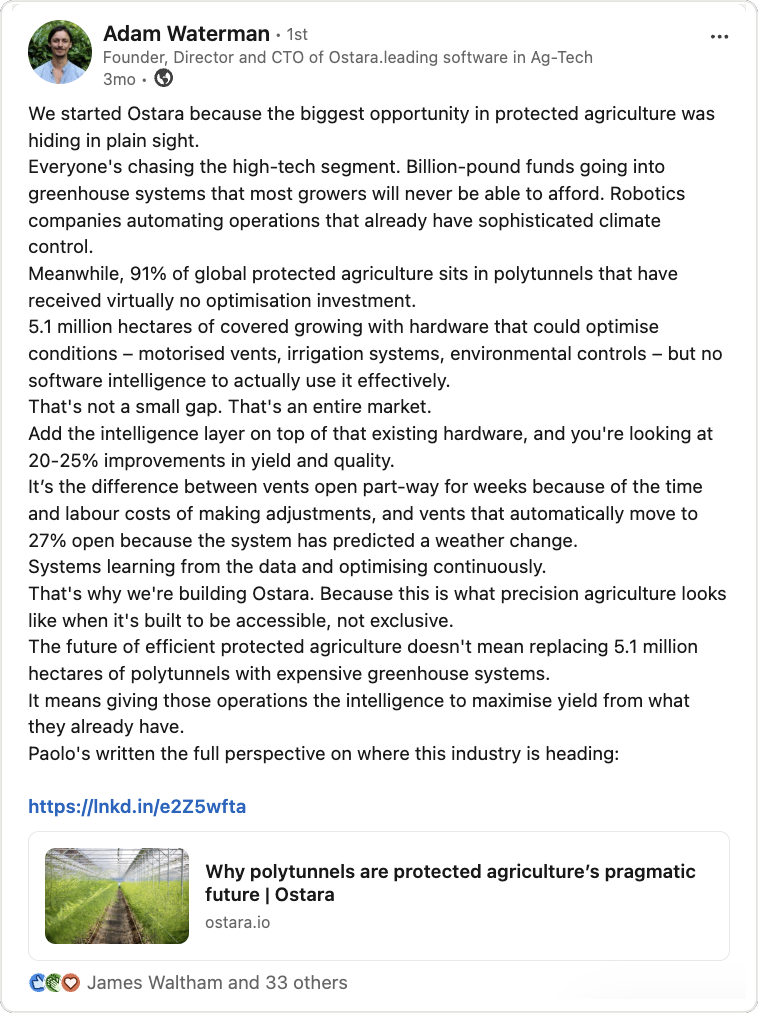
Every blog then went out across all four LinkedIn accounts with an angle tailored to each person. Adam’s version, for example, told the story of why the founders started Ostara.
Solution education
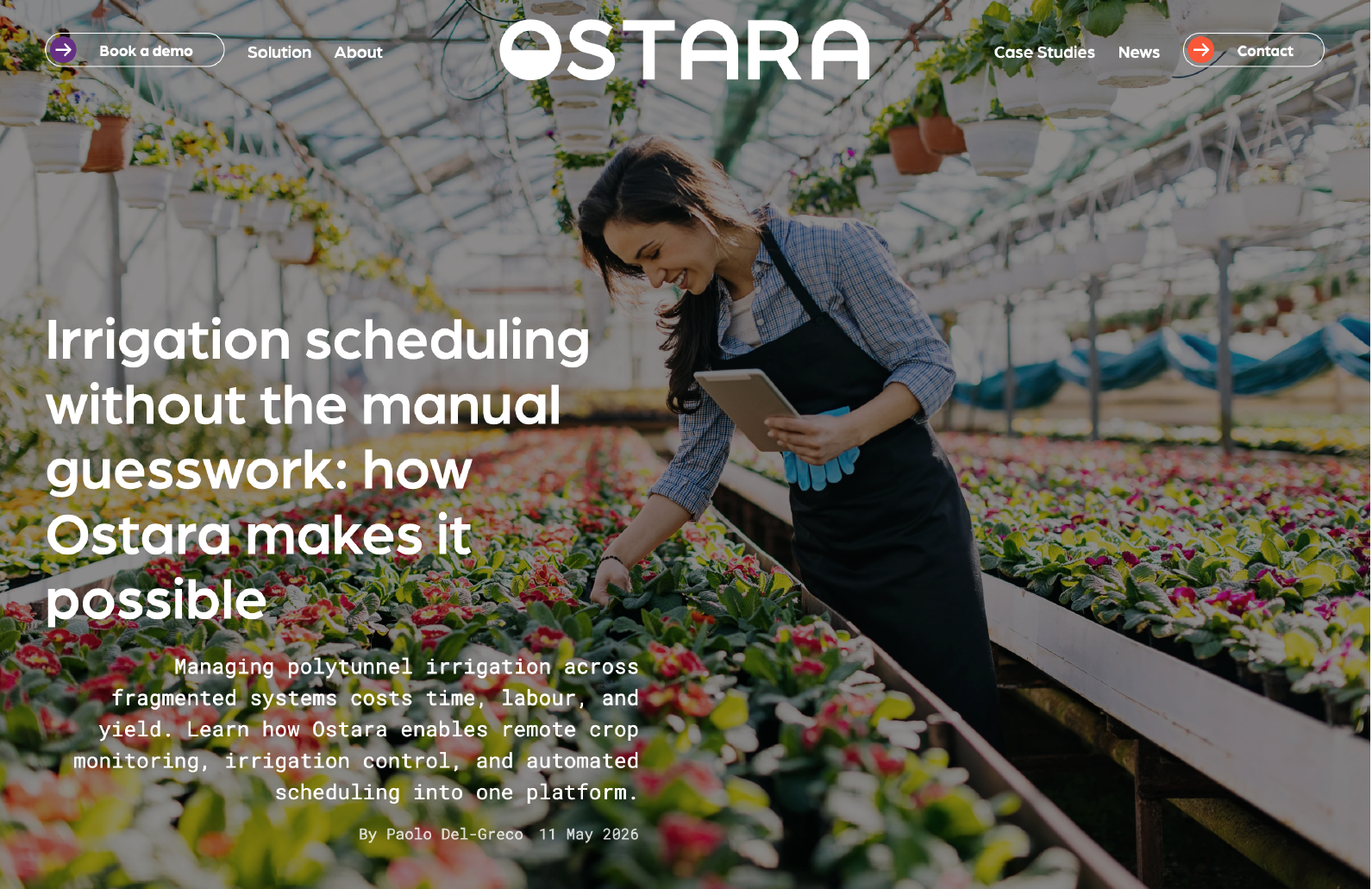
Pieces on manual venting labour and irrigation scheduling showed how Ostara solves specific grower problems.
They used Haygrove’s trial data (60 labour hours saved per hectare per month, and 25% more time in optimal VPD) alongside quotes from Haygrove’s technical team.
High-intent SEO
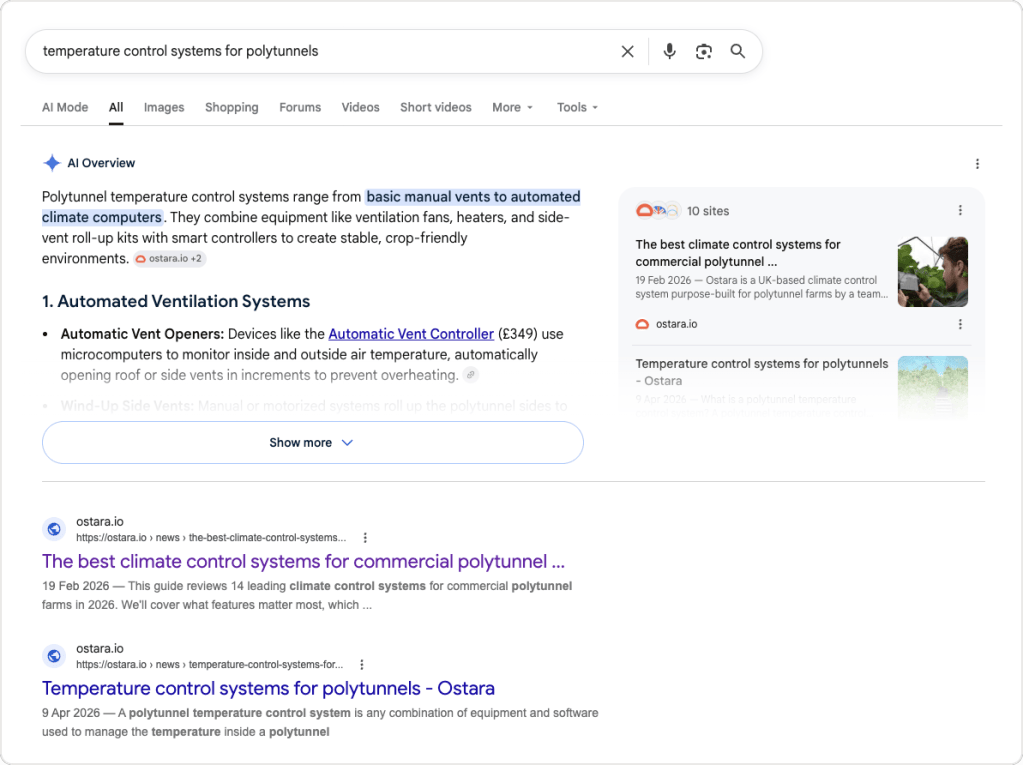
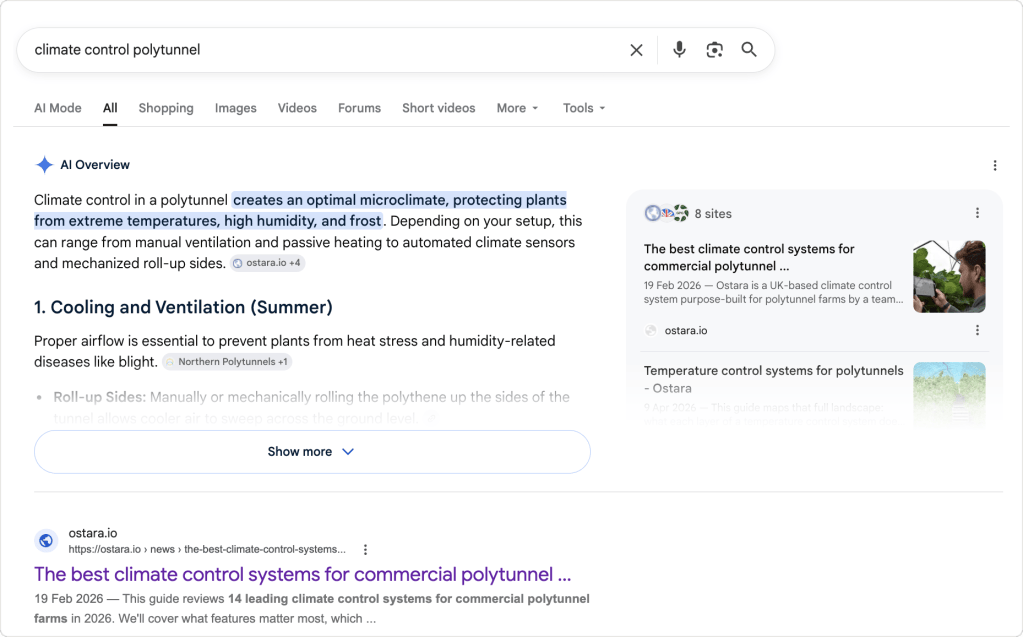
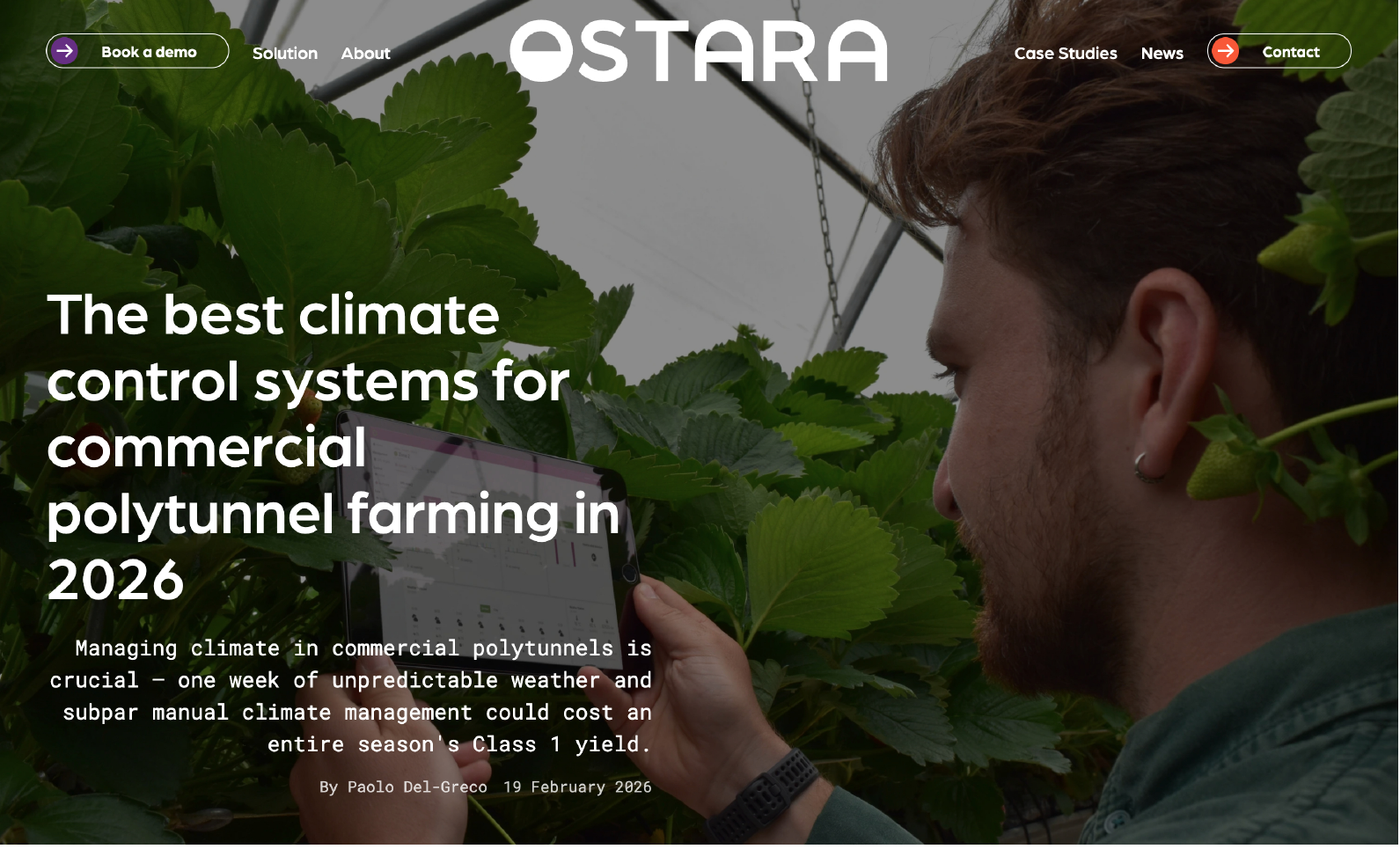
Buyer’s guides for the category terms growers search when comparing options, including the best climate control systems for commercial polytunnel farming and temperature control systems for polytunnels.
Homepage rewrite
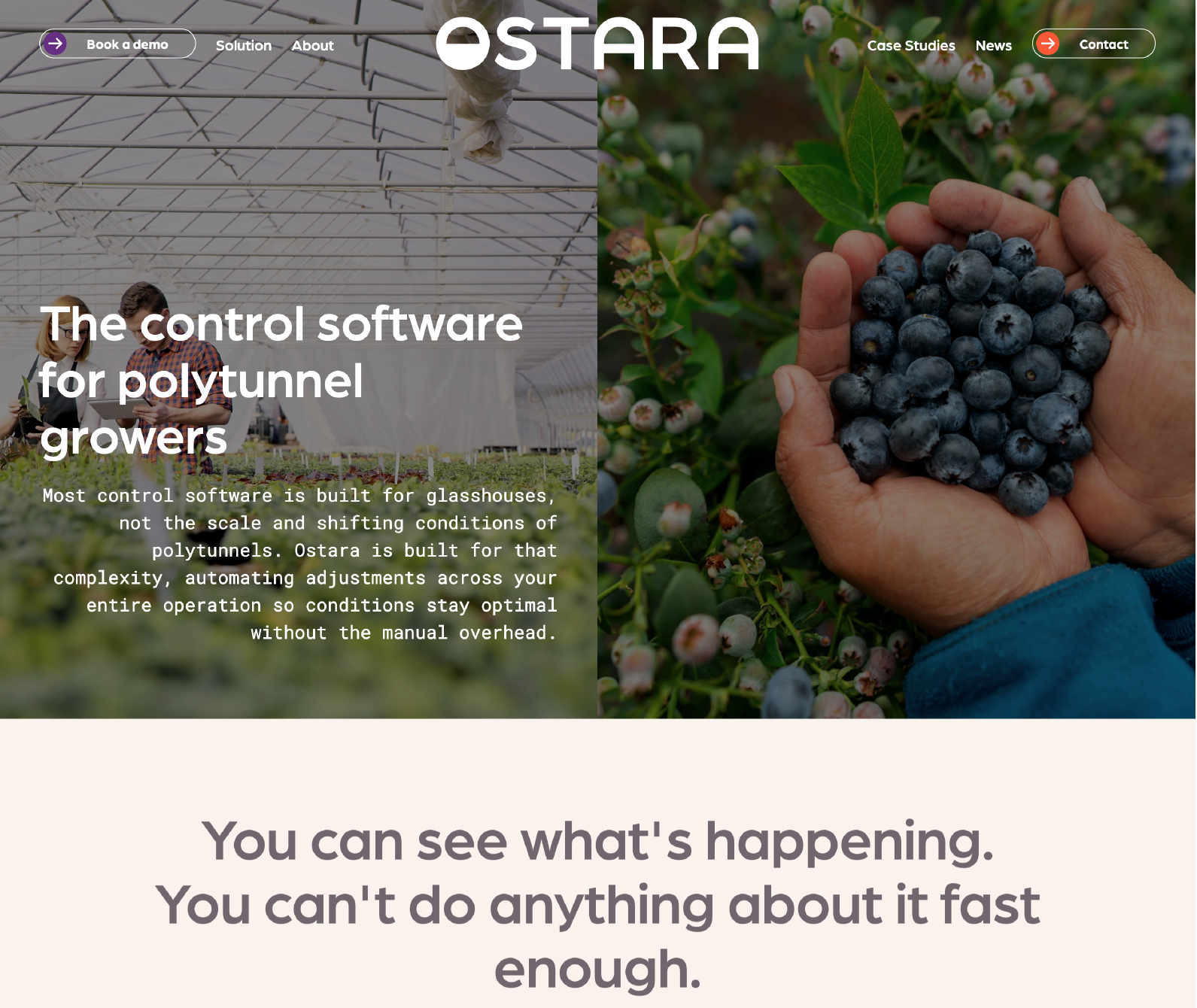
I also rewrote the homepage. The new version was built around the problem growers arrive with: they can see what’s happening in their tunnels, but they can’t act on it fast enough. It also swaps the generic agritech language for specifics about who Ostara is for.
Results:
In six months, Ostara went from no content and generic website messaging to a clear point of view that showed up everywhere the brand did. The founders’ LinkedIn posts, the blog and the homepage were all telling the same story about polytunnels and the role software plays in them.
That consistency was the main thing the strategy set out to fix. Before, each founder talked about Ostara in their own way, and the website described it in language any agritech startup could have used. By the end, a grower could read Paolo’s thought leadership piece, see Adam’s post on why they started Ostara, land on the homepage and get the same message each time.
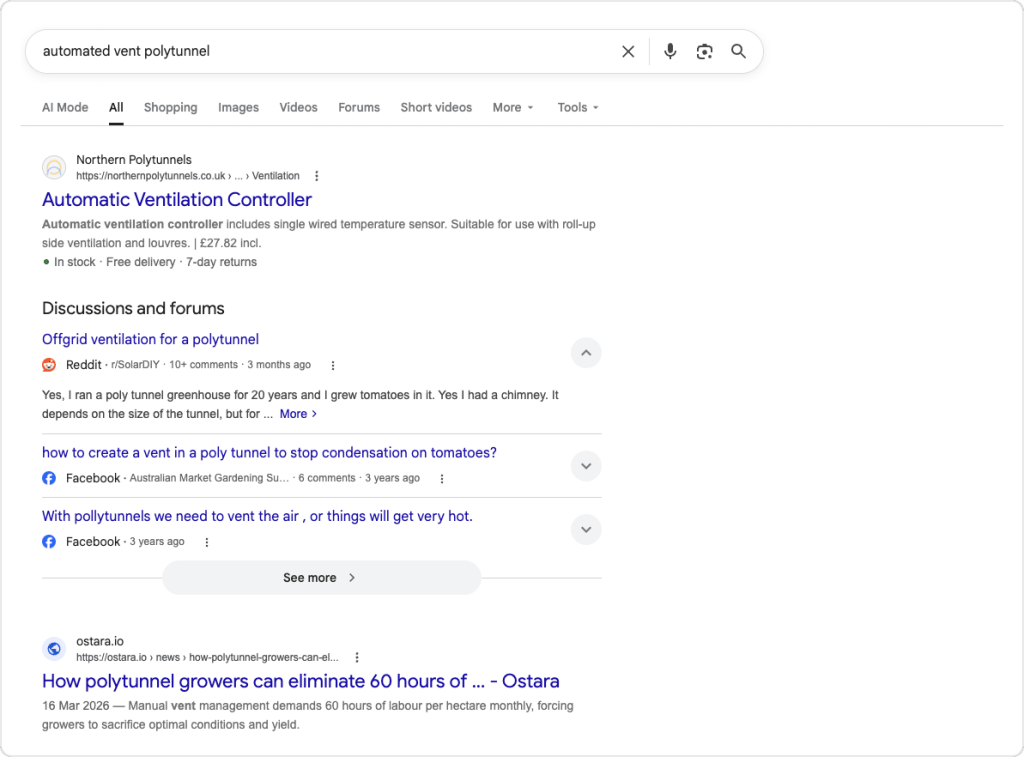
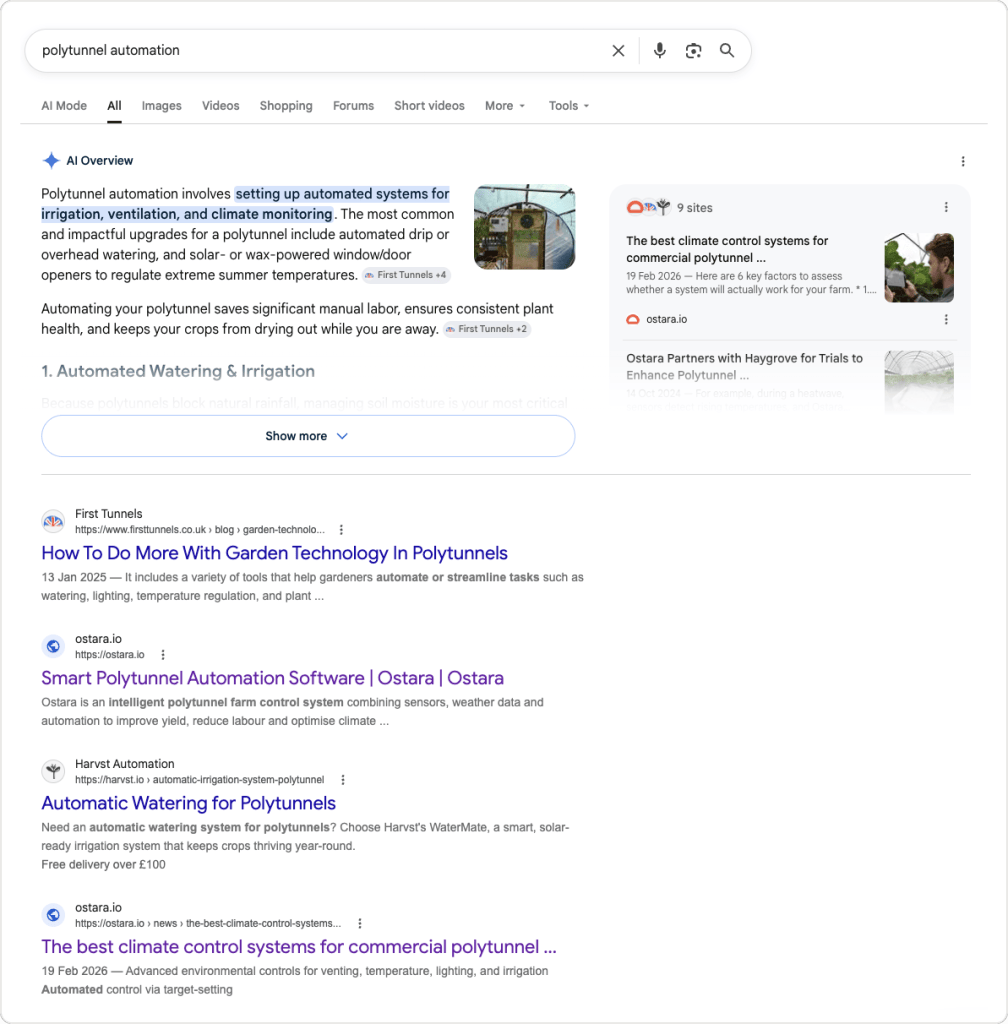
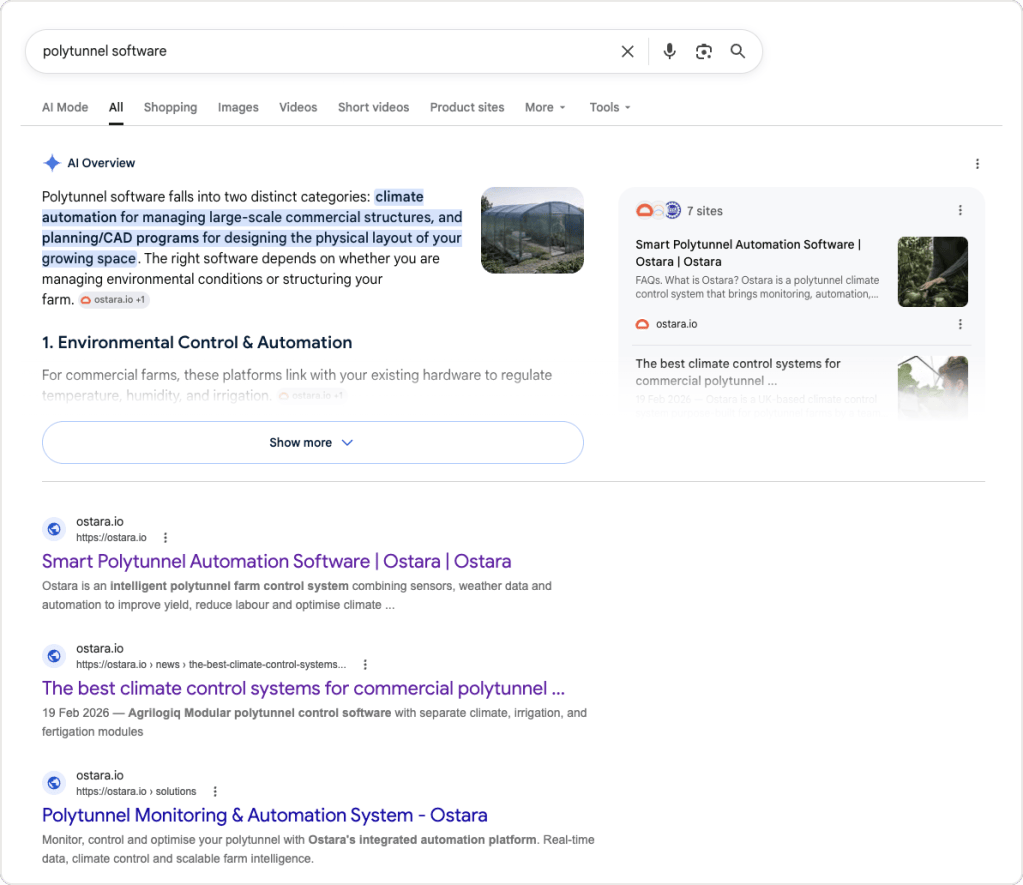
It also showed up in search. Ostara started with no search presence. Within four months of the first blog going live, it ranked #1 on Google for “polytunnel software”, “climate control polytunnel” and “temperature control systems for polytunnels”, and #2 for “polytunnel automation” and “automated vent polytunnel”. Ostara’s content was also the main source cited in Google’s AI Overviews for four of those five searches.